

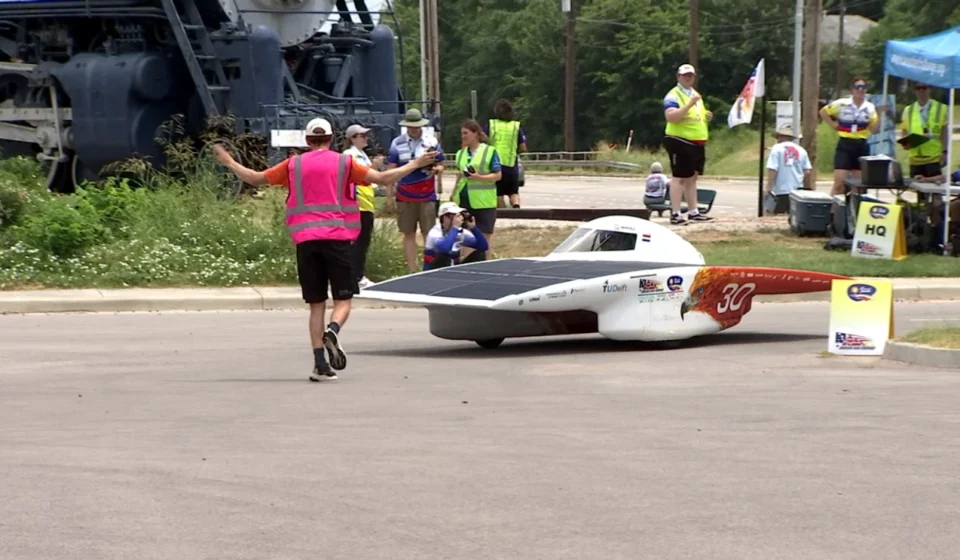

The finish line marked far more than the end of a demanding road trip. It represented years of research, late nights inside university workshops, and the determination of young engineers who believe cleaner transportation can become a practical reality. Student teams from Appalachian State University and KU Leuven successfully completed the more than 1,500 mile 2026 Electrek American Solar Challenge, demonstrating how solar powered vehicle technology continues to mature through hands on education, innovation, and real world endurance.
The event, completed on August 5, 2026, tested much more than vehicle speed. Every mile required careful energy management, engineering precision, and teamwork under changing weather conditions. For students, the challenge served as a living laboratory where classroom theories met the unpredictability of public roads.
A demanding test of engineering rather than a simple race
The Electrek American Solar Challenge has earned a reputation for rewarding efficiency, reliability, and intelligent design instead of outright acceleration. Teams construct highly specialized vehicles capable of harvesting sunlight through advanced photovoltaic panels while relying on lightweight materials, aerodynamic shaping, and sophisticated battery management systems.
Unlike conventional motorsport competitions, success depends upon balancing available solar energy with power consumption over hundreds of miles. Drivers, engineers, and support crews constantly evaluate weather forecasts, battery conditions, traffic patterns, and route planning. Every decision can influence whether a vehicle reaches the next checkpoint on schedule.
For Appalachian State University and KU Leuven, completing the demanding route highlighted the strength of interdisciplinary collaboration. Mechanical engineering, electrical engineering, software development, manufacturing, materials science, and project management all played essential roles in creating vehicles capable of traveling long distances with remarkable efficiency.
Students gain experience that reaches beyond the classroom
Engineering education increasingly depends upon practical problem solving, and competitions like this provide an environment that textbooks alone cannot replicate. Students must convert theoretical concepts into functioning machines while working within strict budgets, technical regulations, and production deadlines.
Many participants spend months designing custom components, testing electrical systems, writing software, and refining aerodynamic features before the first mile of competition begins. Along the journey they encounter unexpected mechanical issues, changing environmental conditions, and logistical challenges that demand quick thinking.
These experiences often prepare graduates for careers across industries that include renewable energy, automotive engineering, aerospace, advanced manufacturing, battery technology, and sustainable infrastructure. Employers frequently value applicants who have already managed complex engineering projects under real operating conditions.
Skills developed throughout the competition
- Advanced battery management and energy optimization.
- Solar panel integration and electrical system design.
- Computer modeling and aerodynamic analysis.
- Vehicle safety testing and quality assurance.
- Leadership, communication, and multidisciplinary teamwork.
Solar transportation continues to inspire innovation
Solar powered passenger vehicles remain a specialized area of research rather than an everyday consumer product. Even so, technologies developed through student competitions frequently influence broader transportation advances. Improvements in lightweight composite materials, efficient electric motors, regenerative braking systems, and battery management software often find applications well beyond solar racing.
Many innovations originally explored in experimental vehicles eventually contribute to commercial electric transportation, public transit, industrial equipment, and renewable energy systems. Universities serve as valuable testing grounds where ambitious ideas can be evaluated before reaching larger markets.
Researchers continue investigating methods to increase solar cell efficiency, reduce battery weight, improve charging strategies, and optimize vehicle aerodynamics. Organizations such as the United States Department of Energy regularly highlight the growing importance of renewable energy research and advanced vehicle technologies for future mobility.
International collaboration strengthens clean energy research
The participation of KU Leuven alongside Appalachian State University reflected the increasingly international character of engineering education. Universities across continents share research findings, exchange technical knowledge, and encourage students to solve common sustainability challenges together.
Such cooperation broadens perspectives while exposing students to different engineering methods and design philosophies. It also reflects the reality that climate related challenges and transportation innovation rarely stop at national borders. Solutions developed through collaborative research often benefit industries and communities worldwide.
International competitions create valuable networking opportunities among students, professors, industry professionals, and technology sponsors. These relationships frequently continue long after the event concludes, supporting future research partnerships and professional careers.
The science behind efficient solar vehicles
A successful solar car depends upon maximizing every available watt of energy. High efficiency photovoltaic cells convert sunlight into electricity that either powers the electric motor directly or charges onboard batteries. Sophisticated electronic controllers regulate power flow while minimizing energy losses.
Vehicle shape also matters enormously. Engineers devote countless hours to computational analysis and wind tunnel testing in pursuit of lower aerodynamic resistance. Even minor reductions in drag can produce meaningful gains over hundreds of miles.
Weight reduction represents another major engineering priority. Composite materials, lightweight structural components, and carefully optimized chassis designs allow solar vehicles to travel farther while consuming less energy.
Readers interested in renewable energy technologies can explore additional educational resources through the National Renewable Energy Laboratory, which supports research into solar power, advanced energy systems, and sustainable transportation.
Clean transportation depends upon the next generation
While commercial electric vehicles continue expanding worldwide, student competitions remind us that future breakthroughs often begin inside university laboratories. The engineers participating today may become tomorrow’s leaders developing safer batteries, smarter charging networks, more efficient electric motors, or entirely new approaches to sustainable mobility.
The more than 1,500 mile journey demanded persistence from every participant. Long hours behind the wheel, constant technical monitoring, and careful strategic planning required resilience that extended well beyond engineering calculations. Every successful checkpoint reinforced confidence that practical innovation grows through steady experimentation rather than overnight success.
Why achievements like this matter
The completion of the 2026 Electrek American Solar Challenge demonstrates that educational competitions can produce meaningful technological progress while inspiring future scientists and engineers. Appalachian State University and KU Leuven showed that determined student teams can build sophisticated vehicles capable of performing under demanding real world conditions.
Beyond the trophies and recognition, the greatest achievement may be the knowledge gained throughout the journey. Every prototype refined, every engineering challenge solved, and every mile completed contributes to the broader effort to create cleaner, more efficient transportation systems. Those lessons will continue influencing research, industry, and education long after the final solar car crossed the finish line.