

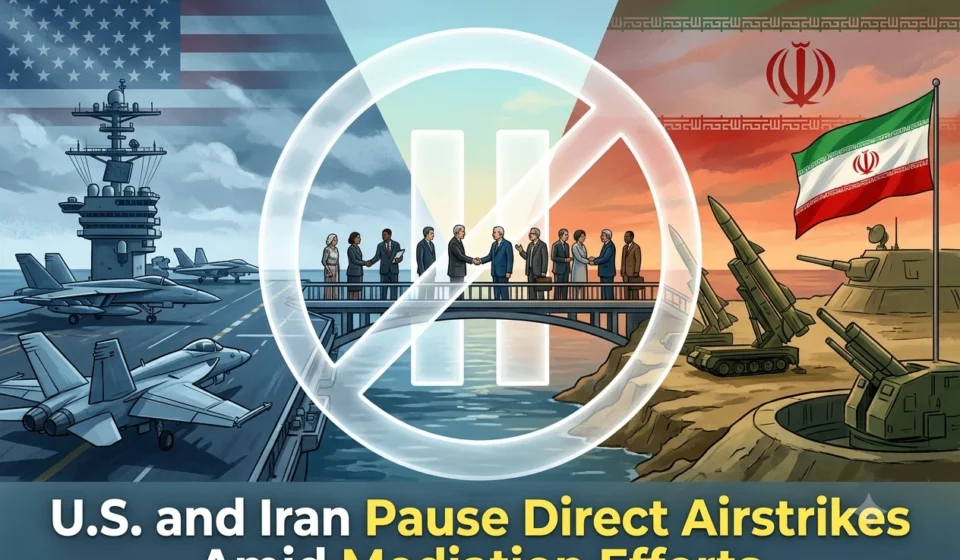

The pause in direct U.S. and Iran airstrikes on July 26, 2026 has created a narrow opening for diplomacy across West Asia, but the atmosphere remains tense as naval blockades, drone activity, and missile exchanges continue around the Strait of Hormuz. For millions of people living near conflict zones and for families watching global events unfold from afar, this moment represents both relief and uncertainty. We are seeing a temporary reduction in the most dangerous form of confrontation, while deeper security concerns remain unresolved.
A Temporary Break After Weeks of Escalation
The latest pause follows intensive mediation efforts involving regional and international diplomatic channels aimed at preventing further military escalation. The halt in direct airstrikes does not represent a complete settlement between Washington and Tehran, but it provides a critical window for negotiations and communication.
I view this pause as a moment of caution rather than a clear turning point. History shows that temporary military pauses can create opportunities for dialogue, but they can also collapse quickly when underlying disputes remain active. The current situation reflects a wider struggle involving regional influence, maritime security, energy routes, and competing strategic interests.
The Strait of Hormuz remains at the center of global attention because it is one of the world’s most significant energy shipping corridors. Any disruption in this area can affect fuel markets, shipping costs, and economic confidence far beyond West Asia. Businesses, governments, and ordinary consumers are closely watching whether the current diplomatic efforts can prevent another surge in instability.
Diplomatic Mediation Takes Center Stage
The temporary pause has shifted attention from military operations toward negotiations. Diplomatic teams are working to maintain communication channels and reduce the possibility of miscalculations that could trigger renewed attacks.
International organizations have repeatedly stressed the importance of dialogue during periods of heightened military tension. The United Nations has long supported diplomatic approaches to international conflicts, particularly when civilian populations face growing risks from armed confrontations.
For mediators, the challenge is balancing immediate security concerns with the broader political disagreements that have fueled tensions between the United States and Iran. Any lasting arrangement would likely require discussions about military activities, regional alliances, maritime access, and methods to avoid accidental clashes.
Why the Pause Matters for Civilians
Behind every military announcement are communities experiencing the human effects of conflict. Families near strategic locations often live with uncertainty, listening for warning signals and preparing for sudden changes in security conditions.
A pause in airstrikes can provide relief for residents who have endured fear, displacement, and disruption. It can allow humanitarian groups to assess needs, support affected communities, and restore essential services where possible. However, continued naval restrictions and drone or missile incidents mean many people remain cautious about what comes next.
The Strait of Hormuz Remains a Major Flashpoint
The continuing maritime tensions around the Strait of Hormuz are a reminder that the conflict has multiple layers. Even without direct air campaigns, naval movements and shipping restrictions can create serious risks for regional stability.
Commercial vessels traveling through important waterways depend on predictable security conditions. Any prolonged uncertainty can influence insurance costs, shipping schedules, and international trade patterns. Energy markets are especially sensitive because disruptions in this region can quickly affect global supply expectations.
Governments across Asia, Europe, and North America are monitoring developments because energy security and economic stability are closely connected to the security of major shipping routes. The International Energy Agency provides analysis on global energy markets and the challenges that supply disruptions can create.
Regional Allies Watch for the Next Steps
The pause between the United States and Iran also carries consequences for neighboring countries. Nations across the region must assess how the diplomatic shift affects their own security planning, economic activity, and relationships with major powers.
Some governments may see the pause as a chance to encourage further negotiations, while others may remain concerned that tensions could return if discussions fail. Regional leaders are likely to focus on preventing attacks that could expand the conflict beyond current boundaries.
We should also recognize that modern conflicts are rarely limited to one battlefield. Cyber operations, economic pressure, information campaigns, and indirect military actions can continue even when major air operations stop. The current pause reduces one immediate danger, but it does not remove the wider competition shaping regional politics.
What Happens Next Could Define the Crisis
The coming days will be closely watched as negotiators attempt to maintain the pause and move toward more stable arrangements. The key test will be whether all sides can reduce hostile actions while creating enough trust for meaningful talks.
Several factors will influence the outcome:
- Whether diplomatic channels remain active and produce measurable progress
- Whether maritime tensions around the Strait of Hormuz decrease
- Whether regional groups and allied forces avoid actions that could restart escalation
- Whether humanitarian concerns receive greater attention during the pause
A successful diplomatic effort would not only prevent renewed airstrikes but could also create a foundation for broader regional discussions. A breakdown, however, could quickly return the situation to a cycle of retaliation and uncertainty.
A Fragile Opportunity for Peaceful Resolution
The pause in direct U.S. and Iran airstrikes offers a rare moment when diplomacy has room to operate. It is a reminder that even during severe conflicts, communication remains one of the most powerful tools available to governments seeking to avoid further destruction.
For people across West Asia and around the world, the hope is simple: fewer sirens, safer communities, and a future where disputes are managed through negotiation rather than military escalation. The current calm is fragile, but it provides an opportunity that leaders cannot afford to waste.
We will continue watching whether this pause becomes the beginning of a broader diplomatic process or only a brief interruption in a dangerous confrontation. The decisions made during this period may shape regional security for years to come.