
US Retaliatory Air Strikes Announced on Social Media After Strait of Hormuz Shipping Attacks

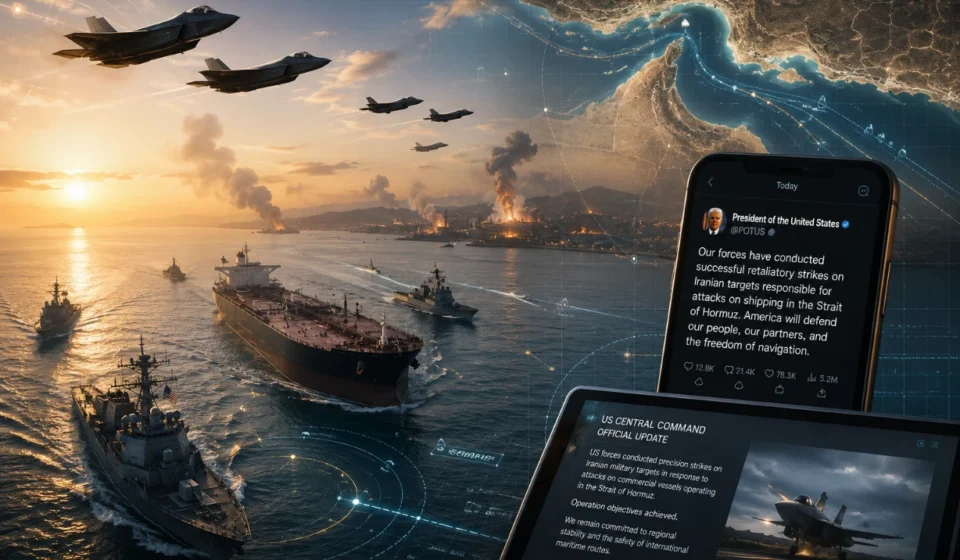
The United States entered another tense chapter in its confrontation with Iran after attacks on commercial shipping in the Strait of Hormuz triggered a swift military response. During July 8 and July 9, 2026, President Donald Trump revealed that the United States had launched retaliatory air strikes through a post on Truth Social, marking yet another moment where social media served as the first channel for a major national security announcement. Soon afterward, US Central Command published additional operational details on X, providing official confirmation that military action had taken place.
We have seen governments use digital platforms for diplomacy, crisis communication, and emergency updates for years. Even so, announcing active military operations through social media continues to raise questions about transparency, strategic messaging, public confidence, and the speed at which information now shapes international events. The latest developments highlight how official communication has evolved alongside modern technology while military decisions remain rooted in complex geopolitical realities.
What Triggered the US Military Response?
The immediate catalyst was a series of reported attacks targeting commercial shipping in the Strait of Hormuz, one of the most strategically important waterways in the global economy. Every day, massive quantities of crude oil and liquefied natural gas pass through this narrow maritime corridor, making any disruption a matter of worldwide concern.
American officials described the attacks as a direct threat to freedom of navigation and international commerce. The administration argued that failing to respond could encourage additional assaults against civilian vessels operating in international waters. Within hours of the reported incidents, President Trump stated on Truth Social that retaliatory strikes had been ordered against selected targets inside Iran.
The announcement spread rapidly across digital platforms before traditional government briefings had fully unfolded, illustrating how social media has become a primary source of breaking geopolitical news.
Truth Social Became the First Official Announcement
Rather than waiting for a televised address or a Pentagon press conference, President Trump informed the public through Truth Social. His message declared that American forces had carried out precision strikes in response to what the administration viewed as Iranian aggression against maritime traffic.
The decision reflected a communication style that has become familiar during Trump’s political career. Direct posts allow the President to bypass conventional media channels and communicate immediately with supporters, journalists, investors, foreign governments, and military observers.
While supporters argue that this approach promotes speed and transparency, critics maintain that sensitive military operations traditionally benefit from carefully coordinated public messaging that minimizes confusion during rapidly developing situations.
US Central Command Confirmed the Operation on X
After the President’s initial announcement, US Central Command released official statements through its verified account on X. Those updates confirmed that American forces had conducted retaliatory strikes against designated targets connected with Iranian military capabilities.
The command outlined the purpose of the operation while stressing that the mission focused on reducing threats to international shipping and protecting regional stability. The official updates also reinforced that military planners sought to limit broader escalation while maintaining operational effectiveness.
Information published through verified military accounts has increasingly become part of crisis communication strategy. During rapidly changing security events, these platforms provide near real time updates that can reach audiences across the globe within minutes.
Why the Strait of Hormuz Matters
The Strait of Hormuz remains one of the most significant maritime passages anywhere in the world. Its geographic position connects major Gulf oil producers with international markets across Asia, Europe, and North America.
Any disruption in this narrow channel can influence global energy prices, shipping insurance costs, commercial logistics, and investor confidence. Security concerns in the region often extend far beyond military considerations because financial markets closely monitor developments affecting energy supplies.
- Large volumes of global oil exports travel through the waterway.
- Commercial cargo vessels rely on uninterrupted access for international trade.
- Regional military activity can influence worldwide energy markets.
- Shipping disruptions often increase transportation and insurance expenses.
Additional background about the strategic importance of the region is available through the US Energy Information Administration, which regularly tracks major global energy transit routes.
Social Media Is Changing Military Communication
Military announcements once arrived through carefully scheduled press conferences, formal written statements, or televised presidential speeches. Today, digital platforms frequently serve as the first public record of significant government decisions.
We are witnessing a communication environment where official information competes with eyewitness videos, satellite imagery, independent analysts, and rapidly spreading online speculation. This creates opportunities for governments to communicate directly with citizens, yet it also increases the challenge of separating verified information from misinformation during unfolding crises.
For journalists, investors, diplomats, and ordinary citizens, monitoring verified government accounts has become an essential part of following international security developments.
Potential Regional and Global Consequences
The retaliatory strikes immediately renewed concerns about broader instability across the Middle East. Although American officials described the operation as limited and targeted, any military action involving the United States and Iran carries the possibility of additional escalation.
Regional allies are expected to monitor the situation closely while commercial shipping companies evaluate security conditions before routing vessels through the Gulf. Financial markets may also react to changing expectations surrounding oil production and transportation.
Diplomatic engagement remains an important factor. Governments across Europe, Asia, and the Middle East have historically encouraged restraint whenever tensions rise between Washington and Tehran because wider conflict could affect international trade and regional security.
Information Moves Faster Than Ever During International Crises
One defining feature of this episode is the remarkable speed with which official announcements reached global audiences. A presidential social media post was quickly followed by confirmation from a unified military command, allowing millions of people to receive updates almost instantly.
That same speed, however, increases the responsibility placed upon readers, reporters, and policymakers to verify facts before drawing conclusions. Early reports during military operations often change as additional intelligence becomes available and governments release more detailed assessments.
Reliable public information remains essential during international emergencies. Official updates from organizations such as US Central Command help establish verified timelines while independent reporting continues to provide additional context.
What Comes Next?
The coming days are likely to focus on whether the retaliatory strikes achieve their intended objective without triggering a wider military confrontation. Analysts will closely examine diplomatic responses, maritime security measures, energy market movements, and any further statements issued by American and Iranian officials.
We also expect renewed discussion about the growing role of social media in national security communication. The events of July 8 and July 9, 2026, demonstrate that digital platforms are no longer simply tools for public engagement. They have become central channels through which governments announce military decisions, shape international narratives, and communicate directly with audiences around the world.
For citizens, businesses, and policymakers alike, the intersection of military operations, global commerce, and instant digital communication is becoming impossible to ignore. As events continue to unfold, verified information, careful analysis, and measured diplomacy will remain essential for understanding both the immediate consequences and the longer term implications of this rapidly developing situation.