

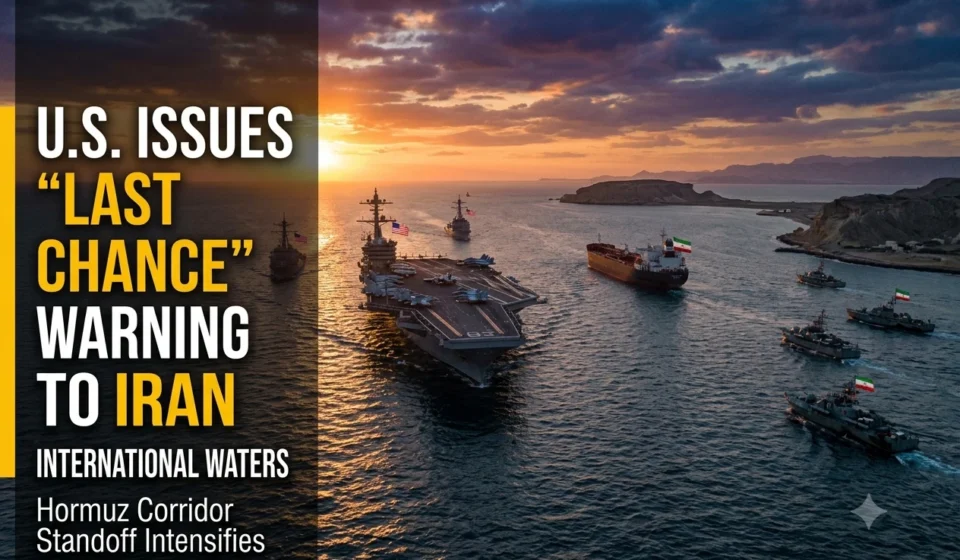

The balance of security across one of the world’s most strategic waterways shifted again on Aug 4, 2026, after senior United States leadership delivered what it described as a final opportunity for Iran to reach a diplomatic agreement before facing the possibility of broader consequences. At nearly the same moment, Tehran announced new maritime transit routes through the Strait of Hormuz in coordination with Oman, adding another layer of uncertainty to a corridor that carries a significant share of global energy shipments. The latest developments have renewed concerns among governments, shipping companies, energy markets, and millions of people whose daily lives are tied to stable fuel supplies and uninterrupted international trade.
Diplomatic pressure reaches a critical stage
The new warning from Washington signals that negotiations have entered a decisive period. Officials indicated that diplomacy remains the preferred path, yet the language surrounding the latest statement was notably firmer than previous public messaging. Calling the current phase a final opportunity reflects growing frustration over unresolved disputes that have stretched across multiple rounds of indirect discussions.
While neither side has publicly detailed every condition under consideration, the broader issues include regional security, maritime safety, sanctions, and confidence building measures. Each of these topics carries consequences that extend well beyond the Persian Gulf, affecting allies, commercial shipping operators, and international financial markets.
Diplomatic language often serves several audiences at once. Messages directed toward negotiating partners are also heard by allies, rivals, investors, and citizens. This latest warning appears intended to demonstrate resolve while still leaving room for negotiations before additional actions become necessary.
Iran introduces new maritime transit routes with Oman
Iran responded by announcing updated maritime transit arrangements through the Strait of Hormuz alongside Oman. Officials described the routes as part of efforts to improve navigation management and maritime coordination in one of the busiest shipping passages anywhere in the world.
The announcement immediately attracted international attention because even modest operational changes within the strait can influence shipping schedules, insurance assessments, and commercial planning. Shipping firms carefully monitor navigation guidance in narrow waterways where large oil tankers, liquefied natural gas carriers, and container vessels operate in close proximity.
Oman’s involvement also carries diplomatic significance. The country has long maintained a reputation as a regional bridge between competing governments and has frequently supported dialogue during periods of heightened tension. Whether the newly announced routes are viewed primarily as operational improvements or as strategic messaging will likely depend on how events unfold over the coming days.
Why the Strait of Hormuz matters to the global economy
The Strait of Hormuz remains one of the most important maritime corridors on Earth. A substantial portion of internationally traded crude oil and natural gas passes through its waters before reaching markets across Asia, Europe, and beyond. Any uncertainty surrounding navigation quickly attracts the attention of traders, policymakers, and manufacturers.
For ordinary households, the consequences can appear far removed until fuel prices begin changing. Higher transportation costs can ripple across supply chains, influencing the price of groceries, manufactured goods, airline travel, and industrial production. Businesses that rely on predictable shipping schedules also face increased planning challenges whenever regional tensions rise.
Readers seeking additional background on the strategic importance of global maritime trade can explore resources published by the International Maritime Organization, which provides information on shipping safety and international navigation standards.
Energy markets react with caution
Financial markets often respond quickly to developments involving the Strait of Hormuz, even before any physical disruption occurs. Investors tend to price in potential risks when diplomatic relations deteriorate, especially if shipping lanes could become more difficult to navigate.
Energy analysts will closely monitor several indicators over the coming days.
- Movements in international crude oil prices.
- Insurance premiums for commercial vessels.
- Shipping schedules through Gulf ports.
- Official statements from regional governments and international organizations.
History shows that markets sometimes react more strongly to uncertainty than to confirmed disruptions. Even when shipping continues normally, concern about possible future restrictions can influence prices across global exchanges.
Regional partners watch developments carefully
Neighboring Gulf states continue to balance economic priorities with national security concerns. Stable shipping remains essential for energy exports, commercial investment, and long term development plans throughout the region. Governments are therefore likely to encourage continued diplomatic engagement while preparing contingency measures should tensions increase.
International naval forces operating in nearby waters also maintain close observation of commercial traffic. Their presence is generally intended to support safe navigation and reassure shipping companies that critical trade routes remain open.
Regional diplomacy has become increasingly complex in recent years, with governments seeking both stronger economic cooperation and mechanisms to reduce the risk of military confrontation. Those parallel goals may shape the next phase of negotiations.
The human impact often receives less attention
Beyond political headlines, maritime tensions affect thousands of people whose work depends on secure sea routes. Merchant sailors spend weeks or months aboard commercial vessels carrying fuel, food, medicine, and consumer goods. Port workers, logistics specialists, truck drivers, refinery employees, and exporters all depend upon predictable shipping conditions.
Families living throughout the Gulf region also experience uncertainty whenever geopolitical disputes intensify. Businesses delay investment decisions, tourism may slow, and communities become increasingly attentive to official announcements. While diplomatic negotiations often focus on governments, their outcomes ultimately influence everyday lives far beyond negotiating rooms.
Diplomacy remains the preferred path despite stronger rhetoric
Although the latest statements have adopted tougher language, experienced diplomats recognize that public warnings do not necessarily signal the end of negotiations. Throughout modern international relations, governments have frequently combined firm public positions with ongoing private discussions.
The coming days may therefore include additional diplomatic contacts through direct meetings, intermediaries, or regional partners. Oman has historically played an important role in facilitating communication during periods when direct engagement proved difficult.
International observers will also watch for responses from European governments, Gulf Cooperation Council members, and the United Nations. Broader international engagement could help create additional opportunities for dialogue if both principal parties remain willing to negotiate.
Readers interested in current diplomatic initiatives and international peace efforts can follow updates through the United Nations News platform, which regularly reports on developments involving global security and diplomacy.
What comes next
Several possible paths remain open following the latest exchange. Negotiators could return to discussions with renewed urgency, reducing immediate concerns over maritime security. Another possibility involves prolonged diplomatic deadlock accompanied by continued political pressure and heightened military readiness. A third scenario would see additional confidence building measures aimed at preserving freedom of navigation while broader political disagreements continue.
Much will depend upon whether both governments view the current moment as a genuine opportunity for compromise or as part of a broader strategy to strengthen their negotiating positions. Public statements often represent only a portion of ongoing diplomatic activity taking place behind closed doors.
Global attention remains fixed on a narrow waterway with enormous influence
The Strait of Hormuz occupies only a small space on the map, yet its influence reaches nearly every continent through global commerce and energy supply. The latest warning from the United States and Iran’s announcement of new transit routes underscore how closely diplomacy, maritime security, and economic stability remain connected.
For now, commercial vessels continue navigating the corridor while governments assess the rapidly developing situation. Investors, policymakers, and citizens alike will be watching carefully for signs that dialogue can reduce tensions before they evolve into a broader regional crisis. The choices made during the coming days may shape not only relations between Washington and Tehran but also confidence across international shipping lanes that support the modern global economy.