
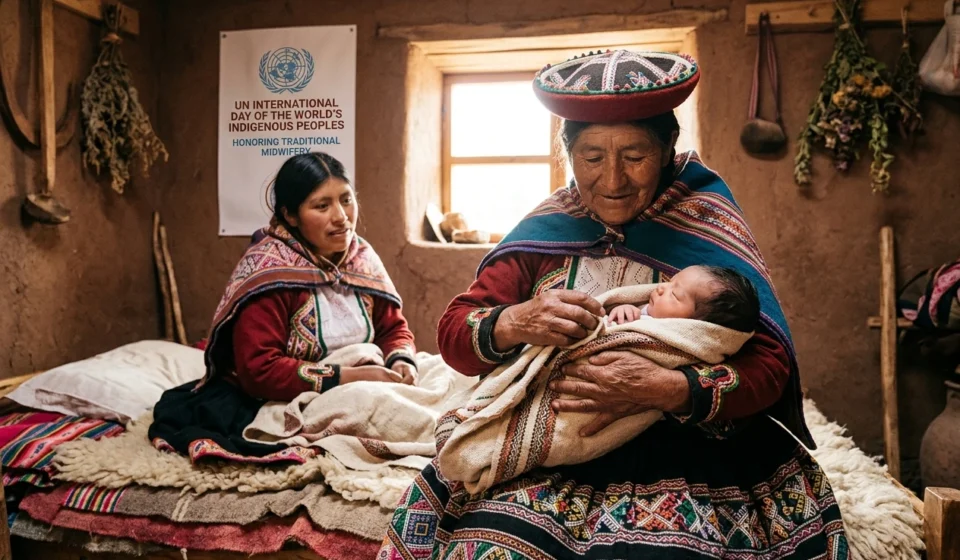

On August 10, 2026, the United Nations is placing Indigenous midwives at the heart of International Day of the World’s Indigenous Peoples, recognizing their longstanding role in protecting mothers, newborns, families, and community health. This year’s theme, “Honouring Indigenous Midwives: Safeguarding Life and Well Being,” calls attention to a form of care rooted not only in childbirth, but also in culture, community trust, traditional knowledge, and the transmission of wisdom between generations.
Why the United Nations Is Spotlighting Indigenous Midwives
For many Indigenous communities, a midwife is far more than a person who assists during delivery. She may be a trusted caregiver, counselor, teacher, community leader, and keeper of knowledge passed from one generation to another. Her work can connect pregnancy and childbirth with language, family traditions, spiritual practices, local foods, and community relationships.
The United Nations says Indigenous midwifery can support physical, cultural, spiritual, and community dimensions of well being. The organization is using the 2026 observance to draw attention to the value of these knowledge systems while also highlighting the discrimination and structural barriers that Indigenous midwives can face.
The UN’s official observance for August 10 includes a global discussion focused on Indigenous midwifery, culturally appropriate approaches to health, and policy measures that can protect Indigenous led systems of care and knowledge transmission. The event is intended to move the conversation beyond symbolic recognition toward stronger support for Indigenous communities.
Readers can follow the United Nations’ broader work on Indigenous Peoples through the United Nations, including its programs addressing Indigenous rights, health, culture, and sustainable development.
Traditional Midwifery Carries Knowledge Built Over Generations
Across Indigenous societies, childbirth knowledge has often been developed through close observation of pregnancy, birth, recovery, infant care, nutrition, and the needs of families. This knowledge can include practical methods for supporting women during labor, recognizing changes in a mother’s condition, caring for newborns, and helping families through the early weeks after birth.
That knowledge is frequently transmitted through relationships rather than formal classrooms. An experienced midwife may teach a younger woman by allowing her to observe births, learn local practices, listen to elders, and gradually assume greater responsibility. The result is a living system of knowledge that can remain closely connected to the community it serves.
For Indigenous families living far from hospitals or major medical centers, trusted local caregivers can also be an important bridge to formal health services. A midwife who understands the language and customs of a community may be better positioned to communicate health concerns, encourage prenatal care, recognize warning signs, and help a mother reach higher level medical treatment when complications arise.
Traditional Knowledge and Modern Medicine Can Work Together
The UN’s recognition of Indigenous midwives does not mean that every traditional practice is automatically safe or that traditional care should replace emergency medical treatment. The more practical lesson is that community knowledge and modern medicine can work together when health systems respect cultural identity while maintaining clear standards for safety.
The World Health Organization has repeatedly highlighted the value of midwifery care when midwives are properly educated, regulated, supported, and integrated into health systems. WHO says quality midwifery can improve maternal and newborn outcomes and reduce unnecessary medical interventions. Its global guidance also supports models in which midwives provide continuous care while working with doctors and other specialists when complications require additional expertise.
That approach can be especially meaningful for Indigenous communities. A health system does not have to choose between cultural respect and clinical safety. It can create referral systems in which traditional midwives remain trusted members of the community while hospitals and professional health workers provide emergency and specialized care when necessary.
The Maternal Health Challenge Remains Global
The focus on midwives comes at a time when maternal and newborn health remains a major international concern. Pregnancy and childbirth can be safe for most women when appropriate care is available, yet preventable complications continue to claim lives, particularly where health services are difficult to reach or under resourced.
WHO reports that educated midwives working within supportive health systems can provide a large share of essential sexual, reproductive, maternal, newborn, and adolescent health services. The organization also identifies midwifery as an important part of efforts to improve respectful and person centered maternity care.
For Indigenous women, however, access is not simply a question of distance to a clinic. Cultural safety, language, discrimination, trust, affordability, and whether a woman feels respected during treatment can all influence whether she seeks care and remains connected to health services.
That makes Indigenous midwives particularly significant. Their presence can help reduce the cultural distance between communities and formal health systems while giving women greater confidence that their identity and choices will be respected.
Indigenous Women Need a Voice in Decisions About Their Care
The 2026 UN observance also raises a broader question about who gets to make decisions about maternal health. Indigenous women should not be treated simply as recipients of policies designed somewhere else. Their experiences and knowledge should inform the policies that affect pregnancy, childbirth, reproductive health, and family life.
That means governments and health organizations need meaningful consultation with Indigenous women, midwives, elders, community leaders, and health professionals. It also means collecting reliable health data that identifies inequalities without reducing Indigenous communities to statistics.
Better data can reveal where maternal deaths, newborn complications, inadequate prenatal care, or barriers to emergency services are concentrated. But data alone cannot solve those problems. Communities need resources, trained personnel, transportation, respectful facilities, and health systems capable of responding when a routine birth becomes an emergency.
Protecting Midwives Also Protects Cultural Continuity
One of the strongest messages behind this year’s observance is that Indigenous midwifery is connected to cultural survival. When an experienced midwife teaches a younger generation, she may be passing on far more than techniques associated with childbirth. She can also transmit language, stories, family traditions, local knowledge, and a sense of responsibility to the wider community.
When such knowledge disappears, replacing it can be extremely difficult. Discrimination, criminalization, lack of recognition, inadequate funding, and the exclusion of traditional practitioners from health policy can weaken systems that have served communities for generations.
The UN has therefore framed Indigenous midwives as knowledge holders as well as health caregivers. That distinction matters. Recognition is not only about celebrating the past. It is also about creating conditions in which younger generations can continue learning, practicing, and adapting community knowledge safely.
What Governments and Health Systems Can Do
The discussion surrounding Indigenous midwives points toward several practical priorities for governments and health organizations.
- Recognize Indigenous midwives and traditional birth workers within appropriate national health policies.
- Provide access to training that strengthens emergency recognition, infection prevention, maternal care, and newborn safety while respecting Indigenous knowledge.
- Create reliable referral pathways between community midwives, clinics, hospitals, and emergency services.
- Include Indigenous women and community representatives in maternal health policy decisions.
- Protect Indigenous knowledge from discrimination while ensuring that unsafe practices are addressed through respectful education and evidence based care.
- Invest in maternal health services in remote and underserved Indigenous communities.
These measures do not require communities to abandon their traditions. Instead, they can help create a health system in which traditional knowledge is respected while mothers and newborns have access to timely clinical treatment when it is needed.
A Wider Lesson for Maternal Health
The United Nations’ focus on Indigenous midwives offers a broader lesson about how maternal health should be approached. Safe childbirth is not only about medical technology. It is also about trust, dignity, communication, continuity of care, and whether women feel heard.
A quiet room, a familiar voice, a trusted caregiver, and knowledge of local customs can matter deeply to a woman giving birth. At the same time, access to skilled medical professionals and emergency treatment can mean the difference between a manageable complication and a tragedy. Strong maternal health systems should make room for both realities.
WHO’s work on midwifery similarly points toward care that places women and newborns at the center while connecting midwives with broader health teams. Its guidance stresses education, professional support, continuity, respectful treatment, and effective collaboration when specialist care is required. More information is available through the World Health Organization.
Why August 10 Matters Beyond One Day
The International Day of the World’s Indigenous Peoples can easily become a single date on the global calendar. This year’s focus on Indigenous midwives gives it a more immediate human dimension. Every pregnancy represents a family waiting for a safe arrival, and every birth carries the hopes of a community.
By honoring Indigenous midwives, the United Nations is drawing attention to people whose work has often remained outside mainstream health policy despite its importance. The recognition also challenges governments to consider whether their maternal health systems genuinely serve Indigenous women with dignity, cultural respect, and equitable access to care.
The strongest outcome of the 2026 observance will not be the ceremony itself. It will be whether recognition leads to lasting support for Indigenous midwives, better cooperation between traditional and formal health services, stronger protections for Indigenous knowledge, and greater investment in the mothers and newborns who depend on these systems.
For communities that have carried birth knowledge across generations, the message is powerful: traditional knowledge has a place in the future of health care when it is respected, supported, and connected to safe clinical practice. Honoring Indigenous midwives therefore means more than looking back at an ancient tradition. It means recognizing the people who continue to safeguard life today.