

Moderna has begun Phase 1 human testing of an experimental mRNA vaccine designed to protect against Bundibugyo ebolavirus, a strain for which no licensed vaccine currently exists. The move brings a promising vaccine candidate into human testing at a moment when health officials are confronting a serious outbreak in Central Africa and a critical gap in available medical countermeasures.
Moderna Begins First Human Trial of Bundibugyo Ebola Vaccine
The vaccine candidate, known as mRNA 1469, is being tested in Canada after Health Canada authorized the Phase 1 study. The trial is expected to enroll about 80 healthy adults across three Canadian sites, with researchers examining whether the vaccine is safe, well tolerated and capable of generating an appropriate immune response.
For us, the significance of the trial goes beyond another entry in the vaccine development pipeline. Ebola outbreaks can move quickly through communities where health systems already face shortages of staff, protective equipment and specialized treatment capacity. A vaccine that could be deployed against the Bundibugyo strain would address a vulnerability that has remained particularly difficult for public health authorities.
Moderna is using the same basic messenger RNA platform that helped establish its position during the COVID 19 pandemic. Rather than delivering a weakened or inactivated virus, an mRNA vaccine provides cells with temporary genetic instructions for producing a specific viral protein. The immune system can then learn to recognize that protein and prepare defenses against the actual pathogen.
Why the Bundibugyo Strain Presents a Distinct Challenge
Ebola is not a single uniform virus. The disease is caused by several related orthoebolaviruses, and protection against one species cannot automatically be assumed to protect against another. The World Health Organization currently lists Ebola virus, Sudan virus, Taï Forest virus and Bundibugyo virus among the species known to cause human disease.
That distinction matters in the current outbreak. The licensed Ervebo vaccine protects against Ebola virus, also known as Zaire ebolavirus, but there is currently no licensed vaccine specifically approved for Bundibugyo virus disease. The World Health Organization’s current Ebola vaccine guidance states that evidence is insufficient to establish that Ervebo provides protection against Bundibugyo virus.
That leaves health authorities with a difficult problem. A vaccine that has proved effective against one Ebola species cannot simply be treated as a universal Ebola vaccine. Scientists must establish whether a candidate targeting Bundibugyo can safely produce the immune response needed to prevent disease.
What Phase 1 Testing Can and Cannot Tell Us
The launch of a Phase 1 trial is an important scientific milestone, but it is not evidence that mRNA 1469 has been proven effective against Ebola. Early clinical testing is primarily designed to establish safety and tolerability while giving researchers an initial picture of the immune response.
Participants in the Canadian study are healthy volunteers. They will be closely monitored for adverse reactions and changes in immune markers after vaccination. Researchers will use those results to determine how the candidate should progress into larger studies.
The distinction is especially important during an active outbreak. People living in affected regions need protection as quickly as possible, but moving a vaccine into widespread use before sufficient evidence exists could create its own risks. The challenge is therefore to move rapidly without sacrificing the scientific and ethical standards required for a vaccine intended for large populations.
The development path ahead
If the Phase 1 findings are encouraging, later trials will need to involve substantially larger groups and provide stronger evidence about immune responses, dosing and protection. Depending on the epidemiological situation and regulatory pathway, researchers may also need to evaluate the vaccine in populations and settings that more closely resemble those facing the disease burden.
That process can take considerable time. Yet outbreak driven vaccine development has one advantage that traditional research programs do not: urgency can encourage governments, manufacturers, researchers and international organizations to prepare manufacturing capacity while clinical evidence is still being generated.
CEPI Is Supporting the Vaccine’s Rapid Development
The Coalition for Epidemic Preparedness Innovations has committed up to $50 million to support Moderna’s Bundibugyo vaccine program, including preclinical work, Phase 1 clinical testing and manufacturing preparations. The partnership is designed to avoid a familiar problem in outbreak response, where researchers prove that a vaccine might work but production capacity is not ready when demand suddenly appears.
CEPI has described the mRNA approach as attractive because the platform can be adapted relatively quickly when researchers identify a new infectious disease threat. The organization is also supporting other Bundibugyo vaccine approaches, including candidates based on viral vector technology.
That broader portfolio matters. No single experimental vaccine should be treated as the guaranteed answer to an outbreak. Different platforms carry different scientific advantages, manufacturing requirements and uncertainties. Testing several approaches can improve the chances that at least one candidate eventually produces strong protection.
The Coalition for Epidemic Preparedness Innovations has said it intends to support rapid progression of promising candidates toward larger clinical studies and manufacturing, reflecting the need to prepare doses before an epidemic grows beyond the capacity of local health systems.
Why mRNA Technology Could Matter During Future Ebola Outbreaks
The most compelling feature of the Moderna candidate may be the flexibility of the platform itself. Traditional vaccine development can require lengthy work to establish production processes for each pathogen. An established mRNA manufacturing system can potentially be adapted to produce a different vaccine after researchers identify the genetic sequence needed to target a pathogen.
That does not mean an mRNA Ebola vaccine can be created overnight. Scientists still need laboratory studies, animal research, clinical trials, manufacturing validation and regulatory review. Safety must be demonstrated, immune responses must be characterized and the final product must be manufactured consistently at scale.
But the experience gained from COVID 19 showed that mRNA technology can move from genetic sequence to human testing and large scale production on an unusually compressed timetable when scientific, industrial and regulatory resources are aligned.
For diseases that appear unpredictably and can spread rapidly, that flexibility could become a major public health asset.
The Human Cost Behind the Scientific Race
It is easy to describe a Phase 1 trial through technical terms such as immunogenicity, dosing and tolerability. Behind those terms are communities facing fever, fear and the disruption of ordinary life.
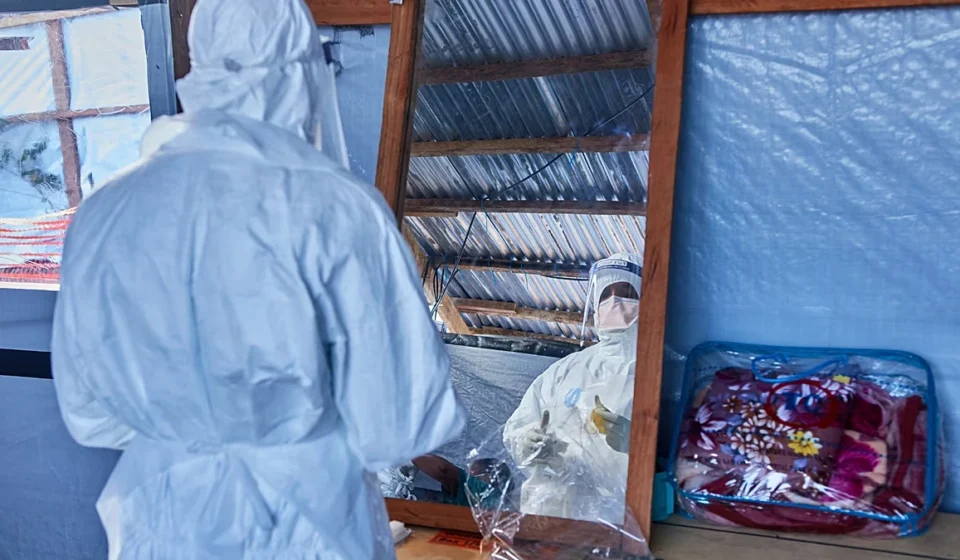
Ebola outbreaks can place enormous pressure on families and health workers. Hospitals may become places of both hope and danger, while protective clothing, isolation procedures and infection control measures alter the most basic interactions between patients and caregivers. Health workers can face the virus repeatedly while caring for people who are already severely ill.
For those communities, the value of a successful vaccine would not be measured primarily in laboratory results. It would be measured in fewer infections, fewer funerals and fewer health workers forced to choose between protecting themselves and caring for patients.
A Critical Test for Global Outbreak Preparedness
The Moderna trial also highlights a broader lesson from recent infectious disease emergencies. Scientific preparedness cannot begin only after an outbreak has become a crisis.
Researchers need candidate vaccines before outbreaks occur. Manufacturers need production systems that can be activated quickly. International organizations need financing mechanisms that can move money without long delays. Governments need clinical trial infrastructure and public health networks capable of operating under pressure.
CEPI’s work on Bundibugyo vaccines reflects that model. Rather than waiting for a single candidate to emerge, the organization is supporting multiple technological approaches while encouraging manufacturing preparations to proceed alongside early research.
The approach carries financial and scientific risks because some candidates will fail. Yet that is inherent in epidemic preparedness. A vaccine platform that is never needed may appear expensive in a quiet year, while the absence of a ready vaccine can become enormously costly when an outbreak arrives.
What Comes Next for Moderna’s Ebola Vaccine
For now, the central question is straightforward: can mRNA 1469 safely generate an immune response against Bundibugyo ebolavirus that is strong enough to justify further development?
The Phase 1 trial cannot answer the entire question. It is the first human step in a much longer process. Results will determine whether the candidate moves toward larger trials, further laboratory research or modification.
Still, getting an experimental Bundibugyo vaccine into human testing represents meaningful progress. The current gap in licensed protection has made the search for a strain specific vaccine particularly urgent, while the mRNA platform offers a potentially rapid route from pathogen sequence to vaccine candidate.
As the trial unfolds, the most responsible measure of progress will be evidence rather than expectation. A successful vaccine would need to demonstrate safety, generate a useful immune response, protect people in appropriately designed studies and ultimately reach the communities that face the greatest risk.
For the people living closest to Ebola outbreaks, that final step may matter most of all. Scientific progress becomes public health protection only when a proven vaccine can reach the people who need it, at the time they need it.