

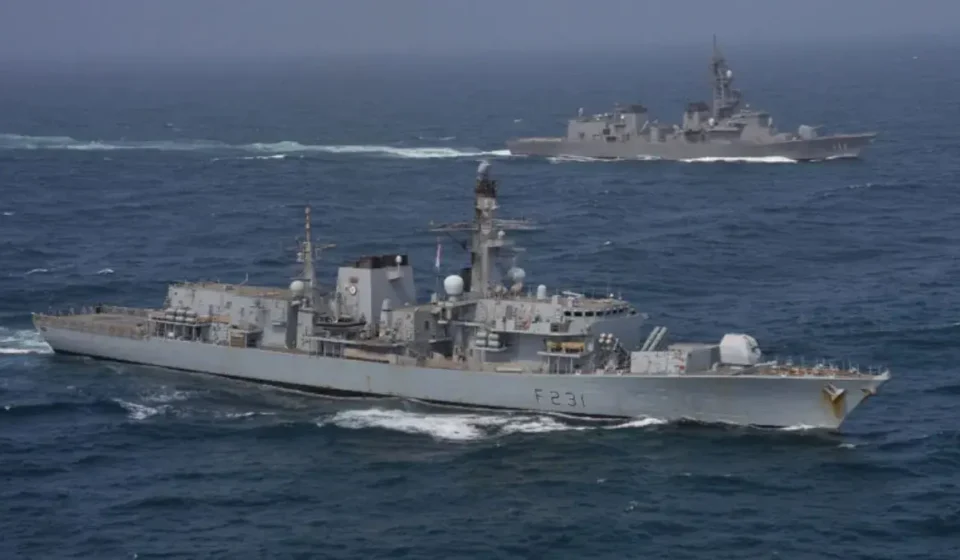

We watched the announcement land on Thursday with the kind of quiet weight that only comes from months of anxious waiting. After weeks of tanker attacks, a declared blockade, and mounting fear among shipowners and energy traders alike, Saudi Arabia and thirteen partner nations confirmed that their multinational maritime defense coalition is now fully operational. For the sailors piloting massive crude carriers through the Bab al Mandeb Strait, for the insurers pricing risk on every voyage, and for millions of ordinary people who never think about where their fuel comes from until prices spike, this is the moment the Red Sea got a formal line of defense.
What Actually Happened This Week
Following a planning session held in Riyadh on August 12 and 13, coalition members finalized the institutional framework that will govern joint patrols, intelligence sharing, and naval coordination across the Red Sea, the Bab al Mandeb Strait, and the Gulf of Aden. The gathering built on an earlier milestone: the appointment of Rear Admiral Abdullah bin Salem al Shehri to lead the alliance’s joint maritime defense operations, a move the Saudi Ministry of Defense confirmed a week prior. Saudi Arabia will host the coalition’s permanent headquarters, its General Secretariat, and its Joint Operations Coordination Center, cementing Riyadh’s role as the political and logistical anchor of the entire effort.
We think it is worth pausing on how quickly this moved. Fewer than three weeks separate the original joint statement from this week’s operational rollout, a pace that reflects just how urgent the situation on the water had become.
Why the Coalition Was Built Now
The timing is not incidental. On July 20, Yemen’s Houthi movement declared what it called a naval blockade against Saudi Arabia, a threat that followed a string of attacks on Saudi linked shipping and oil infrastructure in the port cities of Yanbu and Jizan. Egypt reported a drone strike on a vessel carrying liquefied natural gas, and tanker operators across the region began adjusting routes or delaying voyages entirely while they assessed the risk. Riyadh responded with airstrikes on Houthi positions in Hodeidah, but officials made clear that military retaliation alone would not restore confidence in the shipping lane.
We should also note the broader regional backdrop. With tensions between the United States and Iran continuing to disrupt traffic through the Strait of Hormuz, the Red Sea has taken on new significance as an alternative artery for oil exports. That dual pressure, a blockade threat on one side and a chokepoint crisis on the other, is precisely why energy analysts have been watching this corridor so closely, a dynamic detailed in the U.S. Energy Information Administration’s assessment of global oil transit chokepoints.
Mapping the Fourteen Member States
The coalition’s founding members include Saudi Arabia, Turkiye, Egypt, Pakistan, Jordan, Bahrain, Kuwait, Qatar, Djibouti, Somalia, Sudan, Bangladesh, Yemen, and the Comoros. Nigeria was named in earlier statements as well, underscoring the coalition’s reach beyond the immediate Red Sea littoral into wider African and South Asian partners with direct stakes in the shipping lane. Notably absent are the United Arab Emirates and Oman, both of which share Riyadh’s stated security goals but have so far declined to sign the charter, a gap that regional analysts continue to scrutinize.
Washington has not formally joined, though officials close to the process expect that could change once the coalition’s structure is fully tested. The European Union, which already runs its own Aspides naval protection mission in the Red Sea, sent observers to the founding talks but did not sign on, leaving open questions about how the two efforts will coordinate patrols, share intelligence, and avoid duplicating resources in an already crowded operational theater.
A Command Structure Built for Coordination, Not Confrontation
Saudi officials have gone out of their way to describe the alliance as purely defensive. The coalition’s mandate centers on four goals: strengthening maritime security, protecting freedom of navigation, securing trade and energy routes, and safeguarding shared maritime interests across the three key waterways. Its early activities will focus on surveillance, information sharing, joint exercises, and coordinated patrols rather than offensive operations, and the charter explicitly commits members to operate within international law and the United Nations framework.
We find that framing significant. A coalition built around deterrence and coordination, rather than combat, gives smaller member states like Djibouti or the Comoros a meaningful role without asking them to shoulder military risk they cannot afford. It also leaves the door open, as Saudi officials have repeated, for additional countries to join once they complete their own domestic approval processes.
What This Means for Global Trade and Everyday Prices
The Bab al Mandeb Strait and the Suez Canal together form one of the shortest maritime links between Asia, Europe, and the Mediterranean, carrying a substantial share of the world’s seaborne trade and a significant portion of global oil shipments. When Houthi activity disrupted traffic through the strait in recent weeks, vessel movement fell sharply, and Brent crude prices climbed past the one hundred dollar mark on fears that Saudi exports could be cut off from their primary alternative route while the Strait of Hormuz remains under pressure.
For shipping companies, this coalition offers something they have lacked for months: a predictable security framework they can factor into route planning and insurance calculations. For consumers far from the region, it matters just as much, since disruptions in this corridor tend to ripple quickly into fuel prices and the cost of goods that travel by sea. International maritime governance bodies, including the International Maritime Organization, have long emphasized that stability in chokepoints like this one underpins the reliability of global supply chains more broadly.
The Houthi Response and What Comes Next
The reaction from Yemen’s Houthi leadership has been defiant. In a televised address shortly before the coalition’s announcement, Houthi leader Abdul Malik al Houthi warned of what he called full escalation, vowing that Saudi Arabia would face an equally forceful response to any military buildup. That rhetoric raises the real possibility that coalition patrols could themselves become targets in the weeks ahead, a risk military planners are reportedly already factoring into deployment plans.
What we will be watching most closely in the coming weeks is whether the coalition’s information sharing and joint patrol commitments translate into a measurable drop in attacks, whether the United Arab Emirates and Oman eventually join the framework, and how coordination unfolds between this new alliance and existing missions like the European Union’s Aspides operation. None of these questions have easy answers yet. But for a shipping lane that carries a meaningful share of the world’s energy and goods, having fourteen nations formally committed to its protection marks a genuine turning point, even if the hardest work of proving the coalition’s effectiveness is only just beginning.