
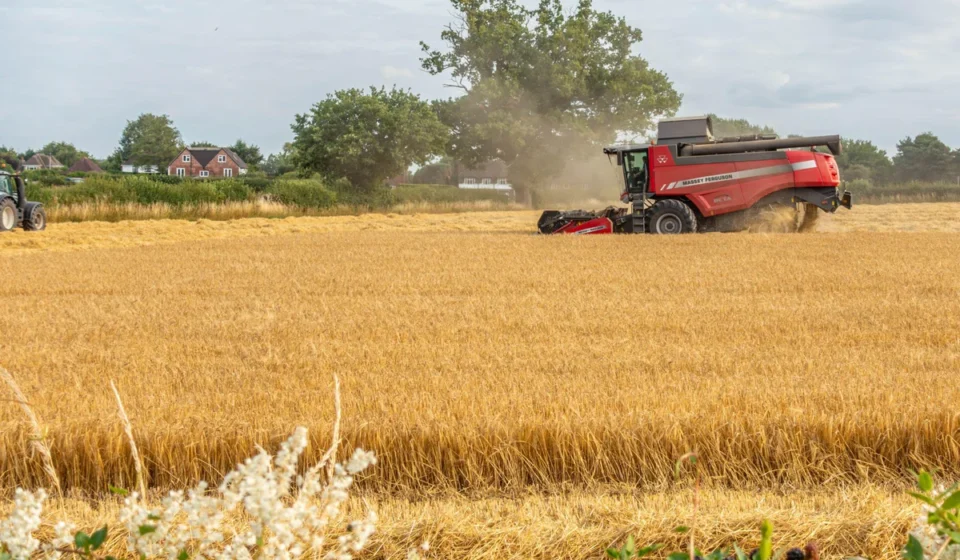

Europe’s brutal summer heat is moving from fields into food factories, with Finnish food producer Apetit warning that severe drought and heatwaves have damaged pea and vegetable harvests across Northern Europe. The setback is more than a farming problem. For processors that depend on predictable volumes of locally grown crops, a failed harvest can quickly become a supply chain problem, affecting factory utilization, product availability, farm incomes and, eventually, food prices.
Extreme Weather Is Hitting Europe’s Vegetable Supply
The warning from Apetit arrives after a summer of repeated heatwaves and unusually dry conditions across parts of Europe. Farmers have faced a difficult combination: temperatures high enough to accelerate crop development while rainfall has remained insufficient to replenish depleted soils.
For vegetables such as peas, the timing of heat and water shortages matters enormously. A crop can appear healthy early in the season and still suffer substantial losses when heat arrives during flowering, pod formation or other critical stages. Water stress can reduce plant growth, shorten development periods and leave produce below the size or quality required by food processors.
The European Commission’s Joint Research Centre has already reported widespread agricultural pressure from repeated heatwaves. Its July assessment found that exceptional heat and limited rainfall had depleted soil moisture across western and central Europe, affecting flowering and biomass accumulation in summer crops. Yield forecasts for several spring and summer crops were reduced, with particularly large revisions for grain maize and sunflowers.
Those conditions provide a wider context for Apetit’s warning. Although Northern European growing conditions differ from those in southern Europe, the broader pattern is increasingly difficult for agricultural businesses to ignore: extreme heat is no longer confined to the regions traditionally associated with drought risk.
Why Peas Matter to the Food Processing Industry
Peas may look like a small part of Europe’s food economy, but they occupy an important place in the frozen food supply chain. They are harvested within a relatively narrow window and must be processed rapidly to preserve quality. That creates a close relationship between farmers, transport operators, freezing facilities, packaging plants, retailers and consumers.
Apetit has a particular exposure to this system. The Finnish company produces frozen peas and vegetables and has identified frozen peas as one of the areas where it expects growth under its 2026 to 2028 strategy.
When harvest volumes fall, processors cannot simply replace every missing tonne overnight. Alternative suppliers may already have contracts with other buyers, while crops from other countries can face their own weather risks. Transportation also adds cost and complexity, particularly for frozen products that require controlled temperatures throughout the supply chain.
That makes a crop failure economically different from a temporary shortage of a single commodity. A processor can face higher raw material costs at the same time that factories, labor and distribution networks remain largely fixed. The result can be pressure on margins even before shoppers see a noticeable change on supermarket shelves.
A Warning Sign for Farmers and Food Manufacturers
Apetit’s situation also illustrates how climate volatility can affect companies that do not directly control agricultural production. Food manufacturers depend on farmers, but farmers operate under weather conditions that can change rapidly from one growing season to the next.
The company’s existing financial outlook was already under pressure earlier this year. Apetit reported that its operating result had declined in the first quarter of 2026 and said in April that its full year operating result was expected to clearly decrease from the previous year.
The latest crop damage adds another layer of uncertainty because the consequences of a poor harvest can extend well beyond the date when fields are harvested. Companies must assess how much raw material is available, how much can be purchased from alternative growers, whether production schedules need to change and whether additional costs can be passed through to customers.
For growers, the equation is equally difficult. A farmer can spend months preparing a crop only to see extreme temperatures and insufficient rainfall reduce the final harvest. Lower yields mean fewer products to sell, while irrigation, energy, labor and other production expenses do not necessarily fall with the harvest.
Europe’s Food Chain Is Already Showing Signs of Strain
The Finnish warning is not an isolated example of agricultural stress. France has reported severe damage to vegetable production during the summer, with drought and extreme heat affecting crops including cauliflower, broccoli, lettuce and green beans. Some growers have reported losses so extensive that even irrigated plots could not protect young plants from the conditions.
The United Kingdom has also experienced significant disruption. Vegetable growers have reported sharply reduced harvests, while supermarkets and food businesses have increasingly turned to imports to fill gaps in domestic supply. Reports have pointed to substantial losses in British pea and broccoli production alongside rising wholesale prices for several vegetables.
These developments matter because European countries are deeply connected through food trade. When one major producing region suffers a poor harvest, buyers often look elsewhere. If several producing regions experience weather stress simultaneously, however, the traditional safety valve of imports becomes less reliable.
That is where the risk becomes more serious for food security. A single poor harvest can usually be managed through inventories, imports or substitutions. Multiple harvest failures occurring across interconnected markets create much less room for adjustment.
What Consumers Could See in the Months Ahead
Consumers should not interpret the warning as evidence that European supermarkets are about to run out of food. Europe’s food system has considerable capacity to adapt, and processors can use inventories, alternative suppliers and international sourcing when local harvests fall short.
But those measures have costs. Importing vegetables from farther away can increase transportation expenses. Competing for limited supplies can raise wholesale prices. Manufacturers may also have to alter recipes, packaging sizes or production schedules when particular ingredients become scarce.
Frozen vegetables may be especially sensitive to harvest disruptions because the processing industry depends on large quantities of suitable produce arriving during specific harvesting periods. If less raw material meets processing standards, manufacturers may have fewer opportunities to rebuild inventories later in the season.
European food prices had already begun showing signs of relief before this summer’s extreme weather created a new source of uncertainty. Economists have warned that damaged harvests could put renewed pressure on food prices in the months ahead.
Why Water Management Is Becoming a Food Security Issue
The immediate debate is likely to focus on crop losses, but the deeper issue is water. Heat alone does not explain every failed harvest. The greatest damage often occurs when high temperatures arrive after soils have already lost much of their available moisture.
That combination places enormous pressure on irrigation systems. Farmers may have access to irrigation but still face restrictions on water use, inadequate storage or insufficient supply during prolonged drought. In some regions, irrigation can protect a crop only temporarily when heat persists for weeks.
Europe therefore faces a difficult agricultural policy question. Investments in reservoirs, efficient irrigation, soil management, protected cultivation and drought tolerant crop varieties can reduce future losses, but such measures require years of planning and substantial capital.
The European Commission’s agricultural monitoring has highlighted how depleted soil moisture can compound heat stress, particularly for summer crops. That finding points to a practical lesson for policymakers: food security planning cannot focus solely on how much land is planted. It must also account for whether that land can reliably receive enough water during increasingly volatile growing seasons.
Food Companies May Need a Different Supply Strategy
For food manufacturers, the lesson from this year’s conditions is equally practical. Relying heavily on a narrow group of growing regions can expose factories to simultaneous weather shocks. Diversifying suppliers and growing locations can provide greater resilience, although it cannot eliminate climate risk when extreme weather becomes geographically widespread.
Companies may also need stronger relationships with growers, better seasonal forecasting and more flexible procurement arrangements. Investment in crop varieties suited to heat and drought could become increasingly important, as could technologies that monitor soil moisture and plant stress before visible damage becomes severe.
Apetit’s strategy already places cooperation with growers and primary production at the center of its business approach. The current crop problems demonstrate why that relationship matters. Food security begins long before produce reaches a processing line.
The Bigger Question Is Whether This Becomes the New Normal
One difficult harvest does not establish a permanent trend, and agricultural systems can recover when weather conditions improve. We should therefore be careful about treating a single company’s warning as proof of an imminent European food crisis.
What deserves attention is the frequency and combination of shocks. Repeated heatwaves, prolonged drought, depleted soil moisture and disruptions in other agricultural regions can create a much more difficult environment than any individual event.
For European consumers, the consequences may appear gradually rather than dramatically. A favorite frozen vegetable could become more expensive. A processor might source from another country. A supermarket could temporarily carry a different product. Farmers may switch varieties or invest in irrigation. None of these changes alone represents a food system collapse, but together they reveal how climate pressure can reshape the ordinary food choices people make every week.
For farmers and food manufacturers, the priority is preparation rather than panic. Better water infrastructure, climate resilient crops, diversified sourcing, stronger agricultural monitoring and closer cooperation between growers and processors can reduce the damage from future extremes.
The heatwave has already left its mark on Europe’s fields. Apetit’s warning shows that the consequences do not stop at the farm gate. They can travel through processing plants, transport networks and grocery supply chains before eventually reaching household budgets. The challenge now is to make Europe’s food system resilient enough that the next extreme growing season becomes a manageable disruption rather than a deeper threat to food production.