
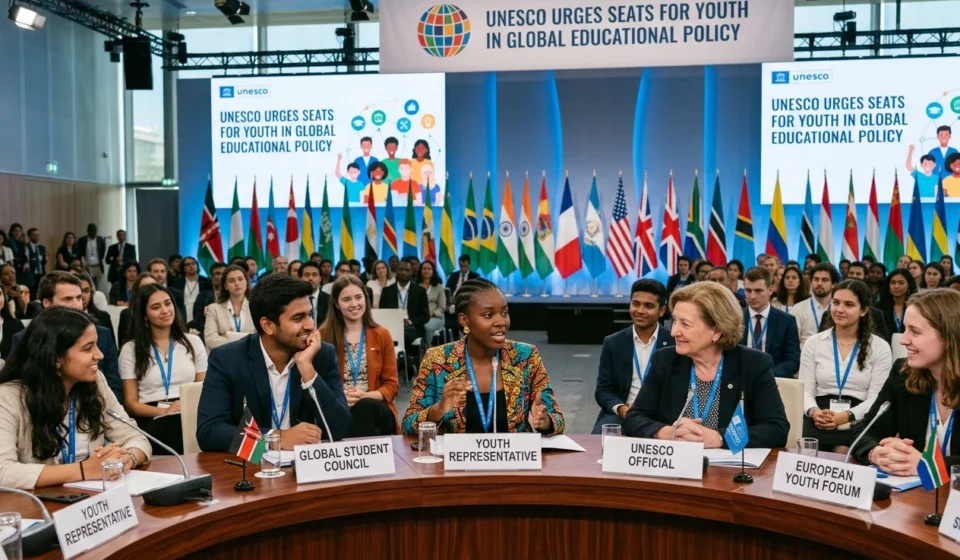

Young people spend years inside classrooms, yet many have little influence over the rules, priorities, and policies that shape their education. UNESCO wants that to change. On July 31, 2026, the United Nations agency launched a global initiative encouraging governments to give students and youth formal roles in educational policy making and governance. The proposal reflects a growing international belief that education systems become stronger when those directly affected by them have a meaningful voice in how they are designed and managed.
For students, the announcement represents more than symbolic recognition. It signals a push toward structured participation in school boards, national education councils, curriculum discussions, and long term planning. For governments, educators, and communities, it presents an opportunity to rethink how education policies are created in an era shaped by rapid technological change, evolving labor markets, and growing demands for inclusion.
Why UNESCO Wants Youth at the Center of Educational Decisions
Education has traditionally been directed by ministries, administrators, researchers, and political leaders. Students often participate through surveys or temporary consultations, but these opportunities rarely provide lasting influence. UNESCO argues that this approach overlooks valuable perspectives from learners who experience educational policies every day.
The new initiative encourages countries to move beyond occasional consultation by creating permanent structures that include young people in governance. This could involve elected student representatives with voting rights, youth advisory councils connected to education ministries, or formal participation in curriculum development and education reform committees.
The agency believes that meaningful participation improves accountability while producing policies that better reflect classroom realities. Students frequently identify challenges that may not be immediately visible to policymakers, including concerns about mental health, digital learning, accessibility, academic pressure, and school safety.
Education Systems Are Facing New Challenges
The call arrives during a period of significant change across global education. Artificial intelligence is reshaping teaching methods, employers continue to seek new skills, and schools are working to recover from learning disruptions experienced during recent years. Governments are also balancing demands for quality education with limited public resources.
These pressures have encouraged international organizations to reconsider how educational systems respond to changing student needs. Young people often adapt quickly to new technologies and social trends, making their experiences valuable during policy discussions involving digital learning, online safety, and future workforce preparation.
UNESCO has consistently promoted education as a shared responsibility involving governments, teachers, families, researchers, and communities. Expanding that partnership to include students as active participants reflects a broader commitment to democratic governance within schools and national education systems.
What Formal Youth Participation Could Look Like
The initiative does not prescribe a single model for every country. Instead, UNESCO encourages governments to develop participation frameworks suited to their legal systems, educational structures, and cultural traditions.
Possible approaches include:
- Student representatives serving on national education councils.
- Youth advisory panels that review proposed education reforms.
- Formal consultation before curriculum revisions are approved.
- Student participation in school governance with clearly defined responsibilities.
- Regular dialogue between education ministries and youth organizations.
Supporters believe these mechanisms help move participation beyond symbolic meetings by creating predictable opportunities for students to contribute throughout the policy development process.
Benefits That Extend Beyond the Classroom
Giving young people a voice in education policy can produce benefits reaching well beyond schools. Students who participate in governance often gain practical experience in leadership, public speaking, negotiation, critical thinking, and civic responsibility.
Communities may also benefit from stronger public trust. When education reforms include transparent consultation with learners, families often gain greater confidence that policies reflect genuine classroom experiences rather than distant administrative priorities.
Research into civic participation has frequently suggested that individuals who become involved in decision making during their youth are more likely to remain active citizens throughout adulthood. Schools therefore become not only places for academic learning but also environments where democratic participation can be practiced responsibly.
Teachers and School Leaders Remain Essential Partners
UNESCO’s proposal does not reduce the importance of teachers or education professionals. Instead, it encourages collaboration between experienced educators and students.
Teachers bring years of instructional knowledge, curriculum expertise, and classroom management experience. Students contribute firsthand understanding of how lessons, assessments, technology, and school culture affect learning every day. Bringing these perspectives together can produce more balanced policy discussions.
School leaders also play a significant role by creating environments where respectful dialogue is encouraged and student participation becomes part of everyday institutional culture rather than an occasional event.
Challenges Governments May Need to Address
Expanding youth participation will require thoughtful implementation. Governments may need to determine how student representatives are selected, how diverse communities are fairly represented, and how young participants receive the information needed to contribute effectively.
Questions may also arise regarding age requirements, voting authority, accountability, and continuity as students graduate from educational institutions. Countries with decentralized education systems may choose different participation models than nations where education policy is managed centrally.
Successful implementation will likely depend upon clear governance structures, transparent selection processes, and ongoing support for student representatives so their participation remains informed and meaningful.
A Growing International Conversation About Student Voice
The initiative reflects a broader international movement recognizing young people as active contributors rather than passive recipients of education policy. Many countries have experimented with student councils, youth parliaments, and advisory committees, although their influence varies considerably.
International organizations have increasingly highlighted youth participation as an important element of sustainable development and democratic institutions. UNESCO’s latest proposal builds upon that direction by encouraging governments to integrate student representation into official governance rather than limiting participation to temporary consultations.
Readers interested in UNESCO’s broader work on education policy can explore resources available through UNESCO. Additional information about the global Sustainable Development Goal focused on quality education can be found through the United Nations Sustainable Development Goal 4 platform.
Looking Ahead
Whether governments fully adopt UNESCO’s recommendations will vary across regions, political systems, and educational structures. Some countries already have established student participation mechanisms that could expand under the initiative, while others may begin by introducing advisory councils or pilot programs.
One message stands out clearly. Young people are no longer viewed solely as future leaders waiting for their turn. UNESCO is encouraging governments to recognize students as capable contributors whose experiences, ideas, and perspectives deserve a formal place in shaping the education systems they rely upon every day.
If the initiative gains widespread support, future education reforms may increasingly reflect conversations held not only among ministers, researchers, and administrators, but also with the students sitting in classrooms whose lives those decisions ultimately affect. That shift could redefine educational governance by making participation itself an essential lesson taught through practice rather than theory.