
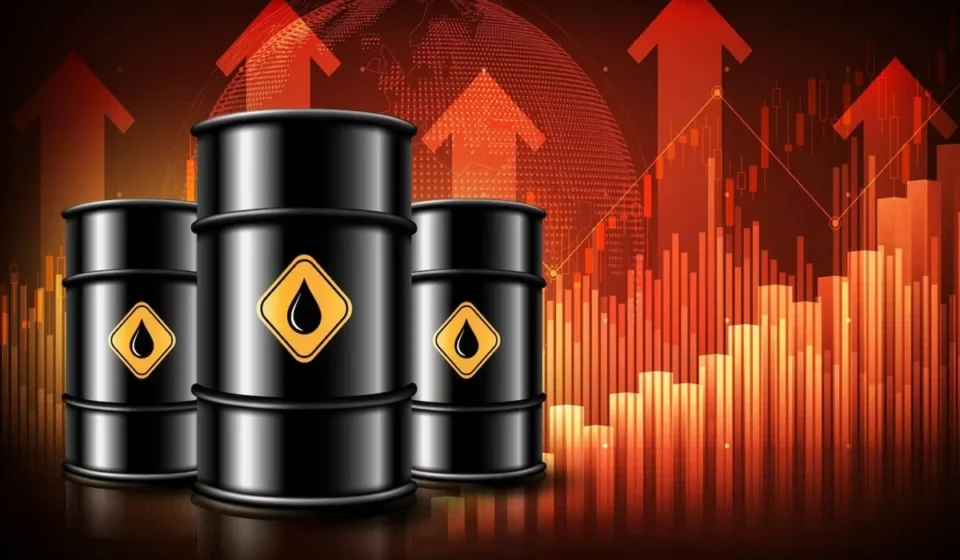

Global oil prices climbed more than 1% on August 10 as uncertainty over the Strait of Hormuz deepened, with negotiations between Iran and Oman facing delays over demands that the United States make major concessions. For energy traders, shipping companies and households far beyond the Persian Gulf, the message from the latest developments is unsettling: the prospect of a reopening remains alive, but so does the risk of another prolonged disruption.
Oil Markets React to Renewed Hormuz Uncertainty
Crude prices moved higher as markets absorbed conflicting signals surrounding the future of commercial shipping through the Strait of Hormuz. The waterway remains at the center of a wider diplomatic dispute involving Iran, the United States and regional governments, while Oman has continued efforts to mediate arrangements that could allow shipping to resume under new conditions.
Reuters reported that Iran is nearing an agreement with Oman on new shipping arrangements but has tied a broader reopening of the waterway to several demands directed at Washington. Those demands include compensation for military attacks, sanctions relief, an end to military threats, the removal of a US naval blockade in the Gulf and the release of frozen Iranian assets.
That combination has left oil traders facing a familiar problem: even when diplomatic progress appears possible, the timing of actual normalization remains difficult to predict. Every delay raises the possibility that ships will continue avoiding the area, insurers will maintain elevated risk charges and buyers will compete for alternative supplies.
Why the Strait of Hormuz Matters to the Global Economy
The Strait of Hormuz is a narrow maritime passage connecting the Persian Gulf with the Gulf of Oman. Despite its relatively small geographic footprint, it is one of the world’s most consequential energy chokepoints. A substantial share of internationally traded petroleum and natural gas normally passes through the waterway.
A recent briefing from the UK Parliament estimates that about 20% of global petroleum flows through the Strait, while roughly 27% of internationally traded oil moves through the route. The narrowest section is only about 29 nautical miles wide, with designated shipping channels occupying a much smaller area.
That concentration creates an outsized market effect. When tankers can move normally, the Strait is almost invisible to consumers. When access becomes uncertain, however, its importance suddenly appears in crude futures, tanker rates, insurance premiums and fuel purchasing decisions.
We can already see how quickly that uncertainty feeds into prices. Oil does not need to disappear completely from the global market for prices to rise. Traders price in the possibility of shortages before physical shortages fully develop. That risk premium can increase the cost of crude even when some barrels continue reaching international buyers through alternative routes.
Iran and Oman Face a Difficult Negotiating Environment
Iran has said it is close to finalizing an arrangement with Oman that would establish new shipping lanes through the Strait. But Tehran’s position is that a technical agreement with Oman alone cannot guarantee a full reopening. The wider dispute with Washington remains a central obstacle.
Iran has refused direct negotiations with the United States and has instead relied on intermediaries. US officials, meanwhile, have indicated that Washington is only partially engaged in negotiations. That gap makes it difficult for shipping companies to determine when the political conditions will be stable enough to justify returning vessels to the route.
For Oman, the challenge is particularly delicate. Muscat has long played a role in regional diplomacy and has an interest in keeping commercial navigation safe. At the same time, any agreement involving the Strait has consequences far beyond the two countries because oil exporters, importers, tanker operators and governments across several continents depend on reliable passage.
Why Oil Prices Can Rise Before a Supply Shortage Appears
Oil markets respond not only to barrels already lost but also to the possibility of future disruption. Traders watch shipping movements, diplomatic statements, tanker insurance costs and refinery inventories for signs that supplies could become harder to obtain.
The Congressional Research Service has previously warned that a significant disruption in the Strait could trigger rapid increases in crude and petroleum product prices as buyers search for alternative supplies and inventories are drawn down. It also notes that Saudi Arabia and the United Arab Emirates have pipeline routes capable of bypassing part of the chokepoint, although those alternatives cannot simply replace all of the volumes normally associated with Hormuz.
This distinction matters. A bypass route can reduce the impact of a disruption, but it cannot automatically eliminate the risk. Pipelines have capacity limits, ports require suitable infrastructure and tankers still face longer journeys when routes are changed.
That is why even a temporary reduction in shipping activity can create a financial shock. Buyers may bid more aggressively for available crude, refiners may adjust purchasing schedules and shipping companies may demand higher compensation for operating in areas considered dangerous.
Shipping Companies Remain Caught Between Risk and Opportunity
For tanker operators, the current situation presents a difficult calculation. A vessel that avoids the Strait may face a longer route and higher operating costs. A vessel that enters the area may face elevated insurance expenses and security concerns.
The result can be higher freight costs even before crude reaches a refinery. Those costs eventually influence the economics of gasoline, diesel, jet fuel and other petroleum products.
Insurance is especially important because maritime operators do not assess risk solely on whether a waterway is technically open. They also consider whether commercial vessels can move through it consistently and whether governments can provide credible security assurances.
A corridor that is officially open but commercially unpredictable may therefore remain unattractive to shipowners. This helps explain why diplomatic announcements can produce only modest relief in oil markets when shipping companies still lack confidence in the safety and permanence of the arrangement.
The Broader Impact Could Reach Consumers
Higher crude prices can eventually spread through the wider economy. Fuel costs influence transportation, manufacturing, agriculture, aviation and logistics. For households, the most visible effect is usually at the gasoline pump, but the economic consequences can extend into food distribution, air travel and the cost of moving everyday goods.
Import dependent countries in Asia are particularly sensitive to prolonged disruption because many rely heavily on Gulf producers for crude and refined petroleum products. European economies can also feel the effects through global price benchmarks even when their direct dependence on Hormuz is lower.
Developing economies face an additional vulnerability. Higher energy prices can increase import bills, pressure currencies and raise inflation at a time when governments may have limited room to subsidize fuel or absorb additional costs.
Alternative Routes Offer Some Protection but Not a Complete Solution
Several Gulf producers have invested in infrastructure designed to reduce dependence on the Strait. Saudi Arabia can move crude toward the Red Sea through its East West pipeline, while the United Arab Emirates has a pipeline connection that can transport oil toward the Gulf of Oman.
These routes provide valuable flexibility, but their capacity is limited compared with the volumes that normally move through Hormuz. The Congressional Research Service has cited an estimated combined available capacity of about 2.6 million barrels per day for key Saudi and UAE bypass pipelines.
That leaves the international market exposed to a basic logistical reality: there are alternative routes, but there is no simple substitute capable of absorbing a major and sustained disruption overnight.
What Traders Will Watch Next
The next phase of the crisis will depend heavily on whether Iran and Oman can finalize their shipping arrangement and whether Washington responds to Tehran’s demands. Markets will also watch actual vessel movements rather than relying solely on diplomatic statements.
Several indicators could determine whether the current oil price increase becomes a short lived reaction or the beginning of a longer period of elevated energy costs:
- Whether Iran and Oman formally announce a workable shipping corridor.
- Whether the United States accepts, rejects or modifies Iran’s conditions.
- Whether commercial tankers begin returning to the Strait in meaningful numbers.
- Whether maritime insurers reduce war risk premiums for Gulf shipping.
- Whether crude inventories in major consuming markets remain sufficient to absorb further disruption.
The US Energy Information Administration’s petroleum data will remain particularly useful for tracking inventory, production and consumption trends as the market responds to the uncertainty.
A Diplomatic Breakthrough Could Quickly Reverse the Market Move
The same sensitivity that pushed oil prices higher can work in the opposite direction. A credible agreement that guarantees safe commercial passage could remove part of the risk premium embedded in crude prices.
That does not mean prices would immediately return to previous levels. Tanker operators would need time to reposition vessels, insurers would need evidence that the security environment had stabilized and refiners would need to rebuild confidence in regular deliveries.
Still, a durable reopening could provide significant relief to global energy markets. It would reduce pressure on alternative routes, lower shipping uncertainty and give oil buyers greater confidence that Gulf supplies can reach international markets.
The Market Is Pricing Uncertainty, Not Just Today’s Supply
The latest rise in crude prices is therefore about more than the barrels moving through the Strait today. It reflects the financial value markets place on certainty. When governments cannot agree on the conditions for safe passage, businesses must prepare for multiple outcomes, and those preparations carry a cost.
For consumers, that uncertainty may feel distant from the narrow waters between Iran and Oman. Yet the chain connecting a tanker in the Gulf to a fuel station, airline ticket or delivery truck is remarkably direct. A delayed negotiation in the Middle East can eventually show up in household budgets thousands of miles away.
As of August 10, the central question is no longer simply whether a shipping corridor can be drawn on a map. The crucial question is whether Iran, Oman and the United States can create conditions that commercial operators believe will remain safe and predictable. Until that confidence returns, the Strait of Hormuz will continue to cast a long shadow over crude prices and the wider global economy.