

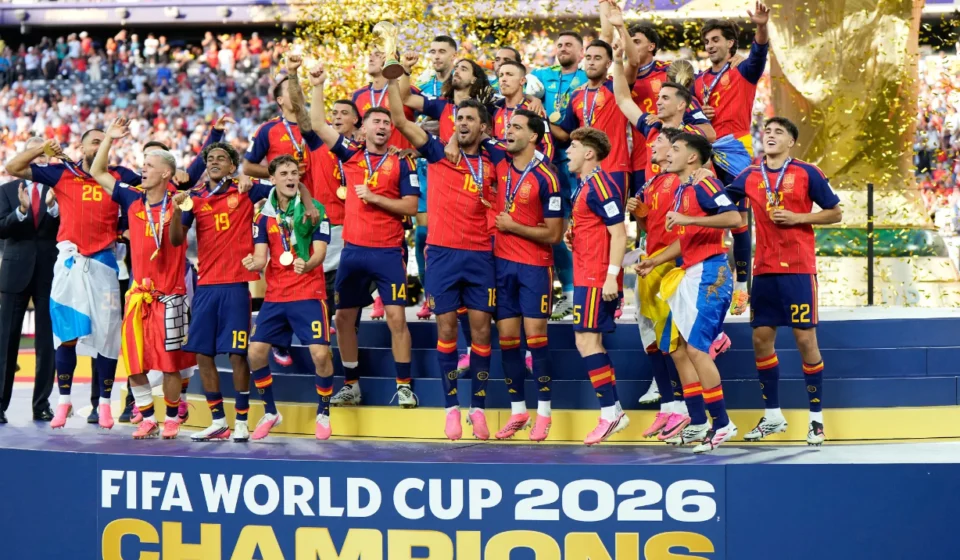

Spain reached the summit of world football on July 20, 2026, after defeating Argentina 1 0 in a dramatic World Cup final that demanded patience, discipline, and unwavering belief. Ferran Torres delivered the decisive moment in the 106th minute, sending Spanish supporters into celebration and securing one of the most memorable victories in the nation’s football history. Argentina, reduced to ten players before the decisive phase of the contest, fought with determination but ultimately fell short against a Spanish side that controlled key moments when the pressure reached its highest point.
A Final That Tested Every Player on the Pitch
World Cup finals are rarely decided by free flowing football alone. They are often shaped by resilience, tactical discipline, and the ability to seize a single opportunity. This championship match reflected that tradition from the opening whistle.
Spain controlled possession for long stretches, carefully moving the ball through midfield while searching for openings in Argentina’s organized defensive structure. Argentina answered with quick counterattacks and relentless work without possession, forcing Spain to remain alert every time the ball changed hands.
Clear scoring opportunities remained limited throughout normal time as both defenses stood firm. Goalkeepers from both sides produced confident performances, while defenders repeatedly stepped in with timely interceptions and crucial clearances. Every challenge carried extra significance as the tension inside the stadium continued to grow.
Argentina Forced to Continue With Ten Players
The balance of the match shifted after Argentina was reduced to ten men. Losing a player in a World Cup final presents an enormous tactical challenge, particularly against a team known for patient ball movement and technical quality.
Argentina responded by compacting its defensive shape and asking every remaining player to cover additional ground. Their determination frustrated Spain for significant periods, demonstrating the fighting spirit that had carried the South American side through the tournament.
Even with a numerical disadvantage, Argentina refused to surrender possession easily or retreat completely into its own penalty area. The players continued pressing when opportunities appeared and looked for moments to surprise Spain on the break.
Ferran Torres Delivers the Defining Moment
The breakthrough finally arrived during extra time.
In the 106th minute, Ferran Torres found the space that had remained elusive throughout the evening. A well constructed attacking move opened the defense just enough for the Spanish forward to finish calmly and send the ball beyond the goalkeeper.
The celebration reflected more than a single goal. It represented years of preparation, countless hours on the training ground, and the confidence required to perform when the entire football world was watching.
For Torres, the goal instantly became one of the defining moments of his international career. Few players experience the opportunity to decide a World Cup final, and even fewer succeed with such composure.
Spain’s Tactical Patience Pays Off
Spain’s approach remained remarkably consistent throughout the match. Rather than forcing risky passes or abandoning its philosophy, the team trusted its system and continued circulating possession until opportunities emerged.
This patient style has long been associated with Spanish football, combining technical precision with intelligent movement away from the ball. Against a disciplined Argentine defense, every successful sequence required concentration and excellent decision making.
Several tactical factors contributed to Spain’s success.
- Controlled possession limited Argentina’s attacking opportunities.
- Midfield organization allowed Spain to dictate the rhythm.
- Defensive discipline prevented dangerous counterattacks.
- Fresh legs during extra time created valuable attacking energy.
- Clinical finishing turned the most important chance into the winning goal.
Argentina Leaves With Pride Despite Defeat
Although the final result brought disappointment, Argentina produced a performance that reflected determination and resilience. Playing with ten men for a significant portion of such an important match demands exceptional physical and mental commitment.
The players defended bravely, blocked numerous attempts, and refused to allow frustration to dictate their performance. Every tackle and interception drew loud reactions from supporters who appreciated the effort despite the difficult circumstances.
Losing a World Cup final always leaves lasting emotion, yet Argentina’s journey through the tournament will remain an important chapter in the nation’s football story. Reaching the final itself required overcoming elite opponents and consistently performing under extraordinary pressure.
An Emotional Night for Spanish Supporters
Across Spain, celebrations erupted as the final whistle confirmed the nation’s triumph. Public squares, family homes, and local gathering places quickly filled with supporters waving flags, singing familiar chants, and celebrating a championship earned through persistence.
For many fans, the victory carried emotional meaning beyond the trophy itself. It represented a new generation of players proving capable of succeeding on football’s biggest stage while honoring the traditions established by previous Spanish teams.
Moments like these unite communities across generations. Young supporters witnessed history unfold before their eyes, while longtime followers reflected on decades spent dreaming about another World Cup celebration.
What This Victory Means for Spanish Football
Winning the World Cup reinforces Spain’s place among international football’s most successful nations. The championship demonstrates the strength of player development, coaching philosophy, and the commitment to technical excellence that has characterized Spanish football for many years.
The achievement may also inspire the next generation of players entering youth academies across the country. Young footballers often look toward championship teams for inspiration, studying their movement, teamwork, and professionalism in hopes of one day representing their own nation.
Fans seeking more information about international competitions can follow tournament updates through FIFA, while broader coverage of global football remains available from UEFA.
Key Match Facts
| Category | Details |
|---|---|
| Date | July 20, 2026 |
| Competition | World Cup Final |
| Result | Spain 1 Argentina 0 |
| Winning Goal | Ferran Torres in the 106th minute |
| Turning Point | Argentina continued with ten players |
| Champion | Spain |
A Championship Built on Composure
The scoreline may appear narrow, yet the contest offered everything supporters expect from a World Cup final. Tactical intelligence, relentless effort, emotional intensity, and one unforgettable finish combined to produce a match worthy of football’s biggest stage.
Spain remained faithful to its identity from the opening whistle until the final moments of extra time. Rather than abandoning its principles under pressure, the team trusted its structure and eventually found the breakthrough that secured football’s greatest prize.
As celebrations continue and the images of Ferran Torres celebrating his historic goal circulate around the world, this final will be remembered as a contest where patience overcame pressure and determination delivered Spain another unforgettable chapter in international football history.