

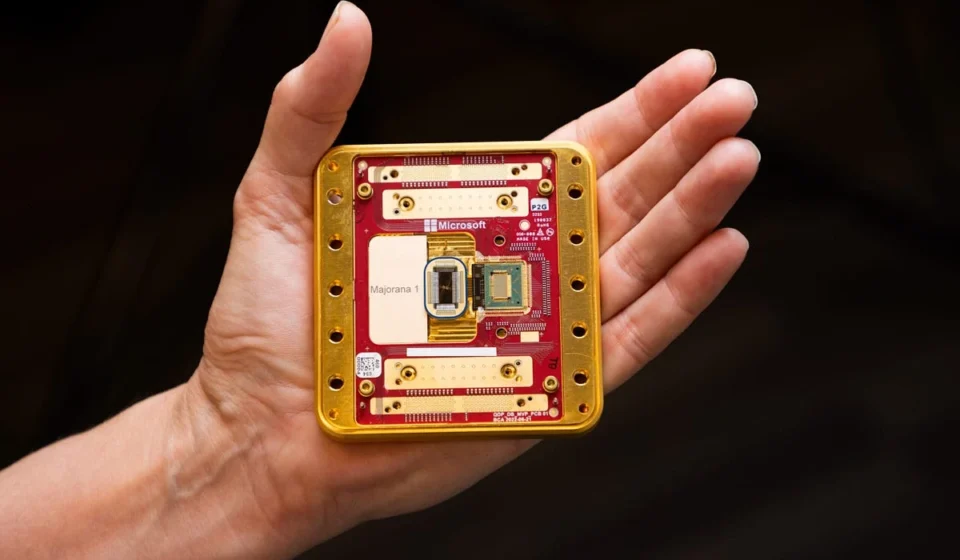

July 29, 2026 marks a defining moment for quantum computing. Leading research institutions announced a successful demonstration of fault tolerant quantum error correction operating in real time, a result that many scientists have pursued for decades. We have watched the field progress through steady advances in hardware, software, and quantum algorithms, yet one challenge repeatedly stood in the way of practical systems. Reliable error correction has long been considered the gateway to machines capable of solving problems beyond the reach of conventional computers.
The latest achievement represents more than another laboratory experiment. It offers a practical foundation for commercial quantum systems that can maintain stable calculations even when individual quantum bits experience the disturbances that naturally occur in fragile quantum environments. Researchers believe this accomplishment could accelerate progress across medicine, materials science, financial modeling, logistics, and cybersecurity.
Why quantum error correction has been such a difficult challenge
Quantum computers process information using quantum bits, often called qubits. Unlike traditional computer bits that exist as either zero or one, qubits can represent multiple states simultaneously through quantum mechanics. This property gives quantum computers extraordinary theoretical computing power, but it also introduces significant instability.
Heat, electromagnetic interference, vibration, and even tiny environmental fluctuations can disrupt a qubit before a calculation is complete. These disturbances create computational errors that quickly spread through a quantum processor. Without an effective way to detect and correct these mistakes, larger quantum computers cannot perform reliable calculations for meaningful periods.
Scientists have spent years designing methods that distribute information across multiple physical qubits to create more dependable logical qubits. The newest demonstration confirms that these corrections can occur continuously while calculations remain active, allowing the system to identify and repair errors before they compromise the computation.
Real time fault tolerance moves quantum research toward commercial reality
Researchers describe fault tolerance as one of the highest standards in quantum engineering. A fault tolerant system continues operating accurately even while individual components experience failures. Achieving this capability in real time has required major advances in hardware design, quantum control systems, and sophisticated decoding software.
The successful demonstration indicates that quantum processors can now perform active monitoring without overwhelming the system with additional complexity. Instead of waiting until a calculation finishes, correction mechanisms respond immediately, preserving the integrity of quantum information throughout the computing process.
For businesses investing billions of dollars in quantum technology, this development reduces one of the largest technical uncertainties surrounding commercial deployment. Although widespread enterprise adoption remains several years away, the path toward scalable quantum computing now appears significantly clearer.
Industries expected to benefit first
The impact of dependable quantum computing extends well beyond academic research. Several industries have already been preparing for the arrival of machines capable of handling calculations that conventional supercomputers struggle to complete.
- Drug discovery through faster molecular simulation and protein interaction analysis.
- Advanced materials research for batteries, semiconductors, and clean energy technologies.
- Financial institutions seeking improved portfolio optimization and risk analysis.
- Transportation companies developing more efficient routing and logistics systems.
- Climate researchers building increasingly sophisticated environmental models.
Each of these fields depends on solving highly complex mathematical problems involving enormous numbers of variables. Reliable quantum processors could significantly reduce the time required for many of these calculations while opening entirely new research possibilities.
Commercial investment gains stronger technical validation
Private investment in quantum computing has accelerated rapidly over the past several years. Technology companies, startup firms, government agencies, and venture capital groups have collectively committed billions of dollars to quantum hardware, software platforms, networking infrastructure, and workforce development.
Many investors viewed quantum error correction as one of the final scientific barriers separating promising demonstrations from commercially valuable systems. The latest milestone strengthens confidence that continued investment may produce practical products capable of serving pharmaceutical companies, manufacturers, research laboratories, and financial institutions.
Organizations developing quantum cloud services could also benefit as customers gain greater confidence that future systems will deliver dependable computational results rather than experimental demonstrations.
The engineering effort behind the milestone
Reaching this point required collaboration across multiple scientific disciplines. Physicists refined quantum architectures while computer scientists improved decoding algorithms capable of interpreting massive streams of measurement data. Engineers designed increasingly precise control electronics, and specialists in cryogenic systems created environments capable of protecting delicate quantum hardware.
The result demonstrates how progress in quantum computing depends upon coordinated improvements across the entire technology stack rather than advances in a single component.
Organizations such as the United States National Quantum Initiative continue supporting research programs designed to accelerate innovation and strengthen collaboration among universities, government laboratories, and private industry. Meanwhile, educational resources from the IBM Quantum platform have helped broaden access to quantum computing concepts for researchers, students, and developers around the world.
Challenges that still remain
Despite the excitement surrounding this achievement, experts caution that commercial quantum computing has not yet reached maturity. Building large scale fault tolerant systems requires many more logical qubits than currently available in most experimental machines.
Engineers must continue improving manufacturing consistency, processor scalability, cooling technology, energy efficiency, and software development tools. Reducing operational costs will also be essential before quantum computers become accessible to a broad range of organizations.
Another important priority involves preparing the cybersecurity community for the long term effects of powerful quantum processors. Researchers continue developing quantum resistant encryption methods designed to protect digital communications before advanced quantum systems become widely available.
Growing demand for quantum skilled professionals
The commercial momentum surrounding quantum technology is creating demand for professionals with expertise in quantum information science, computer engineering, mathematics, physics, artificial intelligence, and software development.
Universities across North America, Europe, and Asia continue expanding specialized programs that combine theoretical quantum mechanics with practical engineering and programming experience. Businesses are also investing in employee training as they prepare for future quantum applications within existing technology environments.
This growing workforce will play a critical role in translating scientific breakthroughs into practical products that businesses and consumers can eventually use.
What this breakthrough means for the future
Scientific progress rarely follows a straight path, and quantum computing has experienced both remarkable advances and frustrating setbacks over the past several decades. We see this latest demonstration as one of the strongest indicators that the field is moving beyond proof of concept toward dependable computing infrastructure.
Fault tolerant quantum error correction does not immediately place powerful quantum computers on every company network, yet it removes one of the most persistent obstacles that has limited practical deployment. Researchers now have stronger evidence that scalable, dependable quantum systems are technically achievable.
The announcement also reflects the value of sustained collaboration between academic institutions, government supported research, and private industry. Each breakthrough builds upon years of incremental discoveries that rarely capture public attention but collectively shape the future of computing.
As laboratories continue refining quantum hardware and software, this commercial milestone will likely be remembered as one of the defining achievements that shifted quantum computing from an ambitious scientific pursuit toward a technology with genuine economic and societal potential.