

Mass timber is moving from a specialized construction option into the mainstream as cities, developers, and homeowners respond to stricter climate goals and growing demand for sustainable buildings. Market reports released on August 3, 2026, point to a rapid rise in engineered wood construction across residential, commercial, and mixed use projects. Multi family housing developers are increasingly replacing conventional concrete and steel designs with advanced wood systems, while homeowners planning renovations are exploring timber based additions that promise lower environmental impact without sacrificing structural performance.
We are witnessing more than a shift in building materials. The growing acceptance of mass timber reflects a broader change in how communities think about cities, housing affordability, energy efficiency, and long term environmental responsibility. From apartment towers to schools and neighborhood renovations, engineered wood is becoming a symbol of a construction industry searching for practical climate solutions.
What Mass Timber Means for Modern Construction
Mass timber refers to engineered wood products created by bonding layers of lumber into large structural panels and beams. These products include cross laminated timber, glued laminated timber, and laminated veneer lumber. Unlike traditional wood framing used in many homes, these engineered systems are designed to support large buildings while meeting demanding structural and fire safety standards.
Advances in manufacturing have made engineered wood stronger, more predictable, and easier to install. Factory production allows panels to arrive at construction sites ready for assembly, reducing waste and helping builders shorten project timelines. For developers facing labor shortages and rising material costs, faster installation can translate into meaningful financial savings.
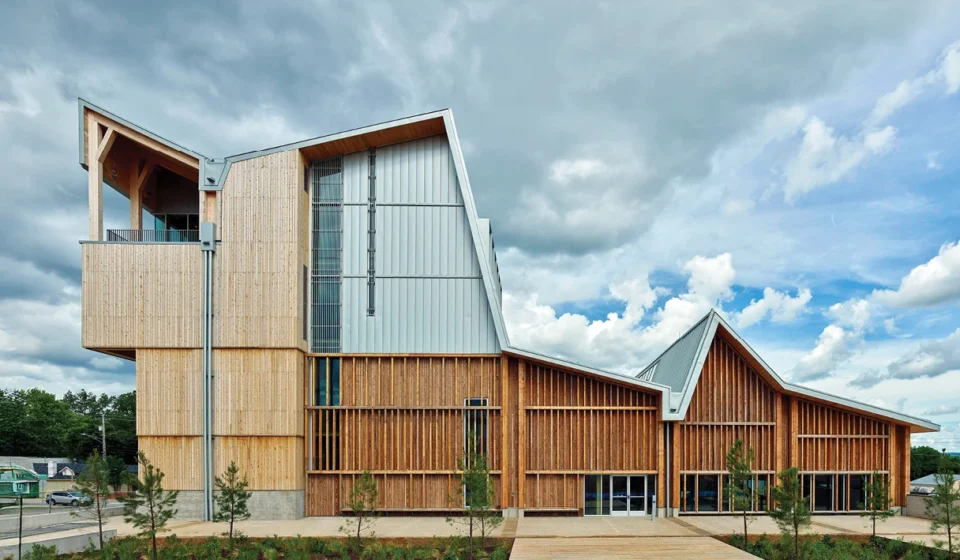
Many architects also appreciate the warm appearance of exposed wood interiors. Residents often describe timber spaces as bright, welcoming, and comfortable, creating environments that feel different from buildings dominated by concrete or steel surfaces.
Climate Policies Push Developers Toward Lower Carbon Materials
Governments across North America, Europe, Asia, and other regions have introduced stronger climate commitments that encourage builders to reduce carbon emissions throughout a building’s life cycle. Construction materials account for a significant share of global greenhouse gas emissions, placing increased attention on products with smaller environmental footprints.
Engineered wood stores carbon absorbed by trees during growth while requiring less energy to manufacture than many conventional structural materials. Although responsible forestry and sustainable harvesting remain essential, many policymakers now view mass timber as one important tool for lowering emissions in the built environment.
Organizations including the World Green Building Council continue to promote building practices that reduce operational and embodied carbon across the construction sector. These recommendations have encouraged both public agencies and private developers to reconsider traditional design strategies.
Housing Developers Respond to Changing Market Conditions
The latest market reports suggest that developers are moving beyond experimental projects toward larger residential portfolios built with engineered wood. Apartment complexes, student housing, senior living communities, and mixed use developments are increasingly incorporating mass timber into their structural plans.
Several factors are contributing to this momentum.
- Growing demand for environmentally responsible housing.
- Pressure to meet local climate regulations.
- Potential reductions in construction schedules.
- Greater interest from investors supporting sustainable real estate.
- Improved manufacturing capacity for engineered wood products.
Developers also recognize that many prospective residents value environmentally conscious buildings. Buyers and renters often ask about energy efficiency, indoor comfort, and construction materials when evaluating new housing options.
Home Renovation Projects Join the Timber Movement
The trend extends beyond large commercial projects. Homeowners planning additions, accessory dwelling units, loft conversions, and major remodels are increasingly considering engineered wood products.
Many renovation professionals report growing interest in exposed timber ceilings, structural beams, and prefabricated wall systems that can simplify installation. While not every renovation requires mass timber, the material offers attractive possibilities for projects where strength, appearance, and sustainability are equally important.
Families investing in long term improvements often want homes that reduce environmental impact while maintaining lasting value. Engineered wood can support those goals when used alongside efficient insulation, high performance windows, and modern heating and cooling systems.
Construction Speed Offers a Competitive Advantage
One reason mass timber continues gaining attention is construction efficiency. Factory manufactured components arrive precisely cut, reducing time spent measuring and modifying materials at the building site. This approach can help minimize weather related delays and improve overall project coordination.
Workers frequently assemble large structural sections using cranes, allowing building frames to rise quickly once foundations are complete. Faster construction can reduce financing costs while helping communities address housing shortages more efficiently.
Although project economics vary depending on location and design, many industry leaders believe construction speed will remain one of the strongest drivers behind future adoption.
Fire Safety and Building Codes Continue to Advance
Questions about fire safety remain common whenever engineered wood enters public discussion. Modern mass timber products are specifically engineered to perform differently from conventional dimensional lumber. Large timber members develop protective char layers during fire exposure, helping preserve structural integrity for longer periods under carefully tested conditions.
Building codes in many countries have gradually expanded to permit taller timber buildings after extensive research, full scale testing, and engineering analysis. Designers must still follow rigorous safety standards covering fire protection, structural performance, and emergency response planning.
The United States Forest Products Laboratory continues supporting scientific research into wood performance, structural engineering, and sustainable forest products that inform evolving building standards.
Challenges Still Shape the Industry
Despite accelerating adoption, the industry continues facing several practical challenges. Manufacturing capacity differs widely between regions, making supply chains stronger in some markets than others. Skilled designers and contractors with mass timber experience are also in high demand.
Insurance practices, financing requirements, and local building regulations continue evolving as more projects demonstrate successful performance. Education remains important because many decision makers have decades of experience working primarily with concrete and steel.
Responsible forestry also remains central to the conversation. Sustainable timber construction depends on healthy forests managed with careful attention to biodiversity, regeneration, and long term ecosystem resilience.
Economic Opportunities Reach Beyond Construction Sites
The growing timber economy supports employment across manufacturing, forestry, engineering, architecture, transportation, and research. Communities with established forest industries may benefit from increased demand for value added wood products instead of relying solely on raw lumber production.
Universities are expanding research into engineered wood technologies while architecture schools increasingly teach timber design principles. Manufacturers continue investing in automation and precision fabrication that improve consistency while supporting larger production volumes.
For many regions, this represents an opportunity to combine economic development with climate focused investment rather than viewing environmental responsibility and business growth as competing priorities.
Cities Are Reimagining Urban Skylines
Urban planners increasingly view sustainable construction as part of broader strategies addressing population growth, housing shortages, and climate resilience. Timber buildings can contribute to neighborhoods that prioritize lower emissions while creating visually distinctive public spaces.
Walking through completed timber buildings often reveals a noticeably different atmosphere. Natural wood surfaces soften interior spaces, allowing daylight to reflect warmly across ceilings and walls. Residents frequently describe these environments as calm and inviting, qualities that continue attracting attention from designers seeking healthier living spaces.
This aesthetic appeal, combined with measurable environmental benefits, has helped engineered wood move beyond architectural novelty into serious consideration for mainstream development.
Looking Ahead
The acceleration reported this week suggests that mass timber is becoming an increasingly influential part of global construction rather than a temporary trend. Continued innovation, updated building codes, responsible forest management, and expanding manufacturing capacity are expected to shape how quickly adoption continues over the coming years.
We expect future competition among construction materials to focus not only on cost and strength but also on environmental performance, resource efficiency, and community impact. Developers, homeowners, architects, and policymakers are responding to a changing landscape where sustainable design is steadily becoming a practical expectation instead of an optional feature.
As cities pursue ambitious climate targets while confronting persistent housing demand, engineered wood appears positioned to play a growing role in the next generation of residential neighborhoods and urban skylines. The momentum reflected in today’s market reports signals that the conversation surrounding sustainable construction has entered a new chapter, one where timber stands alongside innovation, resilience, and thoughtful urban planning.