

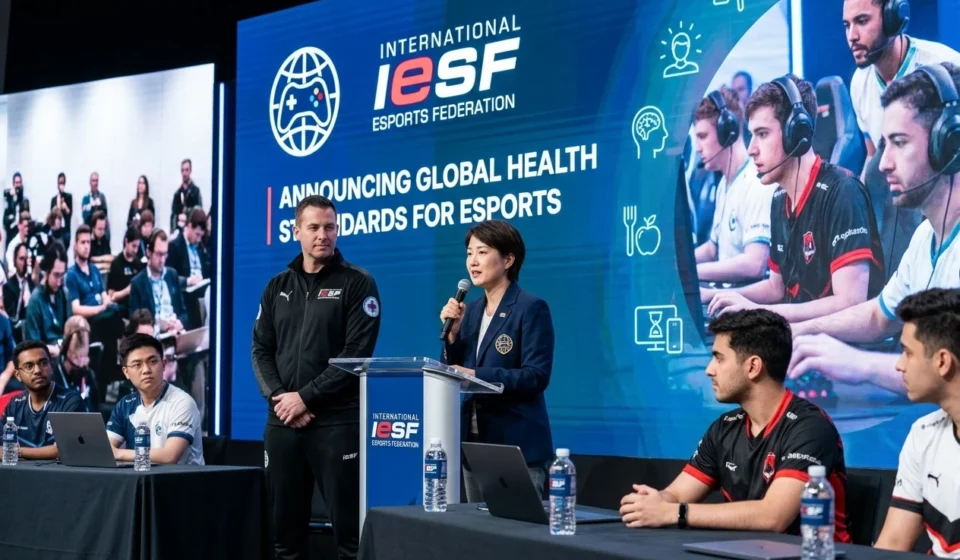

Professional gaming is entering a new phase in which a player’s health is being treated as part of competitive integrity rather than a private concern. On August 15, 2026, the International Esports Federation adopted standardized player health regulations, anti cheating protocols, and mandatory structural rest intervals for tier one competitive gaming leagues worldwide, creating a common framework for how elite esports competitions protect players while preserving fair play.
For players accustomed to long practice sessions, packed tournament calendars, bright arena screens, and the pressure of performing in front of millions of viewers, the change reaches far beyond a rulebook. It could alter how teams schedule training, how organizers structure match days, and how leagues respond when physical or mental fatigue begins to affect competition.
A Global Standard for Player Health
The central feature of the new framework is standardization. Rather than leaving health protections to individual tournament organizers, leagues, or team policies, the rules establish a common baseline for elite competition. That means players competing at the highest level should encounter broadly consistent expectations for rest, recovery, competition conditions, and health safeguards regardless of where a tournament is held.
We see why that matters when considering the realities of professional esports. A player may spend hours maintaining intense concentration, making rapid decisions, communicating continuously with teammates, and reacting to events that change in fractions of a second. The physical demands may look different from those of traditional field sports, but sustained concentration, repetitive movement, sleep disruption, stress, and prolonged screen exposure can still shape performance and wellbeing.
The International Esports Federation already maintains health and integrity measures through its existing regulatory structure. Its anti doping program is aligned with the World Anti Doping Agency and applies to players competing in events under the federation’s umbrella.
The federation’s published governance documents also identify the prevention of cheating, doping, drug abuse, and match fixing as part of its responsibilities.
Mandatory Rest Becomes Part of Competition Design
Perhaps the most visible change for players and spectators will be the requirement for structured rest intervals. Under the new approach, recovery is no longer something that can be left entirely to an individual player or team.
For an esports professional, a short break can mean stepping away from the monitor, loosening tense shoulders, drinking water, eating, using the restroom, or simply allowing the eyes and mind to recover. During a high pressure tournament, however, players can be reluctant to pause when a championship, qualification spot, or major financial reward is at stake.
Mandatory intervals address that conflict directly. When rest is built into the competition schedule, a player does not have to choose between protecting personal health and remaining competitive.
The measure could also encourage teams to rethink training culture. Coaches may have to place greater emphasis on recovery periods, sleep planning, ergonomic setups, nutrition, and sustainable practice schedules rather than simply measuring the number of hours spent in front of a screen.
Why Recovery Matters for Competitive Performance
Fatigue can affect concentration, reaction time, decision making, communication, and emotional control. Those factors are central to nearly every major esports title. A tired player may recognize a developing threat but react too late, misunderstand a teammate’s call, or make an unnecessary mistake during a decisive moment.
That creates an unusual situation for esports. Protecting health can also protect the quality of competition itself. A match decided by exhausted players may not provide the same competitive standard as a match in which both sides are able to perform under comparable conditions.
The new rules therefore position rest as more than a welfare measure. It becomes part of competitive fairness.
Anti Cheating Rules Move Alongside Health Protections
The health provisions arrive alongside strengthened anti cheating requirements, reinforcing the idea that legitimate competition depends on both player welfare and competitive integrity.
Cheating remains one of the most persistent threats facing professional gaming. Unauthorized software, hardware modifications, exploits, automation tools, and other methods can provide advantages that skill alone cannot produce. The IESF’s existing code of conduct prohibits these practices and also addresses match manipulation and betting related misconduct.
The federation has also expanded its cooperation with the World Anti Doping Agency. Its July 2026 announcement about joining the WADA Esports Working Group showed that integrity issues were already receiving greater institutional attention before the latest global standards were adopted.
For players, this creates a broader compliance environment. Competitive gaming is increasingly being governed through formal systems that address conduct, equipment, substances, competition manipulation, and now standardized health protections.
What the Rules Could Mean for Esports Leagues
League operators will face some of the most significant practical changes. Tournament schedules have traditionally been built around broadcast requirements, venue availability, sponsor commitments, travel arrangements, and audience demand. A universal health standard adds another consideration that cannot simply be squeezed into the timetable when convenient.
Organizers may need to redesign match blocks so that rest intervals are clearly protected. Production teams may have to adjust broadcast segments. Tournament officials could require procedures for documenting compliance. Teams may also need staff members responsible for monitoring player readiness and reporting health concerns without creating unnecessary pressure on athletes.
These changes could initially make some competitions less flexible. A tournament that once moved rapidly from one match to another may require additional time between games. Yet the long term benefit could be a more predictable and sustainable competitive environment.
For fans, the changes may be almost invisible. A broadcast could simply show an analysis segment, player interview, replay package, or commercial break while competitors step away from their stations. Behind the scenes, however, that pause could represent a meaningful shift in esports culture.
Players Gain Stronger Protection From the Pressure to Keep Playing
Professional esports can place extraordinary pressure on young competitors. Careers can be short, opportunities can be scarce, and a single tournament can influence a player’s reputation, income, or future roster prospects. Under those conditions, asking a player to voluntarily stop playing because of fatigue is not always realistic.
Universal rest requirements reduce that burden. A player can follow the rules without appearing less committed to teammates or coaches. Teams also gain a clear standard that can be applied consistently across their rosters.
The broader health discussion also extends beyond fatigue. The World Health Organization and International Telecommunication Union have already developed a global standard addressing safe listening practices in video gameplay and esports, reflecting wider concern about health risks associated with prolonged gaming environments.
That work illustrates why player protection cannot be reduced to a single issue. Competitive gaming involves vision, hearing, posture, movement, concentration, sleep, stress management, nutrition, and mental wellbeing. A credible health framework has to consider the player as a whole person rather than simply as a performer behind a screen.
Implementation Will Determine Whether the Policy Works
The announcement creates a framework, but implementation will determine its real value. A rule requiring rest has little meaning if schedules are routinely designed to undermine it. Anti cheating requirements are similarly dependent on effective monitoring, transparent investigations, reliable technology, and consistent penalties.
Leagues will also need clear procedures for exceptional circumstances. Live competitions can encounter technical failures, medical emergencies, travel disruptions, unexpected match delays, and other situations that make rigid scheduling difficult. A workable standard must protect players without creating confusion for tournament officials.
Transparency will therefore matter. Players and teams should know what the rules require before entering competition. Officials should understand how violations are assessed. Fans should be able to see that health standards are being applied consistently rather than selectively.
A More Sustainable Future for Professional Gaming
We believe the most consequential part of the policy may be cultural rather than procedural. For years, esports has sometimes celebrated endurance as proof of dedication. Long practice sessions, late night scrims, compressed tournament schedules, and relentless competition can become badges of commitment.
A stronger health standard challenges that assumption. It suggests that elite performance should not require players to sacrifice basic recovery in order to prove their professionalism.
That message could influence the next generation of competitors. Young players watching professional leagues may begin to see rest, preparation, and health management as components of high performance rather than obstacles to it.
The policy also gives esports a clearer institutional identity. As competitive gaming continues to attract major audiences, sponsorships, investment, and international attention, governance standards will increasingly shape public confidence in the industry.
What Comes Next for Global Esports
The adoption of universal health and integrity standards represents a significant test for the esports industry. The success of the framework will not be measured by the announcement alone. It will be measured by whether players actually receive meaningful recovery time, whether leagues enforce competition rules consistently, and whether teams build healthier working environments around their athletes.
The direction, however, is clear. Competitive gaming is moving toward a model in which professional performance and player welfare are expected to coexist.
That is a necessary step for an industry built around human concentration, reflexes, teamwork, and resilience. The brightest screens in an esports arena may still belong to the games, but the people sitting behind those screens are becoming impossible to treat as an afterthought.
For additional context on the federation’s existing competition and governance framework, readers can review the IESF rules and regulations. The federation’s published anti doping regulations also outline its broader approach to athlete health and competitive integrity.