

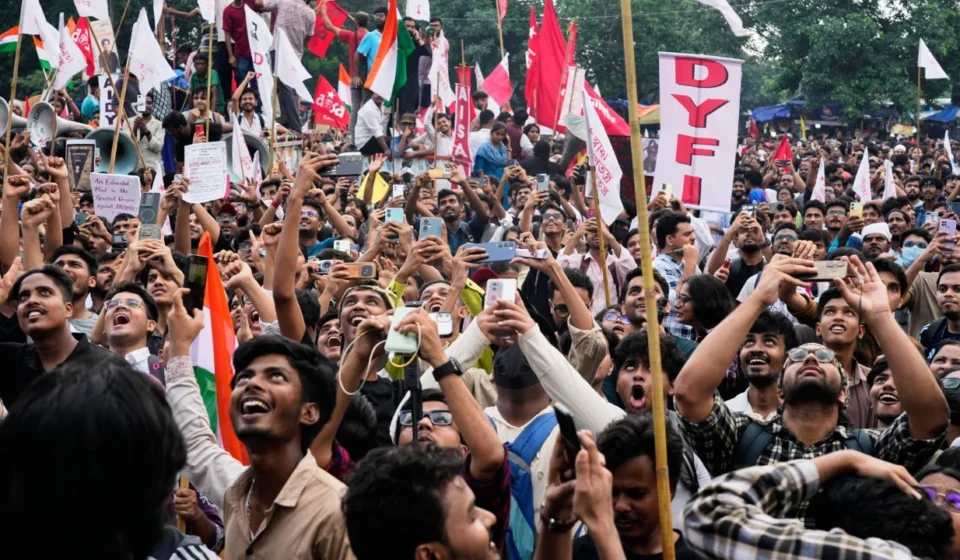

India entered a defining political moment on July 25, 2026, after Education Minister Dharmendra Pradhan submitted his resignation to Prime Minister Narendra Modi following weeks of nationwide student protests, hunger strikes, and growing public outrage over repeated examination paper leaks and allegations of deep administrative failures. The resignation marks one of the most significant responses to student activism in recent years and places the country’s education system under intense national scrutiny.
From crowded university campuses to public squares filled with handwritten placards, young people voiced frustration that had been building for months. Their message remained remarkably consistent. Students wanted fairness, transparency, and confidence that years of hard work would not be undermined by corruption or institutional negligence. The demonstrations steadily expanded across several states, drawing support from parents, teachers, civil society organizations, and education experts.
Exam paper leaks became a symbol of wider institutional concerns
Competitive examinations in India determine admission to prestigious universities, government positions, and professional careers. Millions of students devote years of disciplined preparation, often sacrificing social activities, employment opportunities, and family time to compete in these highly selective assessments.
Repeated reports of leaked examination papers shook public confidence because the consequences extended far beyond a single test. Every compromised examination represented countless hours of preparation suddenly clouded by uncertainty. Students questioned whether merit alone could determine success, while families wondered whether the education system could still guarantee equal opportunity.
The latest controversy intensified existing concerns about administrative oversight, examination security, and accountability. Protesters argued that isolated investigations would no longer be sufficient. Instead, they demanded structural reforms designed to prevent future breaches and restore public trust.
Weeks of demonstrations grew into a nationwide youth movement
The protests evolved gradually rather than erupting overnight. Initial gatherings on university campuses soon expanded into coordinated demonstrations across multiple cities. Peaceful marches, candlelight vigils, and hunger strikes attracted growing participation as images and personal stories spread rapidly through social media platforms.
Many students described emotional exhaustion after preparing for examinations that later faced questions over their integrity. Parents joined rallies carrying photographs of their children studying late into the night. Teachers expressed concern that repeated controversies risked weakening confidence in India’s educational institutions for years to come.
The atmosphere at many protest sites reflected determination rather than disorder. Volunteers distributed drinking water, medical teams monitored participants participating in hunger strikes, and student leaders repeatedly appealed for peaceful demonstrations despite rising frustration.
Voices from classrooms reached the national stage
The movement gained momentum because it represented students from different academic backgrounds rather than a single institution or examination. Engineering applicants, medical aspirants, civil service candidates, and university students shared similar concerns regarding fairness and accountability.
The broad participation demonstrated that confidence in examination systems had become a national issue rather than an isolated administrative challenge. Public discussions increasingly focused on whether existing safeguards remained sufficient in an era of sophisticated information sharing and organized misconduct.
- Students called for independent investigations into examination irregularities.
- Families requested greater transparency throughout recruitment and admission processes.
- Education specialists urged stronger digital security and administrative oversight.
- Civil society organizations advocated legal accountability for officials responsible for examination management.
Dharmendra Pradhan steps down amid mounting political pressure
As demonstrations continued and public criticism intensified, political pressure steadily increased on the central government. Dharmendra Pradhan ultimately submitted his resignation to Prime Minister Narendra Modi, accepting political responsibility during one of the most challenging periods for India’s education administration.
Although leadership changes alone cannot resolve systemic issues, resignations often carry symbolic significance within democratic institutions. For many demonstrators, the decision represented recognition that public concerns could no longer be dismissed as isolated complaints.
The government now faces the complex task of rebuilding confidence while maintaining the continuity of national examinations and educational administration. Attention is expected to shift toward identifying new leadership capable of implementing meaningful institutional reforms.
Why examination integrity matters to India’s future
India possesses one of the world’s largest education systems, serving millions of learners across diverse regions and languages. Competitive examinations remain central to higher education admissions and recruitment into many public sector careers.
Any perception that these examinations lack integrity can produce lasting consequences. Students may lose motivation, employers may question assessment standards, and international observers may examine whether educational credentials continue to reflect merit based achievement.
Education economists frequently note that trust functions as an invisible foundation supporting examination systems. Once confidence weakens, rebuilding it requires consistent administrative performance over many years rather than a single policy announcement.
Readers seeking broader information about educational development can explore resources published by UNESCO, while international research on learning systems and education policy is available through the World Bank.
Experts point toward comprehensive reform rather than temporary fixes
Education policy specialists have long argued that stronger technological safeguards should be combined with independent oversight, secure digital infrastructure, improved personnel screening, and clearer accountability throughout examination administration.
Several experts also recommend expanding audit mechanisms before examinations begin rather than relying primarily on investigations after irregularities emerge. Such preventive measures could reduce opportunities for organized misconduct while strengthening public confidence in examination management.
Equally important is communication. Students often experience significant anxiety when investigations delay results or create uncertainty regarding future examinations. Clear and timely public updates can reduce confusion while demonstrating institutional transparency.
Students seek accountability together with lasting structural change
Many protesters stressed that their movement extended beyond demands for individual resignations. They described a desire for reforms capable of protecting future generations from experiencing similar uncertainty.
That distinction may prove politically significant. Public confidence depends not only on identifying responsibility for past failures but also on establishing systems that reduce the likelihood of future misconduct.
Education advocates have proposed stronger whistleblower protections, independent examination authorities, expanded cybersecurity measures, and standardized monitoring procedures across states. While opinions differ regarding implementation, broad agreement exists that restoring credibility requires measurable institutional improvements.
Political implications extend beyond the education sector
The resignation also carries broader political implications because young voters represent an increasingly influential segment of India’s democratic landscape. Student movements have historically shaped public debate on issues extending well beyond education, including employment, governance, and public accountability.
Government leaders now face expectations to demonstrate that public institutions remain responsive when citizens organize peacefully around shared concerns. The handling of future examination reforms may influence public confidence not only in education policy but also in administrative governance more generally.
What comes next for India’s education system
The immediate priority will involve maintaining stability while preparing future examinations under heightened public scrutiny. Authorities are expected to review existing procedures, strengthen security measures, and reassure millions of students preparing for upcoming assessments.
Whether these efforts ultimately restore confidence will depend less on public statements and more on consistent execution. Students who spent months demanding accountability will likely judge success through transparent reforms, reliable examination processes, and evidence that institutional lessons have genuinely been learned.
The resignation of India’s education minister closes one chapter of a national controversy, yet it opens another that may carry even greater significance. The coming months will determine whether this unprecedented wave of student activism becomes a lasting turning point that strengthens fairness, credibility, and public trust across one of the world’s largest education systems.