
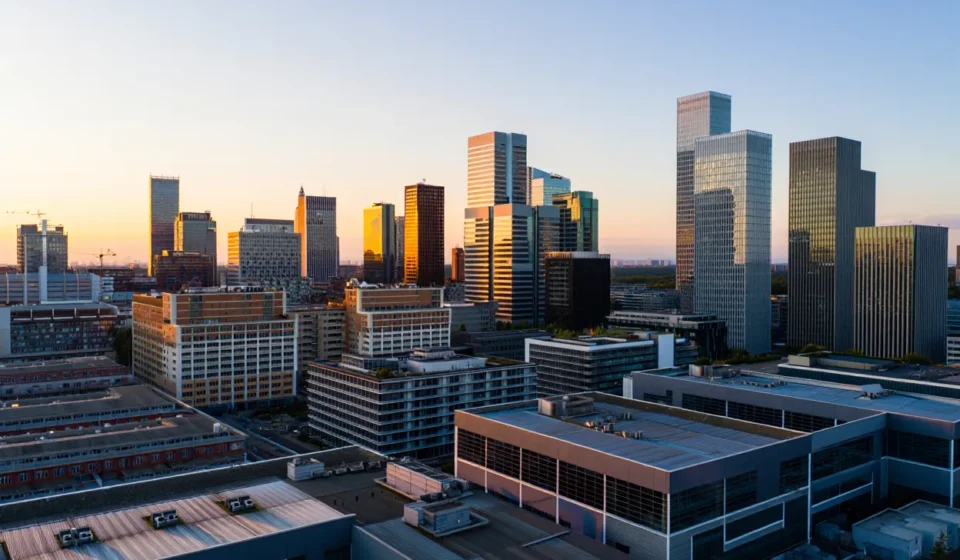

Office towers that once symbolized the heartbeat of business districts are taking on entirely new identities. Across major cities in North America, Europe, Asia, and other regions, commercial real estate owners are converting aging office buildings into residential housing, retail destinations, public gathering places, and environmentally focused community centers. Fresh international property reports released on July 21, 2026, suggest that these conversions have reached record levels, reflecting how hybrid work has permanently reshaped demand for traditional office space. We are witnessing a defining chapter in urban development where empty floors are becoming homes, parks, cultural venues, and neighborhood hubs that serve people throughout the day rather than only during business hours.
Hybrid Work Continues to Shape Property Markets
Several years after flexible work arrangements became common, companies continue to balance office attendance with remote collaboration. While many employers still value physical workplaces for meetings, innovation, and team building, fewer organizations require employees to spend every weekday at a central office.
This lasting shift has left many downtown buildings operating below full capacity. Property owners who once depended on long term corporate leases are now exploring different ways to generate value. Mixed use redevelopment has emerged as one of the strongest responses because it creates neighborhoods that combine housing, shopping, recreation, public services, and green areas within a single location.
Urban economists have noted that cities with a broader mix of residential and commercial activity often experience stronger local business activity during evenings and weekends. Instead of empty business districts after office hours, these areas remain active with residents, visitors, restaurants, cultural events, and community programs.
Office Buildings Find New Purpose
Many commercial buildings were originally designed with large open floor plans, modern infrastructure, and central locations near public transportation. Although not every office tower can be converted efficiently, developers increasingly identify properties suitable for residential apartments, student housing, senior living communities, and affordable housing initiatives.
Mixed use redevelopment often combines several functions within the same property. A former corporate headquarters may now include apartments on upper floors, local businesses at street level, shared workspaces for entrepreneurs, childcare facilities, healthcare clinics, fitness centers, and landscaped public spaces.
This approach allows developers to diversify income while supporting city goals related to housing availability, sustainability, and neighborhood revitalization.
Green Community Centers Become Part of Urban Planning
One of the most notable findings from recent property research is the growing integration of environmentally focused community spaces. Rather than treating sustainability as a separate project, developers increasingly include it within redevelopment plans from the beginning.
New community centers frequently feature rooftop gardens, indoor green spaces, energy efficient lighting, rainwater collection systems, bicycle facilities, and educational spaces where residents can participate in environmental programs. Public plazas with trees and shaded seating also improve walkability while reducing excessive heat in dense city centers.
Organizations including the United Nations Human Settlements Programme have long supported sustainable urban development that balances economic growth with quality of life. These redevelopment projects closely reflect those broader planning goals.
Why Cities Support Commercial Conversions
Municipal governments have several reasons to encourage adaptive reuse rather than allowing large office buildings to remain vacant for years. Housing shortages continue to affect many metropolitan regions, while unused commercial properties generate lower economic activity and reduced tax revenue.
Many city leaders now offer planning incentives, updated zoning regulations, or financial assistance for projects that introduce residential units and public amenities into former office districts.
- More housing opportunities near employment centers.
- Greater support for local restaurants and neighborhood businesses.
- Improved public safety through increased daily activity.
- Reduced environmental impact by reusing existing structures.
- Better use of transportation infrastructure already serving downtown districts.
Adaptive reuse can also preserve historically significant buildings while allowing them to meet modern community needs.
Developers Face Significant Challenges
Despite growing momentum, converting office buildings is rarely simple. Every property presents unique engineering and financial considerations. Older structures may require major upgrades to plumbing, ventilation, electrical systems, accessibility standards, and fire safety requirements before residential occupancy becomes possible.
Building layouts originally designed for offices sometimes lack sufficient natural light or window placement needed for apartments. Developers must carefully redesign floor plans while meeting local construction regulations.
Financing also remains a major consideration. Higher construction costs, changing interest rates, and uncertain market conditions require careful planning before large scale redevelopment begins. Successful projects often involve cooperation among private investors, local governments, architects, community organizations, and financial institutions.
Residents Gain More Than New Housing
The benefits extend well beyond additional residential units. Communities frequently gain access to public gathering spaces that encourage social interaction and neighborhood identity.
Walking through a converted district often feels noticeably different from the traditional financial centers of previous decades. Morning commuters now share sidewalks with families, students, retirees, artists, and local shoppers. Cafes remain busy well into the evening. Parks host outdoor performances and weekend markets. Community centers provide educational programs, fitness classes, and cultural activities that bring together residents from different backgrounds.
This broader mix of activity creates stronger local connections while helping small businesses reach customers throughout the entire week instead of relying almost exclusively on office workers.
Sustainability Plays a Central Role
Environmental considerations have become one of the strongest arguments supporting adaptive reuse. Demolishing large commercial buildings generates significant construction waste and requires substantial new materials for replacement projects.
Reusing existing structures often reduces carbon emissions associated with new construction while preserving valuable building materials already in place. Energy efficient retrofits further improve long term environmental performance through modern insulation, efficient heating systems, renewable energy technologies, and smart building management.
Resources provided by the World Green Building Council continue to encourage building practices that reduce environmental impact while supporting healthier urban environments.
Investors Adjust Long Term Strategies
Commercial property investors increasingly recognize that future success may depend upon flexibility rather than relying exclusively on traditional office leasing. Mixed use developments spread financial risk across several types of tenants and users.
Residential leasing, retail activity, hospitality services, educational facilities, healthcare providers, and flexible workspaces together create multiple income sources that may offer greater stability during changing economic conditions.
Many institutional investors now evaluate properties based not only on office occupancy but also on their potential for adaptive reuse. Buildings located near transit systems, universities, healthcare districts, and entertainment areas often attract particular interest because they support a wider variety of redevelopment opportunities.
What This Means for Workers and Businesses
Hybrid work does not signal the end of the office. Many organizations continue investing in collaborative workplaces where employees gather for meetings, creative projects, client presentations, and team development. At the same time, companies are becoming more selective about the amount of office space they lease.
Businesses choosing smaller but higher quality workplaces may ultimately contribute to healthier downtown districts if surrounding neighborhoods include residents, public spaces, cultural attractions, and local services. Employees benefit from lively environments that remain active beyond traditional working hours.
The relationship between offices and cities is becoming more balanced. Rather than existing primarily as business destinations, downtown neighborhoods are gradually evolving into places where people can live, learn, work, shop, relax, and build lasting community connections.
Looking Ahead
The record pace of commercial office conversions reported this year suggests that hybrid work is no longer viewed as a temporary adjustment. Instead, it has become one factor among many influencing how cities grow and how buildings serve the public.
We expect redevelopment efforts to continue as governments refine planning policies, investors pursue diversified property strategies, and communities seek more inclusive neighborhoods. While each city will follow its own path, one common theme is becoming increasingly clear. The most successful downtown districts are likely to be those that welcome people throughout the entire day with housing, green spaces, public services, cultural experiences, and workplaces existing side by side.
The skyline may still feature familiar office towers, but behind many of those windows a different story is unfolding. Spaces once reserved almost exclusively for corporate activity are gradually becoming homes, gathering places, and community landmarks that reflect how modern cities continue to adapt to changing patterns of work and everyday life.