

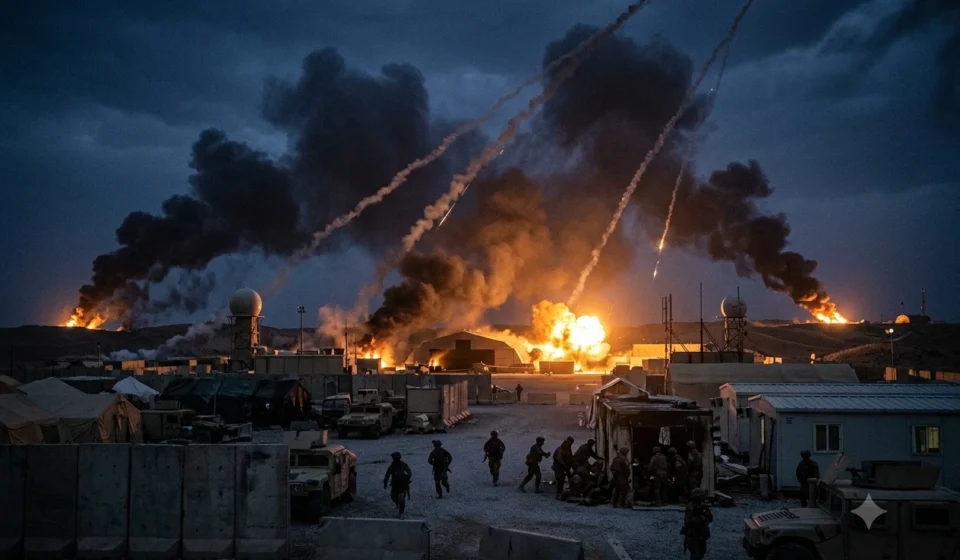

Missile sirens, emergency alerts, and rapidly shifting military operations marked another dangerous chapter in the Middle East on July 29, 2026, after Iran launched ballistic missiles toward United States military positions in Jordan. The strikes pushed an already volatile region closer to broader confrontation and prompted swift retaliatory air operations carried out by United States and Saudi forces against militant locations in Iraq. The latest exchange has intensified concerns among governments, security analysts, humanitarian organizations, and civilians who fear that localized conflicts could expand into a wider regional war with lasting political, economic, and humanitarian consequences.
Missile strikes signal a sharp escalation
The reported ballistic missile launches represent one of the most serious direct military actions involving Iranian forces and United States positions in recent months. Jordan, a long standing regional security partner of Washington, has hosted military personnel and facilities that support coalition operations across the Middle East. Any attack on those installations carries strategic significance because it places both military readiness and regional diplomatic relationships under immediate pressure.
Military officials began assessing the scope of the strikes while air defense systems worked to intercept incoming projectiles. Initial reports focused on damage assessments, possible casualties, and the operational status of affected facilities. Such evaluations often continue for many hours after an attack because commanders must inspect infrastructure, confirm personnel safety, and determine whether additional threats remain.
For residents across neighboring countries, the events unfolded with uncertainty. Families followed television broadcasts and mobile alerts while governments monitored border security and prepared emergency response plans. The psychological effect of missile attacks often reaches far beyond the immediate target, creating anxiety throughout an entire region.
Retaliatory airstrikes target militant sites in Iraq
Following the missile attack, United States and Saudi military forces reportedly carried out coordinated air operations against militant sites inside Iraq. Officials described the strikes as a response intended to reduce the operational capabilities of armed groups believed to support hostile activities against coalition forces.
Military planners typically pursue several objectives during retaliatory operations. These include disrupting weapons storage locations, command centers, transportation routes, and logistical networks that enable future attacks. The success of such missions depends not only on precision targeting but also on timely intelligence gathered from surveillance aircraft, satellite imagery, and regional security partners.
The decision to respond alongside Saudi Arabia also highlights continuing security cooperation among countries seeking to contain instability across the region. Joint military operations require extensive coordination involving intelligence sharing, flight planning, communication systems, and diplomatic consultation before aircraft enter contested airspace.
Regional tensions have been building for months
The latest confrontation did not emerge in isolation. The Middle East has experienced a steady rise in military incidents involving state forces, proxy organizations, and cross border attacks. Competition for regional influence, longstanding political rivalries, and unresolved security disputes have repeatedly increased the likelihood of direct confrontation.
Analysts note that each exchange raises the risk of miscalculation. A single missile strike can trigger multiple retaliatory actions, each producing additional political pressure for further military responses. This cycle becomes increasingly difficult to control when several governments and armed groups operate across overlapping conflict zones.
Jordan occupies a particularly sensitive position because it borders several areas affected by armed conflict while maintaining security partnerships with Western allies and neighboring Arab nations. Protecting military facilities inside Jordan therefore carries significance that extends beyond national borders.
Diplomatic efforts face growing pressure
International leaders are expected to intensify diplomatic engagement as concerns grow over the possibility of broader conflict. The United Nations has repeatedly called for restraint during periods of heightened military activity, encouraging dialogue aimed at preventing additional violence.
Diplomatic channels often remain active even while military operations continue. Behind closed doors, governments communicate through ambassadors, intelligence contacts, and international organizations to reduce misunderstandings that could accidentally widen hostilities. These conversations rarely receive public attention, yet they frequently play an essential role in preventing further escalation.
Regional partners may also seek emergency consultations involving defense ministers and foreign affairs officials. Such meetings allow governments to coordinate humanitarian planning, strengthen border security, and evaluate the broader implications for international commerce and energy markets.
Security concerns extend beyond the battlefield
The consequences of military escalation reach far beyond active combat zones. Airlines may adjust flight paths to avoid potential missile corridors, shipping companies may review maritime routes, and businesses with regional operations often activate contingency plans to protect employees and critical infrastructure.
Energy markets remain especially sensitive to developments across the Middle East because the region plays a central role in global oil production and transportation. Investors closely monitor military activity for signs that production facilities or major shipping routes could face disruption. Even limited uncertainty can contribute to price volatility affecting consumers and industries around the world.
Cybersecurity specialists also remain alert during periods of geopolitical conflict. Modern military confrontations increasingly include digital operations targeting communications networks, financial systems, and government infrastructure alongside conventional military actions.
Humanitarian impact remains a growing concern
Every escalation raises fears for civilians living near military installations and conflict zones. Humanitarian organizations frequently prepare for possible population displacement, medical emergencies, and interruptions to essential services such as electricity, clean water, and healthcare.
Children, older adults, and individuals with chronic medical conditions often face the greatest challenges during periods of instability. Schools may suspend classes, hospitals may shift into emergency operations, and families may struggle to obtain basic supplies if transportation routes become unsafe.
The International Committee of the Red Cross continues to advocate for the protection of civilians and compliance with international humanitarian law during armed conflicts. Such principles seek to reduce harm to noncombatants even when military operations intensify.
Military analysts watch for the next phase
Defense experts are closely examining whether the latest exchange represents a limited retaliatory episode or the beginning of a broader campaign involving additional countries and armed organizations. Much depends on political decisions made during the coming days as leaders weigh military objectives against diplomatic and economic risks.
Several indicators will receive particular attention.
- Additional missile launches or drone attacks targeting military facilities.
- Expanded coalition military operations across neighboring territories.
- Emergency diplomatic meetings involving regional governments.
- Changes in military readiness levels among allied nations.
- Humanitarian developments affecting civilian populations.
Security experts caution that predicting future actions remains difficult because military decisions often depend on rapidly changing intelligence and political calculations.
Global attention remains fixed on the Middle East
The events of July 29, 2026, illustrate how quickly regional tensions can evolve into crises with international consequences. Governments across Europe, Asia, and North America are likely to continue monitoring developments while reviewing contingency plans for diplomatic engagement, economic stability, and the protection of their citizens abroad.
For millions of people living throughout the Middle East, the priority extends beyond military strategy or geopolitical competition. Families seek safety, communities hope for stability, and businesses look for signs that daily life can continue without further disruption. Those human concerns remain at the center of every major regional crisis.
Whether the coming days bring renewed diplomacy or additional military action will depend on choices made by political leaders, military commanders, and international partners. The world will be watching closely as efforts continue to prevent another dangerous escalation from developing into a conflict with even wider consequences.