

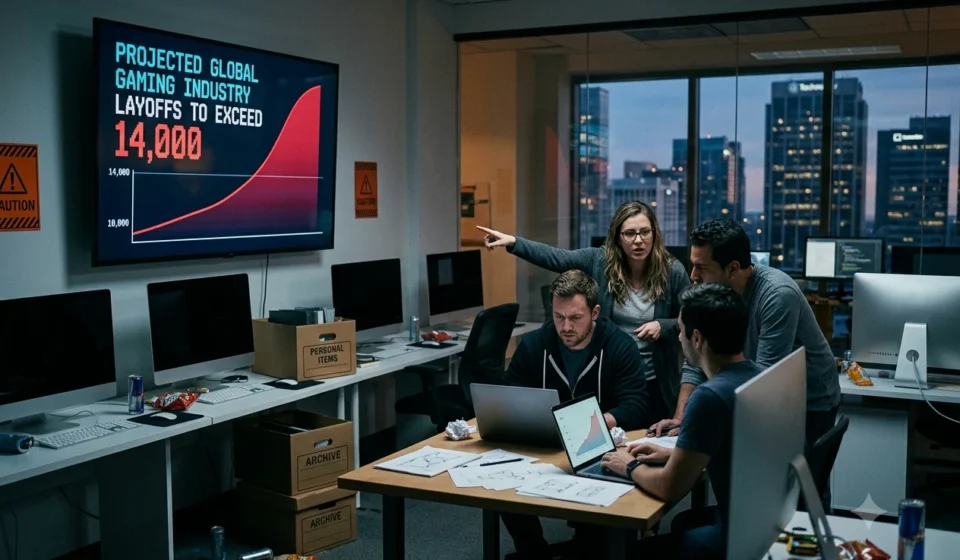

The global video game business is facing one of its most difficult employment crises in recent memory. Industry tracking reports released on July 29, 2026, suggest that gaming sector layoffs could exceed 14,000 positions before the end of the year, driven by sweeping restructuring programs at Microsoft, Ubisoft, and several European game developers. While blockbuster releases continue to attract millions of players, many studios are confronting higher development costs, slower revenue growth, and growing pressure to deliver larger games with fewer resources. Behind every restructuring announcement are artists, programmers, designers, writers, quality assurance specialists, and producers whose careers have been suddenly interrupted.
Why the gaming industry is cutting thousands of jobs
Gaming remains one of the largest entertainment industries in the world, yet commercial success has become increasingly difficult to achieve. Modern game production often requires hundreds of developers working for many years before a title reaches consumers. Budgets for major releases have climbed into the hundreds of millions of dollars, while marketing expenses continue to grow alongside player expectations.
Executives across the industry argue that restructuring has become necessary after years of rapid hiring during periods of exceptional consumer demand. Many publishers expanded aggressively when players spent more time at home and digital sales surged. Once market conditions stabilized, several companies found themselves supporting development teams that had grown faster than long term revenue.
Analysts also point to delayed releases, rising labor expenses, increasing technology investments, and fierce competition from free to play games as contributing factors. Subscription services have changed purchasing habits for many consumers, while live service titles continue competing for player attention long after launch.
Microsoft continues broad organizational restructuring
Microsoft remains one of the most closely watched companies in the current wave of workforce reductions. Since expanding its gaming business through major acquisitions, the company has been integrating development teams while reviewing overlapping operations. Organizational restructuring has affected multiple divisions, including game development, publishing support, and administrative functions.
Industry observers note that consolidation often follows major acquisitions. Duplicate departments, changing strategic priorities, and evolving investment plans frequently lead executives to redesign organizational structures. Although Microsoft continues investing heavily in gaming technologies, cloud infrastructure, and artificial intelligence, those investments have not prevented significant staff reductions.
The company still controls an extensive portfolio of globally recognized franchises, yet executives face ongoing pressure to improve operational efficiency while maintaining a steady release schedule.
Ubisoft confronts another difficult period
Ubisoft has also experienced sustained financial pressure following project delays, changing consumer preferences, and several high profile production challenges. The publisher has adjusted its global workforce through restructuring efforts affecting multiple regions.
Developers within Ubisoft have spent years creating ambitious open world experiences that require enormous production teams. While many of those titles continue attracting loyal audiences, extended development timelines have increased financial risk. Investors increasingly expect publishers to demonstrate stronger cost discipline while maintaining competitive release calendars.
The latest workforce adjustments reflect broader efforts to streamline operations rather than isolated changes affecting only one studio.
European developers face growing financial pressure
The employment challenges extend well beyond the industry’s largest publishers. Independent studios and mid sized European developers are also reducing staff after facing tighter financing conditions and slower investment activity.
Smaller companies often depend on publisher funding or external investment to complete projects. When financing becomes more difficult to secure, studios may delay development, cancel projects, or reduce staffing levels to preserve cash reserves.
Several regional developers have shifted toward smaller productions that carry lower financial risk, replacing ambitious projects requiring years of development with games that can reach players more quickly.
The human cost behind the numbers
Statistics alone cannot fully describe the impact of these layoffs. Every redundancy represents years of experience, creative ambition, and personal sacrifice. Developers frequently relocate across countries to join specialized studios, spending long hours building virtual worlds that entertain millions.
When layoffs occur, experienced professionals often face months of uncertainty while searching for new opportunities in an increasingly competitive employment market. Families may postpone major financial decisions, relocate again, or leave the gaming industry entirely.
Many former employees continue sharing their portfolios across professional networking platforms, hoping their specialized skills in animation, engineering, storytelling, audio production, or game design will attract recruiters seeking experienced talent.
Artificial intelligence adds another layer of uncertainty
The rapid adoption of artificial intelligence tools has intensified conversations throughout the gaming business. Developers increasingly use machine learning systems to support programming, testing, localization, animation workflows, asset management, and content generation.
Industry leaders generally describe artificial intelligence as a productivity tool rather than a replacement for creative professionals. Even so, many workers remain concerned that automation could reduce demand for certain production roles over time.
Studios continue experimenting with technology that shortens repetitive tasks while allowing designers and artists to focus on creative decision making. Whether those productivity gains ultimately create more employment or fewer positions remains one of the industry’s biggest unanswered questions.
Players may notice fewer risks and more familiar franchises
Layoffs can influence the games players eventually receive. Financial caution often encourages publishers to invest in established series with proven commercial appeal rather than experimental concepts carrying greater uncertainty.
This strategy may produce reliable financial results, but it can also reduce creative diversity across the marketplace. Independent developers frequently become the source of innovative gameplay ideas while larger publishers concentrate on recognizable intellectual property.
Consumers may also experience longer waits between major releases as remaining development teams manage increasingly ambitious projects with tighter budgets.
What industry experts are watching next
Employment specialists expect several trends to shape the gaming workforce during the remainder of 2026.
- Continued studio consolidation through mergers and acquisitions.
- Greater investment in artificial intelligence assisted production tools.
- Expansion of contract based development for specialized projects.
- Growing demand for developers with expertise in cloud services, multiplayer systems, and advanced graphics technologies.
- More careful hiring focused on long term sustainability rather than rapid expansion.
Many analysts believe hiring could gradually recover once companies complete restructuring efforts and development pipelines stabilize. The timing, however, remains uncertain because publishers continue evaluating global economic conditions alongside consumer spending trends.
The broader economic picture
The gaming sector does not operate in isolation. Rising operating costs, changing investment priorities, currency fluctuations, and cautious consumer spending have affected technology companies across multiple industries. Publicly traded publishers must balance shareholder expectations with long development cycles that often span five years or more.
Even successful game launches may require years before generating enough revenue to offset production expenses. Studios therefore face increasing pressure to control costs early in development rather than waiting until projects approach completion.
Industry professionals continue monitoring employment trends through organizations such as the International Game Developers Association, while broader market data remains available through resources published by the Statista gaming industry research portal.
A creative industry searching for stability
The projected loss of more than 14,000 jobs in 2026 marks another painful chapter for an industry built on imagination, technical excellence, and artistic collaboration. Studios remain committed to creating memorable experiences for players around the world, yet the business behind those experiences has become increasingly complex.
We are watching an industry attempt to balance creativity with financial discipline at a time when development costs continue climbing and player expectations grow with every generation of hardware. The coming months will reveal whether current restructuring efforts create a more sustainable foundation or simply mark another stage in an extended period of uncertainty. For thousands of developers searching for their next opportunity, that answer carries consequences extending far beyond quarterly earnings reports.