

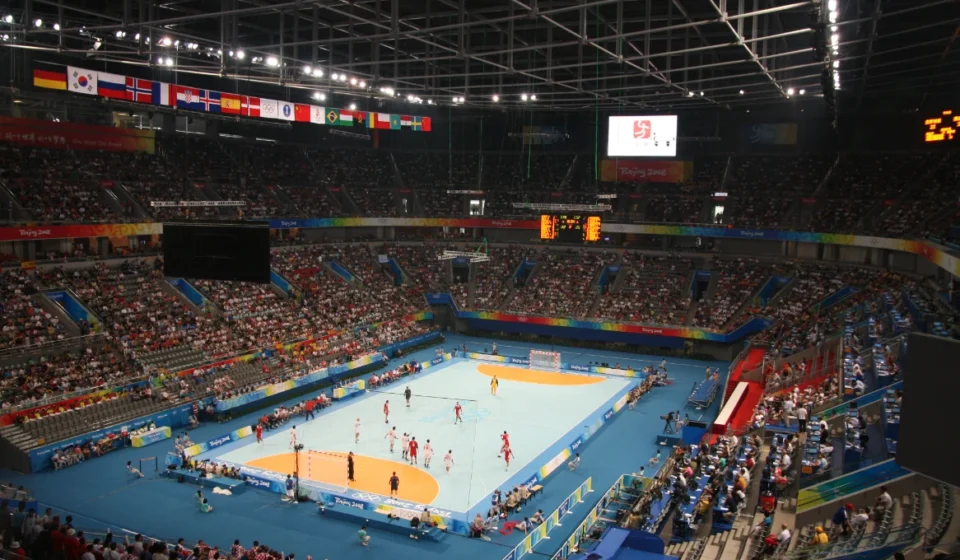

Beijing has opened its 17th citywide Sports Games, bringing together about 35,000 athletes across a broad program that combines established Olympic disciplines with newer mass participation sports. The scale of the event reflects a citywide effort to make competitive sport relevant not only to elite athletes, but also to children, students, working adults and older residents.
A Citywide Sports Festival Rather Than a Single Venue Event
The 17th Beijing Sports Games is being staged across the capital rather than confined to one competition site. Beijing authorities scheduled the Games from May through October, with competitions divided into youth, university and social groups. That structure allows athletes at very different stages of life to compete under the same broader sporting banner.
For many participants, the meaning of the Games is therefore less about a medal ceremony and more about having a place in Beijing’s sporting community. A teenager stepping onto a competition floor for the first time can share the same citywide event framework as an experienced amateur athlete who has spent years training after work.
That breadth is visible in the competition calendar. Official schedules include basketball, three on three basketball, badminton, table tennis, archery, martial arts, rowing, canoeing, tennis, rope skipping and fitness related disciplines. The program also gives space to activities designed for wider public participation, reinforcing the connection between competitive sport and everyday fitness.
Olympic Sports Meet New Forms of Participation
Traditional Olympic sports remain central to the Games. Young athletes are competing in disciplines such as swimming, athletics, basketball, badminton, table tennis and martial arts, while other events provide opportunities for athletes outside conventional elite pathways.
The inclusion of newer and less traditional activities is equally significant. Beijing has been expanding opportunities for residents to participate in sports through community competitions and social group events. Pickleball, for example, has been included in the social group program, with district level selection competitions used to form teams for the Games.
We see an important shift in that approach. A city sports festival no longer needs to define participation solely through established Olympic disciplines. It can also reflect the activities people are choosing in parks, schools, gyms and neighborhood recreation centers.
Youth Competition Remains a Major Focus
Young athletes form one of the most important foundations of the Games. Beijing’s official regulations divide several youth competitions by age, giving younger athletes opportunities to compete against peers while building experience in organized sport.
The badminton competition, for example, includes separate groups for athletes aged roughly 10 to 15, with singles, doubles, mixed doubles and team events depending on age. The competition is scheduled from August 10 through August 13.
Table tennis is following a similarly structured model, with competition for athletes aged 11 and younger as well as older youth categories. The event runs from August 8 through August 11 at Beijing Sport University.
These details matter beyond the results sheet. Youth competitions create an organized pathway from school and community sport toward higher levels of competition. Beijing’s sports authorities have also described the city’s youth championship system as an important platform for identifying and developing future sporting talent. The 2026 youth championship program alone is expected to involve more than 12,000 young athletes across dozens of sports.
Traditional Sports Add a Distinctive Beijing Dimension
The Games are also being used to broaden the definition of what belongs on a major sporting calendar. Six traditional ethnic sports have been incorporated into the 17th Beijing Sports Games alongside the city’s 12th Ethnic Traditional Sports Games.
The six events are pearl ball, shuttlecock style football known as cuqiu, shuttlecock kicking, three person board shoe racing, dragon boat racing and health oriented qigong. Organizers are sharing venues, competition procedures and results across the two events, creating a joint competition model intended to reduce duplication while expanding participation.
That arrangement gives athletes from different communities a wider platform to meet one another through sport. It also places traditional physical activities alongside mainstream competitive disciplines, allowing spectators to see a broader picture of Beijing’s sporting culture.
The Social Group Brings Competition Into Everyday Life
The social group events may be among the most relatable parts of the Games for ordinary Beijing residents. Participants can represent districts, workplaces or other eligible organizations, turning familiar recreational activities into formal competition.
The city’s social badminton tournament illustrates that model. The event brought together 17 teams and more than 700 badminton enthusiasts from across Beijing, with competitors divided into age groups ranging from people in their twenties to those in their sixties.
For those athletes, preparation can look very different from the highly controlled routines of professional competitors. Training may happen before the workday, after children have gone to bed or during a weekend afternoon at a local sports facility. Yet once the match begins, the nervousness, concentration and satisfaction of competition are familiar to anyone who has ever cared deeply about a result.
From Competition to a Broader Fitness Culture
The Games also fit into Beijing’s wider push to strengthen public fitness. The city has been developing more structured access to exercise through community activities, organized competitions and scientific fitness guidance. Its sports administration has explicitly linked the 17th Games with the development of a broader sports participation system that spans different ages and levels of ability.
That connection is especially visible in events such as health qigong. The social group competition includes several established routines, including Yijinjing, Wuqinxi, Baduanjin and Daoyin Yangsheng Gong. Athletes from districts throughout Beijing and eligible workplace organizations can take part under the Games’ social competition framework.
Such events remind us that a sports system is not sustained only by Olympic hopefuls. It also depends on people who keep moving throughout their lives, whether they are competing seriously, exercising for health or simply looking for a community built around shared activity.
Why the 35,000 Athlete Scale Matters
A field of about 35,000 athletes gives the 17th Beijing Sports Games an unusual reach. The number represents more than the size of a sporting event. It points to the logistical challenge of organizing competitions across districts, age groups, facilities and skill levels while maintaining consistent standards for eligibility, safety and judging.
Official competition documents show detailed requirements covering registration, medical eligibility, athlete documentation, competition rules and event management. Youth events, for example, require athletes to meet specified qualification standards and, in several sports, to have competed in qualifying championship events.
For Beijing, this kind of organization serves another purpose. It provides a practical test of the city’s sporting infrastructure, from specialist venues and training facilities to transport, medical support, officials and volunteer services.
A Sporting Calendar Designed to Keep Moving
The Games are not defined by one opening ceremony or one week of competition. Their May to October schedule creates a long sequence of sporting events across Beijing. Some competitions have already taken place, while others are continuing through August and beyond.
That extended format changes the experience for spectators. Instead of concentrating attention on a single championship period, the Games repeatedly bring sporting competition into different parts of the city. A basketball court in one district, a badminton hall in another and a water sports venue elsewhere can all become temporary centers of attention.
For athletes, that spread can create a stronger sense that they are representing their local communities. For residents, it can make high level competition feel closer and more accessible.
What the Games Could Leave Behind
The most lasting measure of the 17th Beijing Sports Games may not be the final medal table. It may be whether more young people continue playing after their competition ends, whether adults find reasons to exercise regularly and whether neighborhood sports groups become stronger because they had a chance to compete.
Beijing’s own sports planning places considerable weight on youth development, mass fitness and the connection between sport and other parts of city life. Officials have also highlighted the potential for sporting events to support tourism, cultural activities and local consumption.
That makes the 2026 Games a useful snapshot of how a major Chinese city is trying to balance elite athletic development with mass participation. The bright lights of a competition venue may belong to the winners, but the deeper legacy can belong to everyone who leaves wanting to return to the court, track, pool or training hall.
Beijing’s Sporting Ambition Beyond the Medals
The 17th Beijing Sports Games arrives with a scale that is easy to measure but harder to fully capture. About 35,000 athletes are participating, hundreds of competitions are spread across the city and a wide range of sports brings together children, university students and adults.
What stands out is the breadth of the invitation. Beijing is presenting sport not simply as a pathway toward elite competition, but as a continuing part of civic life. The presence of Olympic disciplines alongside emerging participation sports and traditional activities gives the Games a character that reaches well beyond the podium.
As competition continues through the coming months, the most meaningful scenes may be the quiet ones: a young athlete tying a pair of worn competition shoes, a parent watching from the edge of a court, teammates encouraging one another before a match, or an older participant stepping forward with the confidence that comes from years of practice. Those moments are the human measure of a citywide sporting event, and they are likely to remain long after the final results are recorded.
For official competition schedules and updates, readers can follow the Beijing Municipal Sports Bureau and the Beijing Government portal, which publish information on individual events, venues and competition arrangements.