

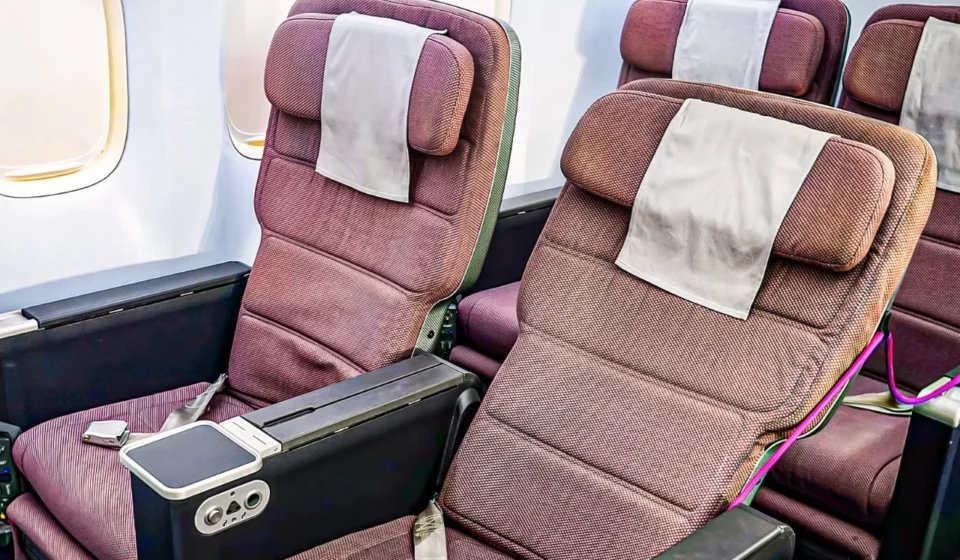

Air travel is entering a new financial chapter. Fresh airline industry data released on July 18, 2026, shows that premium passenger seating and flexible international cargo services now generate nearly half of global airline revenue. The shift reflects a growing effort by carriers to offset rising operating costs while responding to changing traveler expectations. Standard economy ticket sales, once the backbone of airline income, are delivering thinner margins as inflation continues to pressure households and businesses alike.
For millions of travelers, the result is becoming increasingly visible long before boarding begins. Cabin layouts are changing, premium sections are expanding, and airlines are investing more heavily in services that promise comfort, flexibility, and additional value. Behind these visible upgrades lies a broader strategy designed to protect profitability in a period marked by higher fuel costs, labor expenses, aircraft maintenance bills, and supply chain disruptions.
Premium cabins become a financial engine
For decades, premium seating served a relatively small group of corporate travelers and affluent vacationers. That picture has evolved dramatically. Airlines now market premium economy, business class, and upgraded seating options to a much wider audience. Travelers celebrating special occasions, remote workers seeking additional comfort, and families willing to pay more for extra space have all contributed to stronger demand.
The economics are difficult for airlines to ignore. A premium seat occupies more cabin space than an economy seat, yet it often generates several times more revenue. Even when aircraft depart without every premium seat occupied, the higher average fares can significantly improve overall flight profitability.
Carriers are also refining their pricing strategies through sophisticated revenue management systems. Instead of assigning fixed fares months in advance, airlines continuously adjust prices based on booking trends, seasonal demand, competitor activity, and customer purchasing behavior. Premium products have become central to this approach because travelers purchasing them often value flexibility and comfort over the lowest possible fare.
Inflation changes both airline costs and passenger behavior
Inflation has affected nearly every part of airline operations. Fuel remains one of the industry’s largest expenses, but carriers are also facing higher wages, increased airport charges, more expensive aircraft components, and rising financing costs for fleet expansion.
Passengers are responding differently depending on their budgets. Many leisure travelers continue searching aggressively for discounted economy fares, while another segment has shown a willingness to spend more on experiences that reduce travel stress. Airlines see this division as an opportunity to diversify revenue rather than relying solely on large volumes of low margin ticket sales.
We are also seeing airlines introduce smaller premium upgrades that appeal to travelers who may not purchase full business class tickets. Extra legroom seats, priority boarding, airport lounge access, premium meal packages, and flexible ticket changes create additional income while giving passengers greater choice over how they travel.
International cargo remains a powerful source of stability
Passenger services tell only part of the story. International cargo operations have become another major pillar supporting airline finances.
Global supply chains continue to depend on air freight for high value electronics, pharmaceuticals, medical equipment, luxury goods, and time sensitive manufacturing components. Cargo demand often follows different economic patterns than passenger travel, allowing airlines to balance revenue across multiple business segments.
Flexible cargo capacity has become especially valuable because airlines can respond quickly to shifts in international trade. During periods of weaker passenger demand, cargo operations may help stabilize financial performance. When passenger travel strengthens, carriers benefit from combining people and freight on the same long haul routes.
The International Air Transport Association regularly highlights the growing importance of diversified airline revenue streams as the aviation sector adapts to changing economic conditions and evolving customer demand.
Aircraft interiors are being redesigned
The financial importance of premium travel is influencing aircraft design itself. Airlines ordering new aircraft increasingly request cabin layouts that include additional premium economy rows, modern business class suites, and adaptable seating configurations.
Manufacturers and interior suppliers are responding with lighter seats, improved storage, advanced entertainment systems, and privacy features that make premium cabins more attractive without dramatically increasing aircraft weight.
Some airlines are also redesigning older aircraft during scheduled maintenance. Rather than simply replacing worn seats, they are reconfiguring cabin space to create more premium offerings while preserving enough economy capacity to serve price sensitive travelers.
Technology helps airlines identify profitable opportunities
Artificial intelligence and advanced analytics are playing an increasingly important role in commercial aviation. Airlines analyze enormous amounts of booking information to predict purchasing patterns and identify customers who may be interested in premium upgrades.
Instead of offering identical upgrade prices to every passenger, many carriers now present personalized offers through mobile applications, email campaigns, or airport check in systems. A traveler flying for business may receive a different offer than a family traveling during school holidays.
This personalized approach allows airlines to maximize revenue while improving customer satisfaction through more relevant options.
Business travel finds a new balance
Corporate travel has recovered unevenly across global markets. Virtual meetings remain common for routine discussions, but businesses continue to invest in face to face meetings where relationships, negotiations, and major decisions benefit from personal interaction.
Companies that do authorize travel are often placing greater value on employee wellbeing during long international journeys. That trend has helped sustain demand for premium cabins, particularly on intercontinental routes where comfort can influence productivity before important meetings.
Leisure travelers have also become part of this premium customer base. Some save throughout the year for a more comfortable holiday experience, while others use loyalty points or promotional offers to secure better seating without paying full published fares.
Consumers may notice higher fares in economy cabins
The growing importance of premium revenue does not necessarily mean economy travel will disappear. Budget conscious passengers remain essential to airline networks. However, travelers may notice that the lowest advertised fares include fewer services than in previous years.
Many airlines continue separating products into multiple fare categories, allowing customers to pay only for the services they want. Checked baggage, preferred seating, ticket flexibility, and onboard meals may carry additional charges even on traditional full service carriers.
This structure allows airlines to maintain competitive entry level fares while generating additional income from optional purchases.
- Premium seating generates higher revenue per passenger.
- Cargo operations provide financial resilience during changing travel demand.
- Optional travel services create new income beyond base ticket prices.
- Advanced pricing technology helps airlines respond quickly to market conditions.
Competition is becoming more sophisticated
Airlines are not simply competing on ticket prices anymore. Cabin comfort, airport lounge experiences, onboard connectivity, dining quality, digital booking tools, and loyalty rewards all influence purchasing decisions.
Low cost carriers are introducing more premium options while traditional network airlines continue refining luxury experiences for long distance travelers. This convergence has created a more competitive marketplace where airlines seek to attract passengers across a broader range of budgets.
Industry observers expect future competition to focus even more heavily on customer experience rather than basic transportation alone.
Environmental pressures remain part of the equation
The aviation industry continues working toward lower emissions while expanding premium offerings. Airlines are investing in newer aircraft that consume less fuel and exploring sustainable aviation fuel as production increases.
Organizations including the International Civil Aviation Organization continue supporting global efforts to improve aviation efficiency while reducing environmental impacts.
Greater profitability from premium services may also provide airlines with additional financial capacity to invest in cleaner technology, fleet modernization, and operational improvements that reduce fuel consumption.
What this means for travelers and the industry
The latest revenue figures illustrate how rapidly airline business models are changing. Premium seating and adaptable cargo services have evolved from supporting businesses into core financial drivers. That shift reflects both economic necessity and changing customer expectations in an inflationary environment.
For travelers, the future likely brings more choices rather than fewer. Economy cabins will continue serving millions of passengers, but premium products are expected to become increasingly diverse and accessible through targeted offers, loyalty programs, and flexible pricing.
For airlines, balancing affordability with profitability will remain one of the industry’s defining challenges. Those capable of delivering comfort, operational efficiency, reliable cargo networks, and personalized customer experiences are likely to remain best positioned as global aviation continues adapting to economic uncertainty and evolving travel habits.