

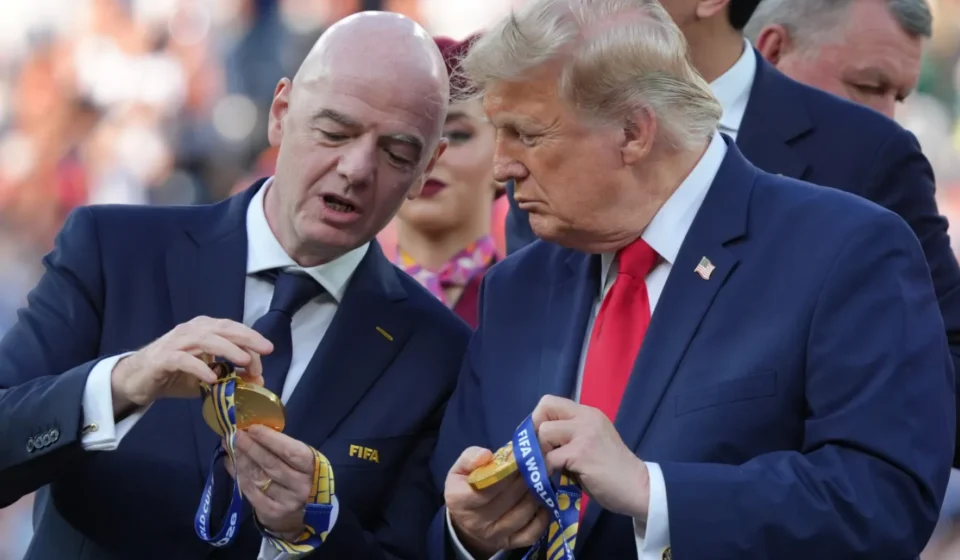

The United States Congress has turned its attention toward one of the most influential organizations in global sports after a House Democrat launched a formal investigation into FIFA over allegations involving financial improprieties and possible executive quid pro quo arrangements. The inquiry marks another moment of intense public scrutiny for the governing body of international football, raising fresh questions about transparency, accountability, and ethical leadership at the highest levels of the game.
Football supporters across the globe often see FIFA through the excitement of World Cup celebrations, unforgettable goals, and national pride. Behind those memorable moments, however, sits an organization responsible for billions of dollars in commercial revenue, broadcasting agreements, sponsorship contracts, and development funding. When concerns arise about how those resources are managed, the consequences extend far beyond boardrooms and political offices. They reach athletes, fans, national football associations, and communities that depend on investment in the sport.
What the Congressional Investigation Seeks to Examine
The newly announced inquiry is expected to examine allegations involving financial management and whether any executive decisions may have been influenced by improper exchanges of favors or benefits. Lawmakers are reportedly seeking documentation, communications, and financial records that could clarify whether governance standards were followed during key organizational decisions.
Congressional investigations do not automatically imply wrongdoing. Instead, they are designed to gather evidence, evaluate testimony, and determine whether additional oversight or legislative action may be appropriate. At this stage, the investigation represents an effort to establish facts rather than conclusions.
Members of Congress have increasingly shown interest in international organizations whose activities intersect with American businesses, financial institutions, media companies, and sporting events. Because FIFA maintains significant commercial relationships involving United States companies and regularly stages major competitions within the country, congressional oversight has become more relevant than in previous decades.
Why FIFA Continues to Face Intense Oversight
FIFA has spent years attempting to rebuild public confidence following earlier corruption scandals that reshaped global football governance. Those earlier investigations led to criminal prosecutions, executive resignations, governance reforms, and renewed commitments to ethical standards.
The organization has since introduced measures intended to improve transparency, strengthen compliance procedures, and increase independent oversight. Information about governance policies, ethics regulations, and organizational reforms is publicly available through the official FIFA governance resources.
Even with those reforms, critics have continued to question whether sufficient safeguards exist to prevent conflicts of interest involving senior officials. Every new allegation inevitably invites comparisons with the organization’s difficult history, making public confidence especially sensitive whenever financial concerns emerge.
Alleged Quid Pro Quo Arrangements Draw Particular Attention
The phrase quid pro quo generally refers to an exchange in which one benefit is provided in return for another. Within corporate or nonprofit governance, allegations involving such arrangements often focus on whether official decisions were improperly influenced by personal, political, or financial considerations.
Investigators will likely examine whether any agreements involving executives complied with internal ethics policies and applicable laws. That process may include reviewing contracts, correspondence, meeting records, and financial disclosures to determine whether decision making remained independent.
Legal experts frequently caution that allegations alone should not be interpreted as proof of misconduct. Congressional inquiries often conclude with findings that recommend policy improvements even when no criminal violations are established.
Financial Transparency Remains Central to Modern Sports Governance
International sports organizations oversee enormous financial ecosystems. Revenue from broadcasting rights, global sponsorships, licensing agreements, hospitality programs, and tournament operations can reach billions of dollars during each World Cup cycle.
Managing resources of that scale requires detailed financial controls, independent audits, ethical review procedures, and transparent reporting. Organizations that govern global competitions are expected to demonstrate that funding decisions are made fairly and that development programs benefit member associations as intended.
International governance specialists often point to transparency as one of the strongest protections against reputational damage. Public disclosure, external auditing, and independent ethics committees can help reassure athletes, commercial partners, governments, and supporters that organizational decisions follow established rules.
Potential Impact on FIFA and International Football
The congressional inquiry could influence several aspects of FIFA’s operations even before investigators reach any final conclusions. Sponsors, broadcasters, commercial partners, and member associations typically monitor high profile investigations closely because organizational stability directly affects long term planning.
Several possible outcomes could emerge during the investigative process.
- Requests for testimony from current or former FIFA officials.
- Additional document production involving financial records and internal communications.
- Recommendations for stronger governance standards affecting international sports organizations.
- Greater congressional attention toward financial oversight involving major sporting events hosted in the United States.
The United States is preparing to play an increasingly important role in international football through future global tournaments and expanding commercial investment. As a result, lawmakers may view stronger oversight as part of broader efforts to protect public confidence in organizations connected to those events.
The Growing Role of Congress in Sports Governance
Congressional oversight has expanded into areas once viewed primarily as private or international matters. Sports organizations increasingly intersect with public infrastructure, immigration policy, taxation, broadcasting regulation, consumer protection, and international commerce.
When billions of dollars move through organizations with substantial American business relationships, lawmakers often argue that transparency becomes a legitimate public interest. Hearings, document requests, and policy reviews have become familiar tools used to examine industries ranging from technology and finance to collegiate athletics and professional sports.
The House investigation into FIFA reflects that broader trend. Rather than focusing solely on match results or tournament planning, policymakers are examining whether governance practices meet expectations associated with organizations operating on a truly global scale.
How FIFA May Respond
Organizations facing congressional scrutiny often cooperate by providing requested records while defending the integrity of their governance systems. FIFA may choose to highlight reforms adopted during recent years, including ethics oversight, compliance programs, financial reporting procedures, and independent auditing.
The organization could also issue public statements reaffirming its commitment to transparency while contesting any allegations it believes lack factual support. Such responses are common during oversight proceedings because organizations seek to reassure stakeholders without interfering with ongoing investigations.
Information regarding international governance principles and anti corruption standards can also be explored through resources published by the Transparency International, a nonprofit organization that studies integrity and accountability across institutions worldwide.
What Comes Next
The pace of congressional investigations can vary significantly. Initial document requests are often followed by staff reviews, interviews, legal analysis, and public hearings before lawmakers determine whether additional action is warranted.
Should investigators identify evidence supporting concerns about financial misconduct or improper executive conduct, the inquiry could expand or be referred to other authorities with jurisdiction over potential legal violations. If evidence fails to support the allegations, lawmakers may instead recommend governance improvements without pursuing further enforcement.
Throughout the process, fairness remains a central principle. Organizations and individuals named during congressional oversight generally have opportunities to respond, provide evidence, and present their own explanations before conclusions are reached.
A Defining Test for Confidence in Global Football Leadership
Football continues to unite billions of people across cultures, languages, and continents through a shared passion that few sports can match. That influence carries equally significant expectations for honesty, responsible financial stewardship, and ethical leadership.
The congressional investigation announced on July 28, 2026, represents another chapter in the continuing effort to strengthen accountability within international sport. Whether the inquiry ultimately uncovers serious misconduct or reinforces existing governance reforms, its findings are likely to shape public discussion surrounding FIFA for years to come. For supporters who care deeply about the future of the world’s most popular sport, transparency may prove just as important as success on the pitch.