
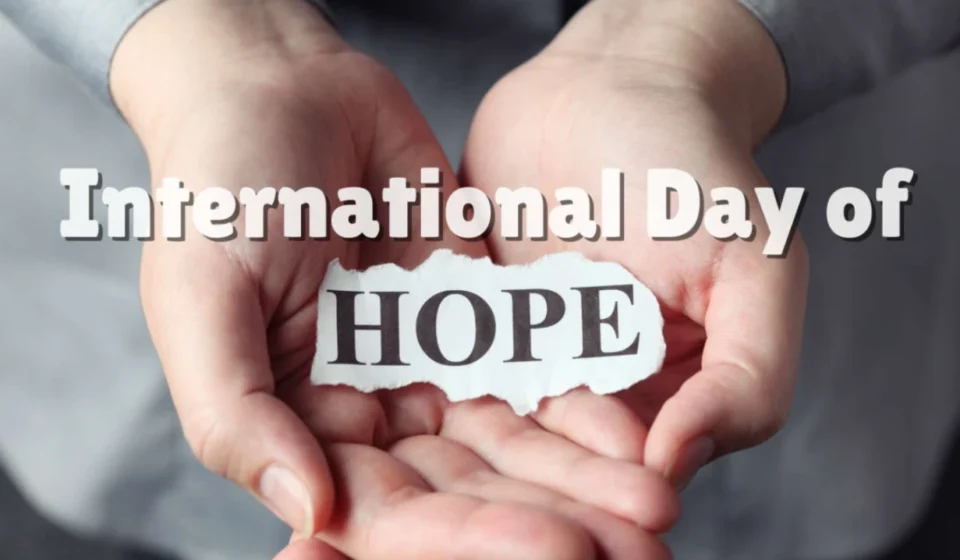

The United Nations has formally designated July 12 as the International Day of Hope, placing renewed attention on one of the defining challenges of modern society. Growing digital polarization, rising social isolation, and declining trust across communities have reshaped public conversations around the world. By introducing a new annual observance alongside a proposed Voluntary Hope Index, the UN hopes governments, researchers, educators, and community organizations will have a common framework for encouraging resilience, measuring social wellbeing, and strengthening connections between people.
The announcement, recognized by the United Nations General Assembly on July 12, 2026, arrives during a period when online platforms increasingly shape public opinion, relationships, and civic engagement. While technology has connected billions of people across continents, it has also contributed to misinformation, hostile discourse, and widening social divisions. The International Day of Hope seeks to encourage practical solutions that place cooperation, empathy, and community wellbeing alongside technological progress.
Why the United Nations created an International Day of Hope
International observances often draw attention to global issues that require cooperation beyond national borders. Climate action, human rights, education, and public health have long received dedicated recognition through UN initiatives. The International Day of Hope extends that tradition by focusing on emotional resilience and social cohesion, areas that many experts believe deserve greater policy attention.
Public health researchers have increasingly connected mental wellbeing with social stability. Feelings of belonging, trust, and optimism influence educational outcomes, workplace productivity, civic participation, and even physical health. When communities become deeply divided, the consequences often extend far beyond political disagreements, affecting families, schools, businesses, and neighborhoods alike.
The new observance encourages countries to develop local initiatives that strengthen community relationships while promoting respectful public dialogue. Rather than viewing hope as an abstract concept, the UN frames it as a measurable social resource that can influence long term development.
The Voluntary Hope Index introduces a new way to evaluate community wellbeing
Among the most notable elements of the announcement is the proposed Voluntary Hope Index. Rather than functioning as a ranking system, the index is intended to provide participating countries with a flexible framework for evaluating indicators related to emotional wellbeing, social trust, community participation, and mental health.
The initiative recognizes that economic performance alone does not fully describe how societies are functioning. Gross domestic product can measure production and spending, yet it says relatively little about whether people feel connected to their communities or optimistic about their future.
The proposed framework may encourage governments and research institutions to examine factors such as:
- Community participation and volunteer activity.
- Public trust in local institutions.
- Mental health support availability.
- Opportunities for meaningful social interaction.
- Educational programs promoting respectful dialogue.
- Local initiatives that reduce digital hostility.
Because participation remains voluntary, countries may adapt the framework according to their own priorities while sharing experiences with the international community.
Digital polarization has become a growing international concern
The rapid expansion of social media has reshaped how people consume information and interact with one another. Personalized recommendation systems often present users with content that reinforces existing beliefs. While these systems improve engagement, they may also reduce exposure to differing viewpoints.
Researchers studying online behavior have observed that emotionally charged content frequently spreads more rapidly than balanced discussion. Heated exchanges, misinformation, and coordinated campaigns can deepen divisions between communities that rarely interact face to face.
The International Day of Hope reflects increasing concern that digital communication should strengthen democratic participation rather than weaken public trust. Encouraging respectful conversations, media literacy, and responsible online behavior has become an important objective for educators, policymakers, and technology companies alike.
Mental health stands at the center of the initiative
Hope carries practical significance beyond symbolism. Mental health professionals have long associated optimism, purpose, and social support with stronger emotional resilience. Individuals facing uncertainty often benefit from supportive relationships, community engagement, and opportunities to contribute to shared goals.
The UN initiative acknowledges that hope cannot replace professional mental health care, yet it can complement broader public health strategies. Communities that foster inclusion, meaningful participation, and mutual respect may create environments where people feel less isolated and more willing to seek assistance when needed.
Educational institutions, employers, nonprofit organizations, and local governments may all contribute by creating spaces that encourage constructive discussion and collaborative problem solving.
Communities around the world may interpret hope differently
One of the strengths of the International Day of Hope lies in its flexibility. Hope carries different cultural meanings across societies, religions, and traditions. Rather than prescribing a single definition, the observance encourages communities to celebrate resilience in ways that reflect local customs and priorities.
Some countries may organize volunteer projects, public discussions, youth leadership programs, or neighborhood gatherings. Others may focus on educational campaigns promoting kindness, digital responsibility, or mental health awareness. Local creativity could become one of the initiative’s defining characteristics.
This approach also allows organizations working in conflict resolution, education, healthcare, and humanitarian assistance to align existing programs with broader international goals.
Technology companies may play an important role
The announcement also highlights ongoing conversations surrounding digital platforms and their influence on public discourse. Social networks, artificial intelligence systems, and online communities have become central spaces where people exchange ideas and build relationships.
Technology companies continue exploring ways to reduce harmful content while protecting freedom of expression. Improved moderation systems, stronger digital literacy resources, and transparent platform governance may contribute to healthier online environments.
The International Day of Hope could provide an opportunity for technology firms, researchers, and civil society organizations to collaborate on initiatives that encourage respectful communication without limiting legitimate public debate.
How individuals can participate beyond official events
Global observances achieve lasting value when people recognize their relevance in everyday life. The International Day of Hope encourages actions that strengthen relationships within families, workplaces, schools, and neighborhoods.
Small gestures often produce meaningful results. Listening carefully during disagreements, supporting local volunteer efforts, mentoring young people, and helping isolated neighbors all contribute to stronger communities. These everyday actions may appear modest individually, yet collectively they reinforce the social bonds that many experts believe are essential for long term wellbeing.
People interested in learning more about international development priorities can explore the United Nations and review broader wellbeing research published through the World Health Organization, both of which continue supporting global conversations around health, resilience, and sustainable development.
Looking ahead
The establishment of the International Day of Hope reflects a broader recognition that societies require more than economic growth and technological innovation to thrive. Trust, empathy, emotional resilience, and meaningful human connection remain essential foundations of healthy communities.
The proposed Voluntary Hope Index will likely evolve through collaboration among governments, researchers, and public health experts as participating nations determine how best to measure community wellbeing. Success will ultimately depend less on statistics and more on whether the initiative inspires lasting action within neighborhoods, classrooms, workplaces, and online spaces.
July 12 now joins the growing calendar of international observances that encourage collective reflection and practical action. At a time when digital conversations can quickly become polarized, the United Nations hopes this annual day will remind people that respectful dialogue, shared purpose, and genuine human connection remain powerful resources for building stronger societies.