

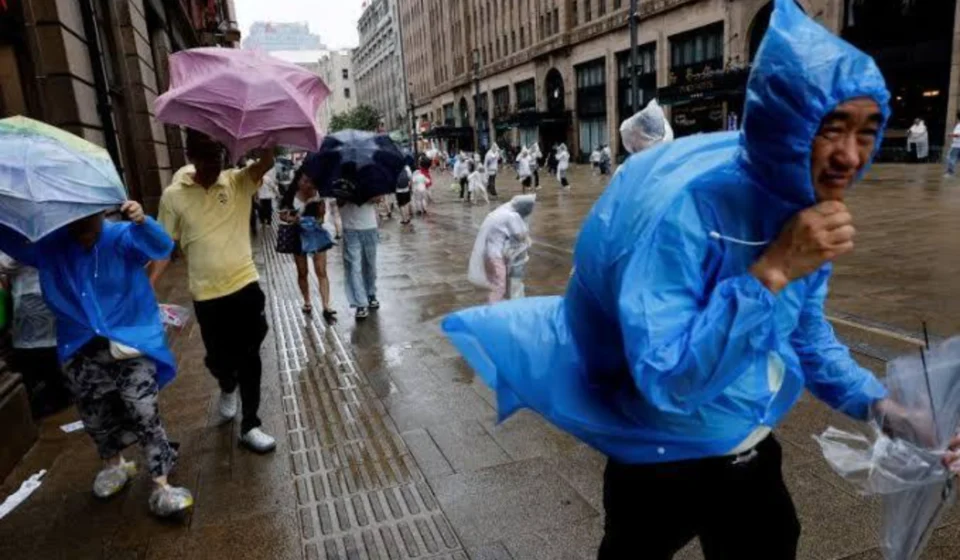

Typhoon Dolphin has forced more than 1 million people from their homes across eastern China as torrential rain, flooding and powerful winds disrupted daily life and brought major transport networks to a standstill. Authorities moved residents into emergency shelters while airports, public transportation services and maritime operations were suspended as the storm pushed inland on August 10, 2026.
Mass Evacuations Follow Dolphin’s Landfall
The scale of the evacuation reflects the danger created not only by the typhoon’s winds but also by the extraordinary volume of rain accompanying the system. More than 900,000 people were evacuated in Wenzhou in Zhejiang province, while Shanghai relocated about 215,600 residents from areas considered vulnerable to flooding. Together, those figures account for more than 1.1 million people moved to safer locations.
Dolphin made landfall in Zhejiang on Sunday with winds reaching about 151 kilometers per hour. Although the system weakened into a tropical storm after moving inland, its rainfall remained a serious threat. Officials warned of flooding and landslides as saturated ground, swollen waterways and overwhelmed drainage systems created hazards well beyond the immediate coastline.
For families leaving their homes, the evacuation was more than a weather precaution. Residents had to decide what could be carried, where they could stay and when it would be safe to return. In low lying communities, emergency movement also involved protecting elderly people, children and residents who could not travel without assistance.
Shanghai Faces Exceptional Rainfall and Severe Flooding
Shanghai has been among the most visible centers of the disruption. Some parts of the city experienced severe street flooding, with water reaching knee height in affected neighborhoods. Rainfall totals in parts of the city approached 400 millimeters, while Shanghai recorded its highest 24 hour rainfall in more than 150 years.
The flooding has affected roads, neighborhoods and public services at a time when millions of people normally depend on the city’s dense transportation network. Authorities suspended nonessential operations in some affected areas and urged residents to avoid unnecessary travel.
The scenes are a reminder that even a highly developed urban area can become vulnerable when rainfall arrives faster than drainage and transportation systems can handle it. For residents, familiar streets can quickly become impassable, while underground spaces, tunnels and low lying roads present additional dangers during intense rainfall.
More Than 1,300 Shanghai Flights Cancelled
Air travel was among the first major services affected by the storm. More than 1,300 flights were cancelled at Shanghai’s airports as airlines and airport authorities responded to dangerous winds, heavy rain and deteriorating operating conditions.
The disruption extended beyond aviation. Ferry and cruise services were suspended in affected coastal areas, while public transportation was interrupted in places where flooding made normal operations unsafe. Railway services were also affected in parts of the storm zone, leaving travelers facing delays and cancellations as authorities assessed conditions.
For people attempting to travel through eastern China, the situation has created a difficult logistical problem. Even when an individual flight or train remains scheduled, flooded roads or suspended local transportation can make reaching a station or airport difficult. Travelers should therefore verify the status of every part of their journey rather than relying on a single booking confirmation.
The China Meteorological Administration provides official weather warnings and typhoon information, while travelers should also check directly with airlines and railway operators before leaving for transport hubs.
Heavy Rain Continues as Dolphin Moves Inland
The weakening of Dolphin’s winds does not mean the immediate danger has ended. Tropical systems can continue carrying enormous amounts of moisture after losing their strongest winds, producing prolonged rainfall far from the coast.
Forecasts called for continued heavy rain across parts of Anhui, Jiangsu, Shandong and other areas as Dolphin moved inland. Rainfall of 200 to 400 millimeters was forecast in some areas over several days, increasing concerns about river flooding, urban inundation and landslides.
Officials have also been watching conditions farther north. Meteorologists warned that the storm’s circulation could carry significant moisture toward central China, with heavy rainfall potentially affecting areas including Hubei and Henan. Beijing was placed on alert as forecasters monitored the possibility of additional rainfall and flooding later in the week.
Why the Storm Has Produced Such a Wide Impact
Dolphin’s effects have extended far beyond the narrow area where its strongest winds were recorded. A major typhoon can disrupt a region through several connected pathways at once. Strong winds damage infrastructure and make aviation dangerous. Heavy rain overwhelms drainage systems. Coastal waves threaten ports and vessels. Flooded roads prevent buses and emergency vehicles from moving normally. Rail operators may also suspend services when tracks, bridges or surrounding terrain become unsafe.
That chain reaction explains why a storm can continue disrupting millions of lives even after its wind speeds decline. The greatest threat may shift from wind damage to flooding, landslides and transportation failures as the system moves inland.
Emergency officials have consequently focused on prevention rather than waiting for conditions to deteriorate. Moving residents before floodwaters rise gives rescue teams more room to respond and reduces the likelihood that people will become trapped inside homes or vehicles.
Residents Urged to Treat Floodwater as a Serious Hazard
Flooding can create dangers that are difficult to see. Fast moving water may hide open drains, damaged roads, fallen electrical equipment and unstable ground. Even shallow water can sweep a person off their feet when moving rapidly, while vehicles can lose traction or stall in unexpectedly deep water.
Residents in affected communities have been urged to follow evacuation instructions, remain indoors when authorities advise against travel and avoid flooded roads. People staying in temporary shelters should also keep essential medicines, identification documents, drinking water and communication devices accessible.
For travelers, the safest approach is to postpone nonessential journeys through affected regions until authorities confirm that transport services have resumed. A cancelled trip is inconvenient, but attempting to cross flooded roads or reach a transport hub during severe weather can create far greater risks.
Eastern China’s Coastal Economy Faces Disruption
The storm’s timing and location have also created wider economic consequences. Eastern China contains major manufacturing centers, ports, logistics networks and densely populated metropolitan areas. When roads, airports, railways and maritime routes are disrupted simultaneously, the effects can spread quickly through supply chains.
Factories may face difficulty receiving materials or shipping finished goods. Restaurants and retailers may close temporarily. Port operators must balance commercial schedules against the safety of crews and vessels. Companies that depend on time sensitive deliveries can face additional delays even after the weather improves because transportation networks require time to return to normal operations.
For households, however, the immediate concern remains safety. Economic losses can be calculated later. The priority during a major storm is keeping people away from rising water, unstable slopes and dangerous travel conditions.
Authorities Prepare for the Next Phase
Emergency crews have already begun dealing with flooded streets and residents trapped in affected homes in parts of Zhejiang. Cleanup operations have started in some communities, but the continuing rainfall means that recovery cannot proceed normally everywhere.
The situation also illustrates why evacuation numbers can change quickly during a major weather emergency. Additional communities may be moved if rivers rise, rainfall intensifies or landslide risks increase. Conversely, some residents may gradually return once officials determine that roads, buildings and utilities are safe.
The China Emergency Management system provides national emergency information and public safety guidance as authorities continue responding to severe weather.
Dolphin’s Threat Is Not Over When the Winds Weaken
Typhoon Dolphin’s landfall has demonstrated how quickly extreme weather can reshape everyday life across a densely populated region. More than 1 million people have been moved from danger, thousands of flights have been cancelled, maritime services have been suspended and major urban areas have experienced serious flooding.
We should judge the storm’s danger by more than its peak wind speed. Once Dolphin moves farther inland, the central concern will increasingly be water, including river flooding, urban flooding and landslides. That means residents in areas far from the coast may still face dangerous conditions even though the typhoon itself has weakened.
For communities across eastern and central China, the immediate priority is straightforward: follow evacuation orders, avoid unnecessary travel, stay away from floodwater and continue monitoring official warnings. The storm may be losing strength, but its rain soaked footprint is still capable of causing serious disruption long after landfall.