


China has officially begun work on its Fifteenth Five Year Plan, setting the direction for economic development from 2026 through 2030. Announced on July 20, 2026, the new strategy places artificial intelligence, advanced manufacturing, digital infrastructure, and resilient technology supply chains at the heart of the country’s next phase of growth. We see this as one of the clearest signals yet that Beijing intends to strengthen its position in global innovation while reducing reliance on foreign technologies.
The announcement arrives at a time when competition over semiconductor production, industrial automation, robotics, cloud computing, and digital services continues to shape international economic policy. While every Five Year Plan reflects China’s long term priorities, this latest roadmap carries particular significance because it focuses on technologies that are expected to influence nearly every sector of the global economy during the coming decade.
Why the Fifteenth Five Year Plan Matters
China has relied on Five Year Plans for decades to coordinate national priorities across industries, infrastructure, education, scientific research, and regional development. These plans are more than policy documents. They serve as strategic guides that influence investment decisions made by government agencies, state owned enterprises, private businesses, financial institutions, and research organizations.
The new planning cycle comes as China seeks to maintain stable economic growth while responding to changing global trade conditions and rapid technological progress. Artificial intelligence has moved from being a promising research field into a practical tool used across manufacturing, logistics, healthcare, transportation, finance, and education. Chinese policymakers appear determined to ensure domestic companies remain competitive in each of these areas.
Readers interested in China’s broader economic planning can review official information published through the State Council of the People’s Republic of China, which regularly provides updates on national policy initiatives.
Artificial Intelligence Takes Center Stage
Artificial intelligence stands out as the defining theme of the new plan. Rather than treating AI as a separate technology sector, Chinese policymakers increasingly view it as foundational infrastructure capable of improving productivity across nearly every industry.
We expect investments to continue expanding in several areas, including intelligent manufacturing, industrial robotics, autonomous systems, machine learning research, natural language processing, computer vision, and large scale data platforms. Public funding may also support universities and research institutes working on next generation AI models and specialized computing systems.
The strategy reflects a broader global trend. Governments across Asia, Europe, and North America are racing to develop domestic AI capabilities that support economic competitiveness while strengthening national security and industrial resilience.
Advanced Manufacturing Remains a National Priority
Manufacturing has long served as a pillar of China’s economy. The new Five Year Plan builds upon earlier initiatives by encouraging higher value production instead of relying primarily on labor intensive manufacturing.
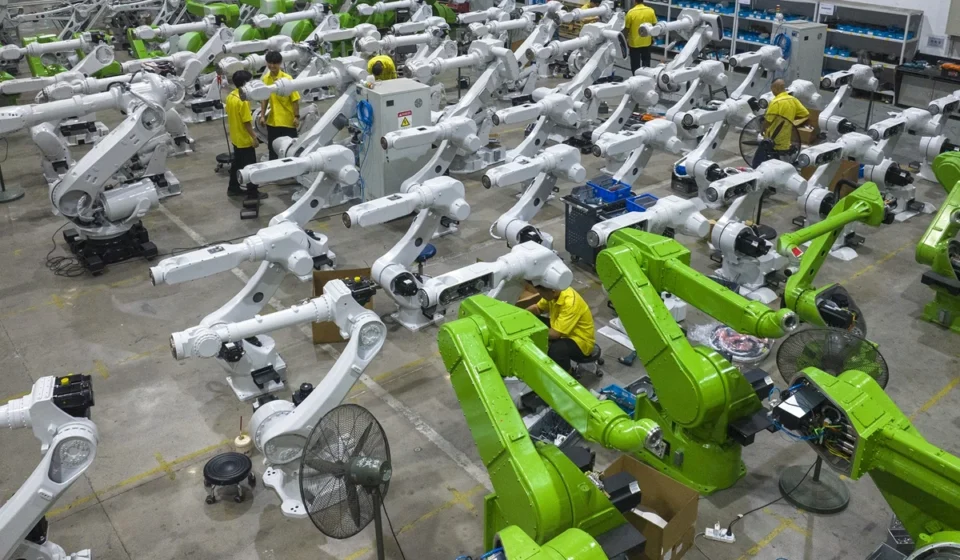
Factories are expected to adopt more intelligent production systems using connected sensors, automated inspection, predictive maintenance, industrial software, and collaborative robotics. These technologies can improve efficiency, reduce waste, and increase product quality while helping manufacturers respond more quickly to changing customer demand.
Industries that may receive increased policy support include:
- Semiconductor design and production
- Electric vehicles and battery technology
- Aerospace manufacturing
- Medical equipment
- Industrial robotics
- Advanced materials
- Green energy equipment
Each of these sectors represents an area where technological leadership carries both economic and strategic importance.
Digital Infrastructure Expands Beyond Traditional Networks
The plan also places significant attention on digital infrastructure. This extends far beyond broadband connections or mobile networks. Digital infrastructure increasingly includes cloud computing facilities, high performance data centers, intelligent transportation systems, edge computing, and secure communication platforms.
These investments support businesses that depend on massive amounts of computing power while creating the foundation needed for widespread AI adoption.
Reliable digital infrastructure also benefits consumers. Faster networks, smarter public services, connected healthcare systems, and digital government platforms can improve everyday experiences while supporting economic activity across urban and rural regions.
Building Stronger High Tech Supply Chains
Supply chain resilience has become one of the defining economic themes of recent years. Global disruptions exposed vulnerabilities affecting everything from semiconductor production to consumer electronics and automotive manufacturing.
China’s latest strategy seeks to strengthen domestic capabilities across critical technologies while improving the reliability of industrial supply networks. This includes greater investment in research, domestic component production, advanced manufacturing equipment, and strategic raw materials.
We see this effort as part of a wider international movement. Many countries are encouraging local production of strategically important technologies while maintaining trade relationships with global partners wherever possible.
Innovation Through Research and Education
Scientific research plays an essential role in the Fifteenth Five Year Plan. China has steadily increased investment in universities, laboratories, engineering programs, and applied research during recent years. Continued support for higher education is expected to produce more specialists in computer science, engineering, biotechnology, materials science, and artificial intelligence.
Talent development remains one of the most important ingredients of technological leadership. New research funding may encourage stronger collaboration among universities, private companies, and government laboratories, helping innovative ideas move more quickly from academic research into commercial products.
The Organisation for Economic Co operation and Development offers extensive research on innovation policy, productivity, digital economies, and international technology trends that help place these developments into a broader global context.
Global Businesses Are Watching Closely
Multinational companies operating in technology, manufacturing, logistics, and finance will likely examine the details of the new plan carefully as implementation progresses. Policy priorities often influence investment opportunities, regulatory changes, industrial incentives, and research partnerships.
International suppliers may also evaluate how stronger domestic production affects demand for imported technologies and specialized equipment. Companies involved in semiconductor manufacturing, industrial automation, cloud computing, software development, and renewable energy could experience new opportunities as well as increased competition.
Investors generally pay close attention to Five Year Plans because they provide valuable insight into sectors that policymakers intend to support over the coming years.
Challenges That Could Shape the Plan
Ambitious technology goals often face practical challenges. Artificial intelligence development requires enormous computing resources, advanced semiconductor technology, highly skilled researchers, and reliable access to quality data.
Global trade restrictions, geopolitical tensions, and export controls could influence the pace at which certain technologies become available. Economic conditions, demographic changes, and consumer demand will also affect how quickly planned investments generate measurable returns.
Balancing rapid innovation with responsible regulation presents another challenge. Policymakers worldwide continue working to establish standards for AI safety, privacy protection, cybersecurity, intellectual property, and ethical use of intelligent systems.
What This Means for the Global Economy
China remains one of the world’s largest manufacturing economies and an increasingly influential technology market. Decisions made through the Fifteenth Five Year Plan are therefore likely to extend well beyond China’s borders.
Growth in Chinese AI research, advanced manufacturing, and digital infrastructure could accelerate global competition while encouraging further innovation across international markets. Companies may increase spending on automation, research, and industrial modernization as they respond to changing competitive pressures.
Consumers could also experience indirect effects through improved manufacturing efficiency, faster technological development, expanded digital services, and greater availability of intelligent products.
Looking Ahead to 2030
The launch of China’s Fifteenth Five Year Plan marks the beginning of another significant chapter in the country’s long term economic strategy. Artificial intelligence, digital infrastructure, and advanced manufacturing have moved beyond policy ambitions into practical national priorities that will shape investment decisions for years to come.
We expect the coming months to bring additional details outlining sector specific targets, funding priorities, research initiatives, and implementation measures. Those announcements will offer a clearer picture of how China intends to pursue technological leadership while strengthening economic resilience.
For businesses, investors, researchers, and policymakers around the world, the message is already clear. Artificial intelligence and advanced manufacturing are no longer emerging industries sitting at the edge of economic planning. They now occupy a central place in one of the world’s most influential national development strategies, setting the stage for important shifts across global technology, production, and innovation through 2030.