

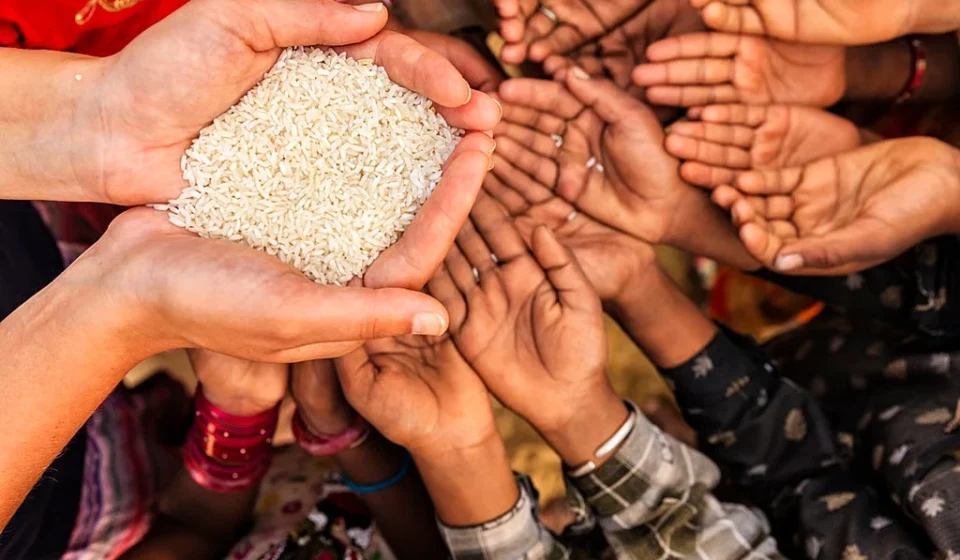

A sweeping assessment of food systems across 197 countries has delivered a stark warning ahead of the 2030 deadline: 22 of 30 vital indicators are failing to meet their global target benchmarks. The findings point to widening pressure across food security, climate, nutrition, environmental sustainability, and the livelihoods that depend on agriculture, leaving governments with less than four years to correct course.
For millions of families, these numbers are not abstract. They appear at the grocery counter when nutritious food costs more than a household can afford, in fields where heat and water shortages threaten harvests, and in communities where an unreliable food supply can turn an ordinary economic shock into a crisis. The latest assessment suggests that the systems connecting farmers, markets, governments, consumers, and the environment are not moving quickly enough toward the goals set for 2030.
A Global Food System Still Moving Too Slowly
The assessment examined 30 vital food system indicators across 197 countries and compared current performance with global benchmarks for 2030. Its central finding is difficult to overlook: 22 indicators are off track.
Those indicators cover interconnected challenges rather than a single measure of agricultural performance. Food security, greenhouse gas emissions, nutrition, environmental pressures, livelihoods, and the resilience of food systems all influence one another. Progress in one area can therefore be undermined when another part of the system deteriorates.
The broader Food Systems Countdown Initiative has been designed to monitor this complexity. Its established framework tracks food systems through themes covering diets, nutrition and health, the environment and natural resources, livelihoods and equity, governance, and resilience. The initiative was created to provide governments and other decision makers with a clearer picture of where food systems are improving and where urgent action is still required.
The Food Systems Countdown Initiative has also stressed the value of annual monitoring as countries move toward the 2030 Sustainable Development Goals. The purpose is not simply to rank countries, but to identify weaknesses early enough for policy makers to respond.
Food Security Remains a Major Warning Sign
Food security sits at the heart of the assessment because a food system cannot be considered successful if people cannot reliably obtain enough safe and nutritious food.
For a family living on a tight budget, food insecurity may begin quietly. A parent may purchase cheaper, less nutritious foods to stretch household income. A child may receive a smaller meal. A farmer may sell part of the household food supply to cover an unexpected expense. Repeated across millions of households, these choices reveal how economic pressure can reshape diets and health.
The established Countdown framework includes measures such as the cost of a healthy diet, the prevalence of undernourishment, food insecurity, access to fruits and vegetables, and other indicators of diet quality. These measures show why food security cannot be separated from income, food prices, agricultural productivity, public policy, and access to essential services.
The Food and Agriculture Organization of the United Nations has likewise highlighted the need for stronger monitoring of food systems as governments work toward the 2030 goals. Better data can help identify where interventions are needed and whether existing policies are producing measurable improvements.
Climate Pressure Is Becoming a Food System Pressure
Greenhouse gas emissions are another major concern highlighted by the assessment. Agriculture and food supply chains depend heavily on land, water, energy, transportation, and industrial inputs. At the same time, climate change is increasingly affecting the conditions under which food is produced.
Heat can reduce crop yields and place livestock under stress. Drought can shrink water supplies and increase competition between agriculture and other users. Heavy rainfall and flooding can destroy crops, damage infrastructure, erode soil, and interrupt transportation. These disruptions can travel rapidly through food markets, affecting prices far beyond the area where a climate event occurred.
This creates a difficult feedback loop. Food systems contribute to environmental pressure, while environmental degradation and climate shocks can make those same systems less productive and less stable.
Reducing emissions from agriculture and food production therefore cannot be treated as a separate climate policy. It is also a question of protecting future food supplies, rural incomes, and household purchasing power.
The Problem Is Bigger Than Farming
One of the most important lessons from food system research is that producing more food alone does not solve the problem. A country can increase agricultural output while still struggling with poor diets, food insecurity, environmental damage, weak rural incomes, or inadequate resilience.
The Food Systems Countdown framework was built around this reality. Its original global baseline identified 50 indicators across five broad themes and found that every country had areas of strength as well as areas requiring improvement. No country ranked among the strongest across every dimension.
The latest assessment of 30 vital indicators adds another layer to that picture by measuring progress against target benchmarks. The finding that 22 indicators are off track suggests that incremental improvements are not enough in many areas.
For policy makers, that means food policy must become more coordinated. Agriculture ministries cannot work in isolation from health ministries. Climate policy cannot ignore farmers. Economic policy cannot overlook food prices. Infrastructure decisions can influence whether crops reach consumers at affordable prices.
Why Governance and Resilience Matter
Food systems are exposed to shocks that governments cannot always prevent. Conflict, extreme weather, disease outbreaks, market disruptions, and sudden changes in energy or fertilizer costs can all affect food availability and affordability.
What governments can influence is how well food systems prepare for those shocks and how quickly they recover afterward.
Strong institutions can help farmers access information, finance, insurance, seeds, irrigation, storage, and markets. Reliable public data can allow governments to detect emerging food shortages earlier. Social protection programs can help vulnerable households maintain access to nutritious food during periods of high prices or lost income.
Resilience also depends on diversity. Agricultural systems that rely heavily on a narrow range of crops or production methods can become more exposed when conditions change. Protecting crop diversity, livestock genetic resources, soil health, water resources, and local knowledge can provide additional buffers against disruption.
What Needs to Change Before 2030
The assessment leaves governments with a shrinking window for action. Reaching 2030 targets will require more than announcing new commitments. Progress needs to be measured, financed, and maintained over time.
Several priorities stand out from the wider evidence on food system performance:
- Governments need stronger food security policies that improve access to affordable and nutritious diets.
- Agricultural investment should support productivity while reducing pressure on land, water, biodiversity, and the climate.
- Farmers need better access to finance, infrastructure, technology, extension services, and risk protection.
- Food policies should connect agriculture with public health so that availability of food is matched by access to healthy diets.
- National governments should improve data collection so that weak performance can be identified before it becomes a larger crisis.
- Social protection should be capable of responding quickly when food prices rise or climate shocks disrupt household incomes.
These measures are closely connected. Improving farm productivity without improving market access may leave producers struggling. Increasing food availability without making healthy food affordable may do little to improve nutrition. Cutting emissions without helping farmers manage the transition could create new economic pressures.
The Human Cost of Missing the Targets
The significance of the assessment ultimately comes down to people.
A food system is not merely a network of farms, warehouses, factories, trucks, supermarkets, and markets. It is the system that determines what families can place on their tables, what farmers earn from their labor, whether children receive adequate nutrition, and whether communities can withstand the next drought, flood, price spike, or economic shock.
When multiple indicators deteriorate at the same time, the consequences can compound. Poor nutrition can weaken health and productivity. Low farm incomes can reduce investment in future production. Environmental degradation can make agriculture more vulnerable. Rising food prices can deepen poverty and force households to reduce diet quality.
That is why the finding that 22 of 30 indicators are off track should not be read simply as a scorecard of failure. It is also a warning about where intervention can have the greatest value.
A Narrowing Window for 2030 Action
The world still has time to improve its trajectory, but the remaining period before 2030 is short. Food systems operate on timelines that can be measured in growing seasons, investment cycles, infrastructure projects, and changes in consumer behavior. Some reforms can produce rapid benefits, while others require years before results become visible.
The value of a countdown assessment is therefore its ability to make delay harder to ignore. Countries can use comparable indicators to identify weaknesses, direct resources toward the most urgent problems, and measure whether reforms are producing real progress.
The challenge now is turning evidence into decisions. Governments, businesses, farmers, researchers, and civil society groups all have different roles, but their objectives must increasingly connect around a common priority: food systems that can feed people affordably while protecting the natural resources and communities that make future production possible.
The latest assessment sends a clear message ahead of the 2030 deadline. The world is not moving fast enough across many of the measures that define a healthy, secure, sustainable, and resilient food system. The remaining years should therefore be treated not as a distant deadline, but as a period for measurable action, stronger accountability, and faster course correction.