

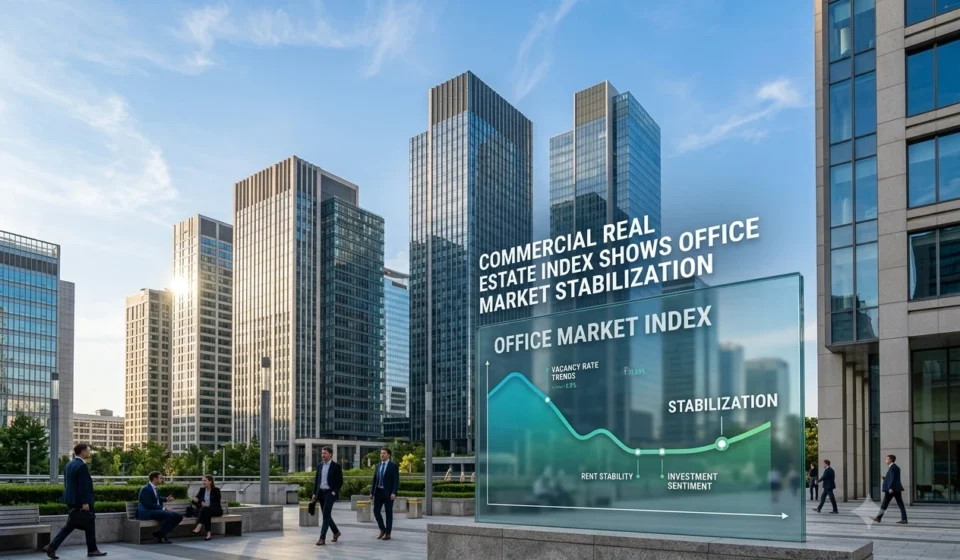

July 30, 2026 has brought fresh evidence that the commercial office sector is entering a more predictable chapter. Institutional real estate indexes released this week indicate that office property valuations have largely normalized across major global markets after several years of uncertainty. We are seeing a shift away from emergency adjustments and toward steady pricing as businesses, investors, and employees settle into hybrid work patterns that now appear to be a permanent feature of modern employment.
For owners of office buildings, pension funds, investment firms, lenders, and companies searching for workspace, the latest findings suggest stability rather than rapid expansion. While the market is unlikely to return to the conditions seen before widespread remote work, many analysts believe the industry has finally reached a sustainable equilibrium.
Office Property Values Show Greater Consistency
Commercial property valuations experienced dramatic swings following the global health crisis, with office buildings facing some of the sharpest declines. Vacancy rates climbed in many cities as organizations reduced their physical footprints while experimenting with remote and flexible work arrangements.
Several years later, institutional market reports indicate that pricing has become more consistent. Investors have adjusted expectations, property owners have refined leasing strategies, and businesses have gained greater confidence in determining how much office space they truly need.
This normalization does not suggest every office building has recovered equally. Premium properties located in desirable business districts continue to attract stronger demand than older buildings requiring costly renovations. Even so, the pace of price declines has slowed considerably, allowing investors to evaluate assets with greater certainty.
Hybrid Work Has Become a Long Term Reality
Perhaps the most significant change shaping commercial real estate is the widespread acceptance of hybrid work. Rather than viewing flexible schedules as a temporary response, employers now treat them as part of everyday business operations.
Many organizations have adopted schedules that combine office collaboration with remote productivity. Employees often spend several days each week at company offices while completing focused tasks from home during the remaining workweek.
This arrangement has altered the purpose of office space. Companies increasingly seek workplaces designed for collaboration, client meetings, innovation, and team interaction instead of assigning permanent desks to every employee.
The result is a more efficient use of office buildings, even if the total amount of leased space remains below historical peaks.
Institutional Investors Regain Confidence
Large institutional investors have spent the past few years reassessing risk across commercial real estate portfolios. Pension funds, insurance companies, sovereign wealth funds, and investment managers reduced exposure to uncertain office assets while monitoring economic conditions.
Recent market reports suggest that many of these investors now view office properties through a more balanced lens. Rather than expecting rapid appreciation, they are focusing on dependable rental income, long term occupancy, and building quality.
Investment decisions increasingly favor assets featuring modern technology, energy efficiency, flexible floor plans, and locations supported by strong transportation networks. Buildings that meet these standards continue attracting tenants willing to commit to longer lease agreements.
Market participants also rely on research published by organizations such as MSCI and educational resources from the Urban Land Institute to monitor commercial property performance and emerging development trends.
Regional Differences Continue to Matter
Although the global picture points toward stabilization, conditions still vary across cities and regions. Financial centers with diversified economies have generally shown stronger leasing activity than markets heavily dependent on a single industry.
Gateway cities continue attracting multinational corporations seeking prestigious office locations for headquarters and customer facing operations. Meanwhile, suburban business districts have benefited in some areas as employees look for shorter commuting times.
Local economic growth, population trends, transportation infrastructure, and business friendly policies all influence the pace of recovery. These differences remind investors that commercial real estate remains a highly localized asset class despite broader global trends.
Building Owners Adapt to New Expectations
Owners of office buildings have responded by making significant improvements to attract and retain tenants. Modern workplaces now frequently include upgraded ventilation systems, collaborative meeting areas, wellness amenities, digital access controls, and improved energy performance.
Many landlords have also introduced greater leasing flexibility. Instead of insisting on traditional long term agreements with fixed layouts, some properties now offer adaptable floor plans that allow tenants to expand or reduce occupied space as business needs change.
These improvements require additional investment, yet they can strengthen occupancy rates while helping buildings remain competitive in changing markets.
What Businesses Are Looking For
Corporate real estate decisions have become more strategic than they were before widespread hybrid work. Companies are asking different questions when evaluating office space.
- Can the workplace encourage collaboration and creativity?
- Does the building support employee wellbeing?
- Is the location convenient for clients and staff?
- Can office layouts adapt as workforce needs evolve?
- Does the property support sustainability goals?
These priorities reflect a broader shift in how organizations define workplace value. Square footage alone is no longer the primary measurement. The quality of the employee experience has become an equally important consideration.
Lenders See Reduced Uncertainty
Commercial lenders have faced considerable challenges during recent years as declining property values complicated refinancing decisions. More stable valuations now provide banks and financial institutions with clearer benchmarks when assessing credit risk.
While financing standards remain disciplined, predictable pricing improves confidence across lending markets. Borrowers with high quality assets and strong tenant profiles may find financing conditions gradually becoming more favorable than during periods of heightened volatility.
Interest rate expectations will continue influencing commercial real estate activity, yet consistent property values provide an important foundation for future lending decisions.
Sustainability Continues to Shape Investment Choices
Environmental performance remains a growing consideration for both investors and occupiers. Office buildings with lower energy consumption, efficient heating and cooling systems, and sustainable construction features often command stronger tenant interest.
Corporate sustainability commitments increasingly influence leasing decisions, particularly among multinational companies seeking to reduce operational emissions. As a result, property owners investing in efficient building upgrades may gain competitive advantages over time.
This trend extends beyond environmental responsibility. Energy efficient buildings can also reduce operating expenses, creating financial benefits for both landlords and tenants.
Challenges Still Remain
The improving outlook does not eliminate every concern facing commercial real estate. Older office buildings located in less competitive markets may continue struggling with elevated vacancies. Some properties could require expensive renovations or conversion into residential, educational, healthcare, or mixed use developments.
Economic uncertainty, inflation, labor market conditions, and monetary policy will continue affecting investment decisions across global property markets. Businesses also remain attentive to changing workforce preferences as younger employees bring new expectations regarding workplace flexibility.
Even with these challenges, the sharp instability that defined earlier years appears to be fading.
Looking Ahead
We are witnessing an office market that has adjusted rather than disappeared. Hybrid work has changed commercial real estate in lasting ways, yet it has also created a clearer framework for investors, employers, and property owners to make informed decisions.
Institutional market indexes released on July 30, 2026 suggest that commercial office valuations have entered a more mature phase marked by realistic pricing and practical expectations. Rather than chasing rapid growth, many market participants now value consistency, dependable income, and resilient assets capable of serving changing workplace needs.
The coming years will likely bring continued innovation in office design, sustainability, and flexible leasing. If current trends continue, the commercial real estate sector may finally have found the stable footing that investors and businesses have been waiting for since the workplace underwent one of the most significant shifts in modern history.