

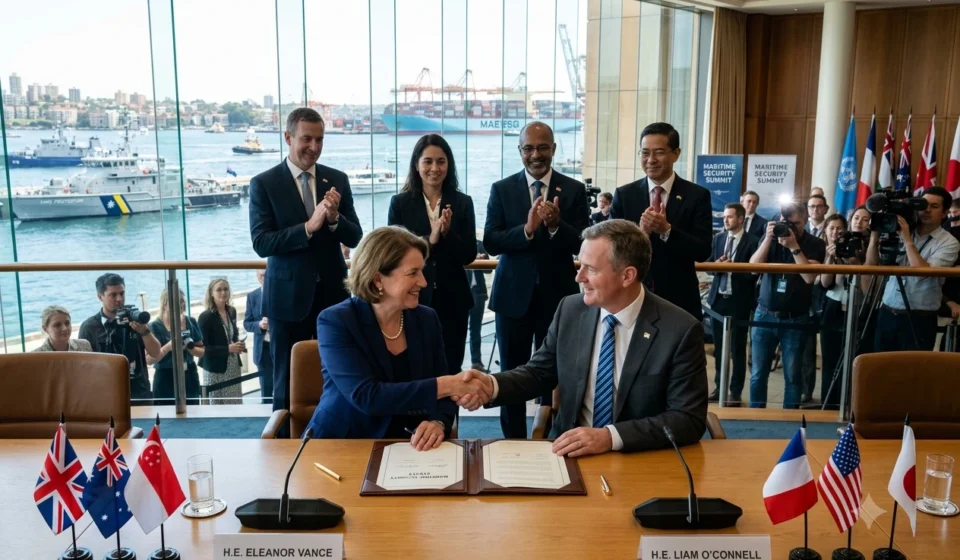

July 30, 2026 marked a significant moment for international maritime cooperation as representatives from major coastal nations finalized a comprehensive maritime security treaty designed to protect commercial shipping routes and strengthen real time surveillance sharing across some of the world’s busiest waterways. The agreement reflects growing concern over shipping disruptions, regional tensions, piracy, cyber risks, and illegal activity at sea that have increasingly challenged global trade. We see this treaty as more than a diplomatic milestone. It represents a practical commitment to keeping essential supply chains moving while building greater trust among participating nations.
The agreement comes at a time when global commerce depends heavily on uninterrupted maritime transportation. From food and energy to electronics and medical supplies, countless products travel through strategic sea corridors every day. Any disruption can ripple through international markets, affecting businesses, consumers, and governments alike. By establishing a shared framework for monitoring maritime activity, participating countries hope to reduce risks while improving coordination during emergencies.
Why Maritime Security Has Become a Global Priority
More than four fifths of international trade by volume moves across the world’s oceans, making maritime security one of the foundations of economic stability. Shipping companies have faced increasing challenges in recent years as criminal organizations, unauthorized vessel activity, cyber attacks, and geopolitical tensions have complicated navigation through important commercial routes.
Officials attending the summit described the treaty as a proactive response to changing security conditions rather than a reaction to one isolated incident. The participating governments agreed that protecting maritime trade requires continuous cooperation, timely intelligence, and coordinated responses instead of isolated national efforts.
International organizations including the International Maritime Organization have long encouraged stronger cooperation among coastal states to improve safety, environmental protection, and secure navigation. The new treaty builds upon many of these established principles while expanding practical information sharing among member nations.
Key Elements of the New Maritime Security Agreement
The treaty introduces several cooperative measures intended to improve both prevention and response capabilities across participating regions. Rather than creating a centralized military structure, the agreement focuses on operational coordination, technological cooperation, and communication between national authorities.
- Shared real time maritime surveillance information.
- Faster communication between national coast guards and naval authorities.
- Joint monitoring of major commercial shipping corridors.
- Improved coordination during search and rescue operations.
- Greater collaboration against piracy, smuggling, and illegal fishing.
- Support for cyber security measures affecting maritime infrastructure.
Officials stated that each participating nation will continue exercising authority over its own territorial waters while contributing selected operational data that can improve regional awareness. This cooperative model allows countries to maintain sovereignty while benefiting from broader situational intelligence.
Real Time Surveillance Sharing Could Change Maritime Operations
One of the most notable features of the treaty is its commitment to real time surveillance sharing. Maritime authorities increasingly rely on satellite systems, coastal radar networks, vessel tracking technology, aerial monitoring, and advanced analytics to identify unusual vessel movements. Faster information exchange may allow authorities to recognize developing threats before they become serious incidents.
Shipping operators have welcomed the initiative because delays caused by security concerns often result in increased operating costs, insurance expenses, and scheduling complications. Better visibility across commercial routes may reduce uncertainty for cargo carriers while improving confidence among international trading partners.
Modern surveillance technology also supports environmental protection by identifying unauthorized activities that may threaten marine ecosystems. Illegal dumping, unauthorized fishing operations, and unsafe vessel practices become easier to monitor when governments coordinate information across national boundaries.
Economic Benefits Reach Far Beyond Coastal Nations
The impact of maritime security extends well beyond countries with large coastlines. Manufacturers, retailers, exporters, agricultural producers, and consumers around the world depend on predictable shipping schedules. Stable transportation networks help businesses manage inventory, control costs, and maintain consistent deliveries.
Financial analysts frequently note that uncertainty along major shipping routes can influence commodity prices, manufacturing output, and consumer inflation. By reducing operational risks, the treaty has the potential to support greater confidence throughout global supply chains.
Small businesses may also benefit indirectly. Reliable international logistics allow companies of every size to participate more effectively in international commerce without facing unexpected transportation disruptions that can significantly increase operating expenses.
Diplomatic Cooperation Takes Center Stage
The negotiations leading to the treaty reportedly involved months of discussions among diplomatic delegations, maritime experts, defense officials, and trade representatives. While participating countries may differ on broader geopolitical issues, delegates consistently recognized that secure commercial navigation serves shared economic interests.
The agreement demonstrates that practical cooperation remains possible even when governments maintain different political priorities. Rather than focusing exclusively on defense, negotiators framed maritime security as an essential component of economic resilience, humanitarian response, and international stability.
We have repeatedly seen throughout history that cooperation at sea often creates opportunities for broader diplomatic engagement. Shared operational goals encourage communication channels that can remain valuable during periods of regional tension.
Technology Will Play a Central Role
Digital monitoring systems continue to reshape maritime operations. Satellite observation, artificial intelligence assisted vessel tracking, secure communication networks, and automated anomaly detection are becoming standard tools for maritime authorities worldwide. The treaty encourages participating nations to strengthen compatibility between existing monitoring systems while respecting national security requirements.
Cyber security also receives considerable attention within the agreement. Ports, cargo terminals, vessel management systems, and shipping companies increasingly depend on digital infrastructure. Protecting these systems from cyber threats has become an important component of modern maritime security planning.
Additional technical guidance and international best practices remain available through the United Nations, whose broader maritime initiatives continue supporting peaceful cooperation and sustainable use of the world’s oceans.
Challenges That Still Require Careful Management
Although the treaty establishes an important framework, successful implementation will require sustained political commitment, funding, and technical coordination. Participating governments must determine how information will be classified, protected, verified, and distributed without compromising sensitive national interests.
Technology compatibility presents another challenge. Different countries operate varying surveillance platforms, communication systems, and operational procedures. Building reliable interoperability requires continuous investment, specialized training, and regular joint exercises.
Legal questions may also arise concerning jurisdiction, privacy, data governance, and operational responsibilities during multinational responses. These issues will likely be addressed through additional working groups and implementation agreements over the coming months.
Shipping Industry Responds with Measured Optimism
Commercial shipping organizations have generally welcomed the treaty, viewing stronger international coordination as a positive step toward reducing operational uncertainty. Industry leaders often point out that predictable security conditions allow shipping companies to optimize routes, reduce delays, and improve scheduling reliability.
Insurance providers are also expected to monitor implementation closely. Improved risk management could eventually influence maritime insurance assessments in regions where coordinated surveillance demonstrates measurable improvements in operational safety.
Cargo owners, logistics providers, and port operators will likely watch for practical outcomes rather than symbolic commitments. Effective implementation, consistent communication, and measurable improvements in maritime awareness will ultimately determine the agreement’s long term success.
Looking Ahead
The Maritime Security Treaty finalized on July 30, 2026 reflects a growing international recognition that secure oceans support economic prosperity, humanitarian cooperation, and regional stability. While implementation will require continued diplomacy and technical collaboration, the agreement provides a structured path toward stronger coordination among nations responsible for safeguarding vital commercial sea routes.
As global trade continues expanding across interconnected supply networks, maritime security will remain central to international economic resilience. The treaty offers participating nations an opportunity to strengthen collective awareness, respond more effectively to emerging risks, and maintain confidence in the shipping lanes that connect markets across every continent. Its long term value will ultimately depend not only on signatures placed at the diplomatic summit, but also on consistent cooperation once ships return to the open sea.