

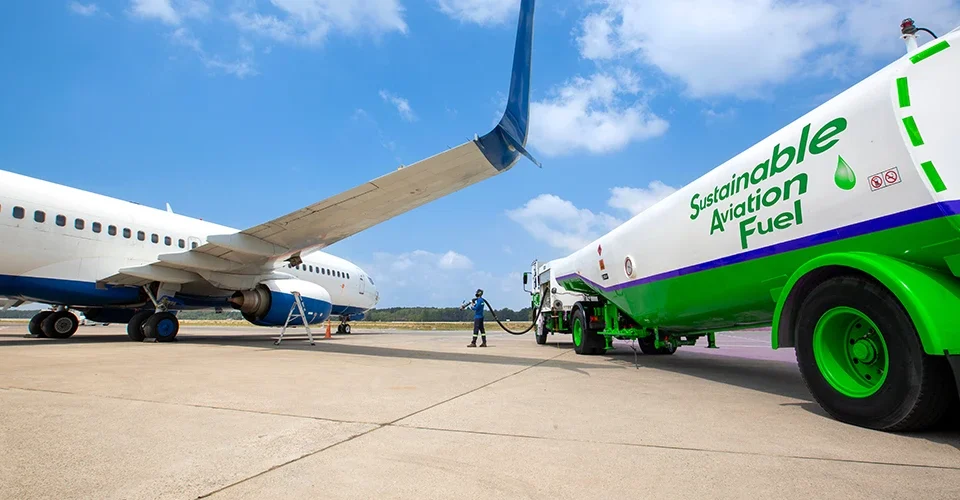

The International Civil Aviation Organization has designated mandatory Sustainable Aviation Fuel blending requirements across major transcontinental flight corridors, putting cleaner aviation fuel at the center of international air travel policy. The decision marks a significant shift from voluntary commitments toward a coordinated system designed to increase SAF use on some of the world’s busiest long distance routes.
A New Fuel Standard for International Aviation
For passengers, the change may be almost invisible. A traveler boarding a long distance flight will still see the same aircraft, the same cabin and the same familiar jet fuel infrastructure. Behind the scenes, however, the fuel flowing into aircraft on covered routes will increasingly contain a required share of Sustainable Aviation Fuel.
ICAO’s move is aimed at one of aviation’s most difficult climate challenges. Commercial aircraft require large quantities of energy, and current battery technology is not yet capable of replacing conventional jet fuel on most long haul flights. SAF therefore occupies an important position in efforts to reduce aviation’s lifecycle greenhouse gas emissions while allowing airlines to continue using existing aircraft and airport systems.
ICAO describes SAF as renewable or waste derived aviation fuel that meets established sustainability criteria. Its technical work identifies SAF as having substantial potential for reducing carbon dioxide emissions from international aviation. The organization has also established a global framework covering SAF, lower carbon aviation fuels and other cleaner aviation energy sources. ICAO’s aviation sustainability programs provide information on fuel policies, production, feedstocks, airport distribution and certification.
Why Long Haul Corridors Are Receiving Attention
Long distance international routes present a particularly difficult problem for aviation policymakers. A flight connecting North America with Europe or Asia can remain airborne for many hours while consuming enormous quantities of fuel. Unlike shorter routes, long haul operations cannot easily depend on battery powered propulsion or other emerging technologies that remain limited by energy density.
That makes liquid sustainable fuels one of the most practical options available for reducing the carbon intensity of long distance aviation in the near term. A coordinated corridor approach also creates a clearer signal for airlines, fuel producers, airports and investors.
We can think of an international flight corridor as more than a line between two airports. It represents an interconnected supply chain involving fuel producers, refineries, storage facilities, airport operators, airlines, regulators and certification organizations. If one part of that chain cannot provide an adequate SAF supply, the entire system can face difficulties.
By applying minimum blending requirements across major transcontinental routes, ICAO is seeking to create predictable demand. Predictable demand matters because SAF production requires substantial capital, long term supply agreements and reliable access to suitable feedstocks.
What Sustainable Aviation Fuel Actually Changes
SAF is not a completely different fuel that requires passengers to fly in a new type of aircraft. Instead, approved SAF can be blended with conventional aviation fuel and supplied through aviation fuel infrastructure under applicable technical and sustainability standards.
The environmental benefit comes primarily from the fuel’s lifecycle emissions profile. Depending on its feedstock, production pathway and other factors, SAF can produce substantially lower lifecycle greenhouse gas emissions than conventional fossil based jet fuel.
However, the word sustainable carries significant weight. Not every alternative fuel automatically qualifies as sustainable. ICAO sustainability criteria address issues including lifecycle greenhouse gas reductions, social and economic considerations, and the need to avoid harmful competition with food and water resources. Eligible fuels must meet defined requirements and can be subject to independent certification.
The Supply Challenge Could Be the Biggest Test
The aviation industry cannot simply switch from conventional jet fuel to SAF overnight. Production remains constrained, while airlines operate on enormous fuel volumes. The new requirements therefore create pressure to expand production capacity while maintaining strict sustainability standards.
For fuel producers, the policy creates a potentially stronger market for renewable and waste derived aviation fuels. For airports, it means planning for storage, delivery and fuel handling capacity. For airlines, it creates new procurement obligations and potentially higher operating costs.
The availability of sustainable feedstocks will also matter. Used cooking oil, agricultural residues, municipal waste and other materials can serve as inputs for certain SAF pathways, but these resources are not unlimited. Policymakers must therefore balance aviation demand against competing uses and ensure that attempts to reduce aviation emissions do not shift environmental damage elsewhere.
Airlines Face a New Cost and Planning Equation
Airlines are likely to feel the policy most directly through fuel procurement. Conventional jet fuel and SAF do not necessarily carry the same production economics, and the cost of sustainable fuel can be considerably higher depending on the technology, feedstock and location.
That difference could affect ticket prices, cargo costs and airline profitability. Whether passengers ultimately see a noticeable increase will depend on several factors, including fuel prices, competition between carriers, government incentives and the pace at which SAF production expands.
For airlines operating extensive international networks, the operational challenge may extend beyond purchasing fuel. Carriers will need reliable information about SAF availability at airports, compliance requirements, certification and fuel accounting. Long term contracts with producers may become increasingly important as airlines compete for limited supplies.
Airports Become Critical Pieces of the System
Major international airports are likely to become strategic points in the SAF network. A long haul corridor can function effectively only when participating airports have dependable access to qualifying fuel and the infrastructure needed to receive, store and distribute it.
This could encourage investment in airport fuel systems and regional production facilities. It may also strengthen the position of airports located near major industrial centers where renewable energy, waste resources or other SAF feedstocks are readily available.
ICAO’s broader SAF framework already recognizes the importance of infrastructure, policy coordination, financing and implementation support. Its framework calls for progress across several interconnected areas rather than relying on fuel production alone.
Why Certification and Traceability Matter
A mandatory SAF system requires more than measuring how much alternative fuel is purchased. Regulators need confidence that the fuel qualifies under established sustainability requirements and that emissions reductions are calculated consistently.
ICAO’s CORSIA system provides an existing international structure for sustainability criteria, certification and lifecycle emissions assessment. Its framework requires eligible fuels to satisfy defined sustainability requirements and allows independent certification through approved sustainability certification schemes.
This matters because environmental claims can become difficult to verify when fuel passes through multiple producers, suppliers and airports. Clear accounting can help prevent double counting and give airlines, regulators and passengers greater confidence that claimed emissions reductions represent genuine lifecycle benefits.
What the Policy Means for Travelers
Most passengers are unlikely to notice an immediate change at the airport. Aircraft will continue using familiar propulsion systems, and SAF blending does not mean that passengers will have to modify how they travel.
The more visible effect could emerge through ticket pricing and airline communications. Carriers may begin explaining how fuel requirements affect fares, corporate travel programs and emissions reporting. Travelers who choose airlines based on environmental performance may also see more detailed information about SAF purchases and fuel usage.
Frequent flyers should also distinguish between an airline buying SAF and an individual passenger physically receiving a separate batch of sustainable fuel. Aviation fuel systems can involve shared infrastructure, meaning environmental accounting depends on accepted certification and chain of custody systems rather than simply identifying fuel molecules inside a particular aircraft tank.
A Policy Designed to Accelerate Investment
The larger significance of ICAO’s action may be financial rather than technological. A binding demand signal can change how investors evaluate SAF projects. Producers have historically faced uncertainty over whether airlines would purchase enough fuel at prices capable of supporting large scale facilities.
Mandatory corridor requirements can provide a clearer basis for long term contracts and infrastructure planning. That could support new production plants, feedstock collection networks, refining capacity and airport distribution systems.
ICAO has already identified financing as one of the four major building blocks in its global cleaner aviation energy framework. The organization also operates programs intended to help countries develop SAF projects and build technical capacity, including assistance for feasibility studies and implementation planning.
The Climate Benefits Still Have Limits
SAF should not be presented as a complete solution to aviation’s climate impact. Cleaner fuel can reduce lifecycle carbon emissions, but aircraft continue to produce emissions and other atmospheric effects during flight. Aviation also faces challenges involving non carbon dioxide climate impacts, aircraft efficiency and continued growth in passenger demand.
That means fuel policy will need to operate alongside improvements in aircraft design, air traffic management, operational efficiency and the development of future propulsion technologies.
ICAO’s long term international aviation goal is net zero carbon emissions by 2050. The organization has also established a collective aspirational vision for reducing international aviation carbon dioxide emissions through cleaner aviation energies by 2030. The new corridor approach places greater emphasis on turning those ambitions into practical fuel demand.
The Next Test Is Implementation
The announcement creates a framework, but implementation will determine its real impact. Governments and aviation authorities will need to coordinate rules across borders, while airlines and fuel suppliers must build reliable commercial arrangements.
The most difficult question may be whether SAF production can expand quickly enough without compromising sustainability or making international air travel substantially more expensive. Developing countries may face additional challenges because financing, refinery capacity and airport infrastructure are not evenly distributed around the world.
ICAO’s capacity building work is therefore likely to remain important. Its approach recognizes that a global aviation fuel transition cannot succeed if cleaner fuel production and infrastructure remain concentrated in only a small number of wealthy markets.
A Significant Step Toward Lower Carbon Flight
The move to require SAF blending across major transcontinental corridors signals a more interventionist phase in aviation’s climate strategy. Instead of relying solely on voluntary airline purchases and national initiatives, international policy is placing minimum fuel requirements directly into the operating environment of long distance aviation.
For passengers, the change will happen quietly. For airlines, airports and fuel producers, the implications are far more substantial. The coming years will reveal whether production can scale, whether costs can fall and whether sustainability safeguards remain strong as demand rises.
Our view is that the significance of the policy will ultimately depend less on the announcement itself than on the infrastructure built behind it. A successful SAF corridor needs dependable fuel, credible certification, workable financing and cooperation across borders. If those pieces develop together, cleaner aviation fuel could become a much more routine part of international air travel rather than a limited premium product.
Further information on international aviation climate policy and cleaner aviation energy initiatives is available through the International Civil Aviation Organization and the United Nations.