

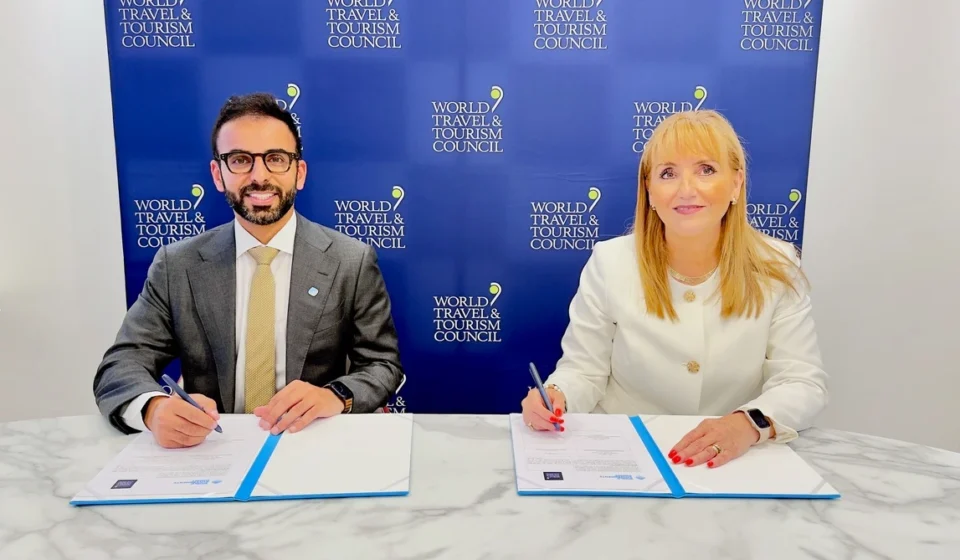

The World Travel & Tourism Council and the World Governments Summit have agreed to establish a global public private policy framework aimed at supporting sustainable travel infrastructure, as investment across the sector moves beyond the $1 trillion mark. The agreement comes at a moment when governments and travel companies are facing a shared challenge: how to expand connectivity and tourism capacity without placing greater pressure on communities, natural resources, or already strained infrastructure.
A New Push for Public and Private Cooperation in Travel
The memorandum of understanding between WTTC and WGS brings government decision makers and private sector leaders closer together around the long term development of Travel & Tourism. Rather than treating tourism infrastructure as a matter for individual destinations, the partnership points toward a more coordinated approach to investment, policy and planning.
For travelers, infrastructure can be almost invisible when it works well. A modern airport reduces long queues. Reliable rail connections make a journey feel shorter. Efficient border systems remove uncertainty. Clean water, dependable electricity and responsible waste management allow communities to accommodate visitors without compromising everyday life. Behind each of these experiences are years of public planning and billions of dollars in capital.
WTTC has increasingly highlighted the role of government and business cooperation in addressing these pressures. Its work with governments focuses on using economic research, policy dialogue and industry expertise to support inclusive and sustainable growth in Travel & Tourism.
Why the $1 Trillion Investment Threshold Matters
The scale of investment is central to the new agreement. Travel and Tourism is not simply an industry of airlines, hotels, restaurants and attractions. Its expansion depends on roads, airports, ports, rail networks, digital systems, energy supplies, water infrastructure and public services.
WTTC has already identified infrastructure investment as a major factor in determining whether tourism economies can meet future demand. In a March 2026 report produced with Oxford Economics, the council projected $12.5 trillion in Travel & Tourism investment across G20 economies and Spain through 2035. The report also warned that investment needs to keep pace with demand while building greater resilience.
That wider investment picture helps explain why the new MoU matters. Capital on its own does not guarantee better travel. Investment decisions need to be guided by clear rules, reliable public institutions and policies that account for environmental and social consequences.
Sustainable Infrastructure Moves to the Center of Tourism Policy
The partnership places sustainable infrastructure at the heart of its policy ambitions. That can have practical consequences for destinations ranging from major international gateways to smaller communities that depend heavily on seasonal visitors.
Well planned tourism infrastructure can help destinations manage visitor numbers while protecting the places people have traveled to experience. Public transport can reduce congestion around popular attractions. Energy efficient hotels can lower pressure on electricity networks. Better water systems can help destinations cope with seasonal demand. Digital travel systems can reduce unnecessary paperwork and improve the movement of people through airports and borders.
There is also a human dimension. Tourism investment can create jobs and business opportunities, but poorly planned growth can raise housing costs, strain local services and change the character of communities. A credible public private framework therefore needs to consider residents alongside visitors and investors.
Governments Face Growing Pressure to Plan Beyond Tourism Numbers
For many governments, the traditional measure of tourism success has been the number of international arrivals. That figure remains useful, but it does not tell the entire story.
A destination welcoming millions of additional visitors needs enough airport capacity, hotel rooms, public transportation, healthcare services, clean water and waste treatment to accommodate them. It also needs skilled workers and policies that allow local businesses to participate in the economic benefits.
The WTTC and WGS initiative arrives against this broader policy backdrop. WTTC’s recent investment discussions have stressed the importance of legal certainty, infrastructure development and government facilitation in attracting private capital.
We see an increasingly clear lesson in those discussions: private investment is more likely to deliver lasting value when governments provide predictable policy conditions, while governments can benefit from the capital, technology and operational knowledge held by the private sector.
Travel Infrastructure Must Become More Resilient
Resilience is another issue that cannot be separated from sustainable tourism. Airports, ports, hotels and transportation networks are increasingly exposed to extreme weather, geopolitical disruptions, energy price shocks and other unexpected events.
Recent travel disruptions have shown how quickly a problem in one region can affect passengers and businesses thousands of miles away. Airlines may reroute flights, shipping disruptions can affect tourism supplies, and sudden changes in border policy can alter visitor flows almost overnight.
WTTC has identified geopolitical tensions, climate related events, pandemics, fragmented traveler journeys and limited connectivity among the structural challenges facing the sector.
A future focused infrastructure strategy therefore needs to ask more than whether a destination can handle today’s travelers. It must also consider whether airports, transport networks, accommodation and public utilities can continue operating when conditions become difficult.
Digital Systems Could Become a Major Part of the Framework
Physical infrastructure is only one part of the travel equation. Digital identity, border management and connected travel systems are becoming increasingly important as international journeys grow more complex.
The 2026 FIFA World Cup has provided a major demonstration of how digital border technologies can support high volumes of international travelers. WTTC has pointed to trusted travel systems and pre approved low risk travelers as examples of how security and faster processing can operate together at scale.
For governments considering future investment, the lesson is significant. A new terminal or railway line may improve capacity, but digital systems can determine how efficiently that capacity is actually used. Better data sharing and coordinated travel processes could reduce bottlenecks while giving authorities stronger tools to manage security.
Local Communities Will Judge the Partnership by Results
For people living in destinations experiencing rapid tourism growth, the success of any international agreement will ultimately be measured locally. Residents do not experience investment announcements as financial figures. They experience them through traffic on the morning commute, water availability during a hot summer, employment opportunities, rent prices and the condition of public spaces.
That makes community participation essential. Sustainable tourism policies should give local authorities and residents a meaningful role in deciding where infrastructure is needed and how tourism growth should be managed.
Investment can bring genuine opportunity when it supports local suppliers, creates quality employment and improves services that residents use every day. The same investment can produce resentment when communities feel that visitors and outside investors receive the benefits while local people absorb the costs.
A Broader Policy Framework Could Shape Future Investment
The MoU between WTTC and WGS signals an effort to bring these competing priorities into a more coordinated policy conversation. The immediate value of the partnership will depend on how its framework develops and whether governments and businesses translate broad commitments into measurable projects and policies.
Several areas are likely to remain central to that work:
- Infrastructure planning: Aligning airports, rail systems, roads, ports, utilities and accommodation capacity with long term visitor demand.
- Sustainability standards: Encouraging investment that reduces environmental pressure while protecting the resources tourism depends upon.
- Resilience: Preparing destinations for climate risks, geopolitical disruption, public health emergencies and other shocks.
- Digital connectivity: Improving border processes, traveler identity systems and information sharing.
- Community benefits: Ensuring tourism investment supports employment, local businesses and public services.
What the Agreement Could Mean for the Global Travel Economy
The partnership arrives as Travel & Tourism continues to attract enormous amounts of capital and government attention. WTTC’s decision to hold its 2026 Global Summit in Valletta, Malta, from October 7 to 9 also reflects the organization’s focus on bringing public officials, investors and industry leaders together around sustainability, resilience and long term growth.
That gathering could provide another opportunity to move the policy conversation from principles toward implementation. The challenge will be making sure that investment reaches the infrastructure gaps that travelers and residents encounter every day.
For the global travel industry, the stakes are considerable. Demand can grow rapidly, but infrastructure takes years to design, finance and build. Decisions made now will shape how destinations function for decades.
The Next Test Is Turning the MoU Into Action
The WTTC and WGS agreement is significant because it recognizes that the future of tourism cannot be managed by governments or companies acting independently. Public authorities control many of the policies and infrastructure systems that make travel possible, while private businesses provide much of the capital, technology and operational expertise that keep the sector moving.
The partnership gives both sides a platform to work more closely as investment accelerates beyond $1 trillion. Its real measure of success, however, will not be the size of the headline figure. It will be whether new investment produces cleaner transport, stronger destinations, smoother journeys, resilient communities and better opportunities for the people who live in the places travelers come to see.
That is where sustainable tourism becomes more than an industry objective. It becomes a question of how countries build places that remain welcoming to visitors while continuing to work well for the people who call them home.
For additional policy context, WTTC’s work with governments outlines its approach to public private cooperation, while its economic research tracks the wider contribution and investment outlook of Travel & Tourism.